
DOES HAPPINESS KILL?
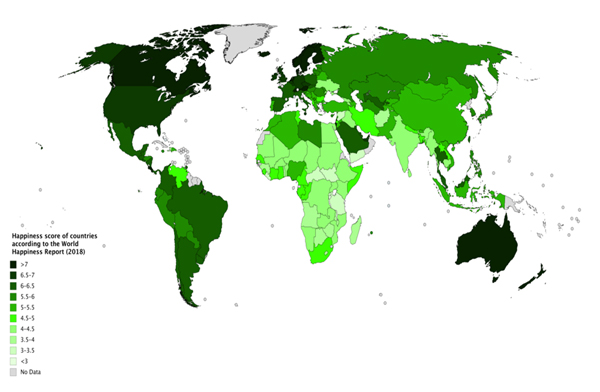
Very often, the Canadian, as well as the world media, report on the countries that are “the best places to live”, or the so-called "happy countries". The criteria are different, the public does not even pay much attention to what the considerations were during the interviewing, that is, the collecting of data and the drawing of conclusions. To us, naturalized Canadians, however we look at it, it still implies that we are at the top of such tables and lists. Some of us chose to come to Canada, while some were aware that in the midst of the immigrant crisis, we were looking to go to the embassy of the country willing to receive us at that moment ...
The so-called “World Happiness Report” is a United Nations annual report containing a list of countries by so-called “national happiness”. Countries are scored based on the following criteria:
- GDP –Gross Domestic Product;
- Social support;
- Healthy life expectancy;
- Freedom of choice;
- Trust among people;
- Trust in institutions.
On the world map for 2018, an overview of "happy countries" is given, with the happiest countries highlighted in the darkest colours. That map ranked Canada in sixth place, Serbia 86th, Croatia 74th, Montenegro in 88th place, etc.
Based on these statistics, the Danes are the happiest people in the world, and this is primarily credited to the great trust in institutions, trust among people and a fair distribution of wealth. According to statistics, 5.5 million inhabitants of that Scandinavian country have been the happiest people in the world for twenty years.
|
RANK |
COUNTRY |
SCORE |
CHANGE FROM 2017 |
|
|
1 |
Denmark |
7.526 |
-0.401 |
|
|
2 |
Switzerland |
7.509 |
0.035 |
|
|
3 |
Iceland |
7.501 |
0.000 |
|
|
4 |
Norway |
7.498 |
0.082 |
|
|
5 |
Finland |
7.413 |
-0.259 |
|
|
Canada |
7.404 |
-0.041 |
|
|
7 |
Netherlands |
7.339 |
-0.119 |
|
|
8 |
New Zealand |
7.334 |
-0.097 |
|
|
9 |
Australia |
7.313 |
0.002 |
|
|
10 |
Sweden |
7.291 |
-0.017 |
|
|
11 |
India |
4.4 |
0.258 |
|
|
12 |
Austria |
7.119 |
-0.003 |
|
|
13 |
Israel |
7.104 |
-0.261 |
|
|
14 |
America |
7.087 |
-0.171 |
Table 1: World Report of “Happiest” Countries for 2018.
When we consider this, and we already knew it more or less, we live in one of the happiest countries.
Do we know how to appreciate it? When it comes to social assistance and health care, we should be satisfied, although there are problems – things are not always smooth. For example, for senior citizens who need health care most, there are no medications covered by OHIP – that is if they are a more expensive or from a "branded" pharmaceutical company. But the hospital, ambulance, seniors’ assistance, it's all covered and Canada ranks as one of the best in that.
Now let's look at the working conditions in Denmark compared to Canada:
|
CATEGORY |
DENMARK |
CANADA |
|
Number of national holidays in a year |
11 |
9 |
|
Minimum wage |
n/a |
$14 |
|
Average income |
$51,466 |
$51,000 |
|
Paid vacation |
25 days |
10 days |
|
Paid parental leave |
50 weeks |
50 weeks |
|
Unemployment |
5% |
5.90% |
|
Number of hours in a work week |
27.5 |
37 |
Table 2: Comparison between Denmark and Canada for 2018.
CANCER RATES IN COUNTRIES AROUND THE WORLD
If we now consider the number of cancer patients worldwide, according to the international organization WCRF for the year 2018, Canada is in fifth place and Serbia is in 18thplace. As we can see, Denmark is ranked high in 6th place.
|
RANK |
COUNTRY |
NUMBER OF CANCER PATIENTS PER 100,000 PEOPLE |
|
1 |
Australia |
468 |
|
2 |
New Zealand |
438.1 |
|
3 |
Ireland |
373.7 |
|
4 |
Hungary |
368.1 |
|
5 |
U.S.A. |
352.2 |
|
6 |
Belgium |
345.8 |
|
7 |
France (metropolitan) |
344.1 |
|
8 |
Denmark |
340.4 |
|
9 |
Norway |
337.8 |
|
10 |
Netherlands |
334.1 |
|
11 |
Canada |
334 |
|
12 |
New Caledonia (France) |
324.2 |
|
13 |
UK |
319.2 |
|
14 |
South Korea |
313.5 |
Table 3: Cancer rates (women only) by country for 2018(https://www.wcrf.org/dietandcancer/cancer-trends/data-cancer-frequency-country)
Based on data from the World Cancer Research Fund (WCRF), the number of patients with cancer of all types is very different in more developed countries and countries with higher standards than in less developed countries, as shown in the table below (standardized rate per 100,000 people). Almost twice as many cancers occur in highly developed countries in the world.
|
CANCER |
WORLD |
DEVELOPED COUNTRIES |
DEVELOPING COUNTRIES |
|
All types of cancer, except for melanoma (skin cancer) |
182.3 |
268.3 |
147.7 |
Table 4: The number of cancer patients in developed countries versus developing countries
Based on these two charts alone, it is concluded that Denmark, as the happiest country in the world, is at the same time a country with a large number of cancer patients! The other countries in the first and second tables almost coincide with this, and so one may wonder if we, in Canada, are really that lucky? Some will certainly think of a higher level of technological development and advances in diagnostics, which Canada uses to detect and treat many types of cancers, which are being detected late in less developed countries ... Here, almost on a regular basis, we get letters inviting us to do certain types of preventative screening, which is a positive, but still, a high fifth place ranking is eye-popping! Of course, this also raises questions about the percentage of people who were cured versus the number of deaths. According to www.cancer.ca, approximately 1-in-2 Canadians will get cancer during their lifetime, and 1-in-4 will die from the disease;therefore, 25 percent. In addition, 60 percent of Canadians who have had cancer will have at least five years to live after being diagnosed and treated, a major improvement versus previous decades.
It also raises the question of why Australia and New Zealand have now taken the top spot on the cancer blacklist? There are many incidences of skin cancers, but also those that are most prevalent in Canada, most notably prostate cancer and breast cancer, followed by lung cancer and colon cancer.
In the first days of July this year, Canada issued a notice that one of the most commonly used high blood pressure medications, Valsartan, was being recalled. The explanation? A substance in it, which is imported from China, was found to cause cancer in rats! What do we, the lucky users of this drug, who have been taking it for the past year, have to say about that? The news was made and then it became a secret. Whoever found out, found out, but what the consequences are to our health depends on God’s Will…
Now let's look at some other parameters that tell us about our "happiness".
WHAT ARE THE MOST DEPRESSING COUNTRIES IN THE WORLD?
World statistics are unrelenting when it comes to countries with the highest use of antidepressants.
Based on the 2013 table, Canada is ranked as "excellent" in fourth place, and Denmark is also there in seventh place, just making the world’s top list! The world's largest users of antidepressants are determined depending on the daily dosageof antidepressants per capita in 2013 in individual countries.
|
RANK |
COUNTRY |
DAILY DOSAGE |
|
1 |
Iceland |
118 |
|
2 |
Australia |
96 |
|
3 |
Portugal |
88 |
|
4 |
Canada |
85 |
|
5 |
Sweden |
84 |
|
6 |
Great Britain |
82 |
|
7 |
Denmark |
80 |
|
8 |
New Zealand |
73 |
|
9 |
Belgium |
72 |
|
10 |
Finland |
69 |
Table 5: List of countries based on antidepressant usage
Are anti-depressants taken because this group of drugs is more available in developed countries, or because people are more unhappy in these countries? When a pill for happiness is taken, does it mean "we have it, so take it", or is it, nevertheless, a cost that people in "happy countries" pay for their high living standard?
What cost? Well, the one most commonly called stress, fast-paced lifestyles, unhealthy and improper nutrition, the chase for material goods, in other words consumer and work culture. In high-standard countries, you cannot afford to live and work in moderation. The system pushes you into a grinder in which, in order to survive, you have to be aggressive, healthy, and ambitious, otherwise you will fall out of the game. You will lose your job, or your health; you will lose your standard, and by the benchmarks in these systems, you will cease to be – happy.
In the case of loss of health, or job, or both, does the state treat its citizens fairly? For those who have not experienced it, it's a bitter pill. Even if you have group insurance through the company that employs you, it happens regularly that insurance companies reject your claim even though you have verifications and evidence from a doctor that you cannot work. That's where the lawyers, and their specialized doctors, step on the scene to fight the battle for you and your rights. In the end, if you survive the whole process, which usually takes several years, you will receive what you originally signed for asyour sickness benefit when you first got the job. In the meantime, you have either gone bankrupt or lost not only your health but also your happiness, because illness and happiness do not go hand in hand.
ALCOHOLISM AND DRUGS IN THE WORLD
Alcoholism is known to be most prevalent in the countries of the former Soviet Union; however, it is less known that countries such as Australia and Denmark (our happiest country in the world) are also among the top twenty in the world. Where does this type of "reveler" come from in high-standard countries? This analysis is related to both tradition and alcohol production, for example, there are large differences in the consumption of beer by country, and by the use of strong drinks, such as whiskey, brandy or the like.
Serbia is ranked 12thin the world in this chart, according to theWHO - World Health Organizationfor 2010.
|
RANK |
COUNTRY |
TOTAL |
|
1 |
Belarus |
17.6 |
|
2 |
Moldova |
16.8 |
|
3 |
Lithuania |
15.5 |
|
4 |
Russia |
15.1 |
|
5 |
Romania |
14.4 |
|
6 |
Ukraine |
13.9 |
|
7 |
Andorra |
13.8 |
|
8 |
Hungary |
13.3 |
|
9 |
Czech Republic |
13 |
|
10 |
Slovakia |
13 |
|
11 |
Portugal |
12.9 |
|
12 |
Serbia |
12.6 |
Table 6: Countries by alcohol consumption
In Canada, 3,987 people died of opioid overdose in 2017. This large number has panicked health professionals and other government institutions as the number of people who have not been helped at the right time is increasing. Bearing in mind that the highest number of deaths is among people between 30 and 39 years of age, this is obviously related to the period of life when the person is most able to work and create a family. Why is it that within this age group there are so many who go down this unfortunate path? Maybe it is because of acareer failure or a personal failure that is very painful during this period of life.Regarding drugs and the numbers of users, that is a particularly tragic story, but then again, it is the highest in Afghanistan, Brazil, the US, and even Canada is among the top ten in the world.
Since Canada is the first country to legalize marijuana, does this mean that we will emerge first in the world in happiness and joy? Serious analysts, doctors, sociologists and parents are shaking their heads, but the consequences remain to be seen.
Some theories say that a man is happy if he is satisfied with what he has (this does not apply to Western countries in any way). Some others claim that health is paramount, and only then – money. Much is written and philosophized about personal happiness, but thinkers see one thing and the government and statistics another. Where do you see yourself? Do you have the time, aside from working and concerns about obtaining material goods, to ask yourself and your loved ones this question?
If we were to close the data from the tables and have the opportunity to live in the country of our dreams, I believe that your happiest combination would be similar to this: resting in the Caribbean, diningand mingling in Serbia, working in Denmark, selecting wine in France, and living in Canada!
The statistics are provided by some world-renowned organizations, so we should trust them. If it is so, then they raise a number of questions, the main one being – does happiness (read: our standard) kill us?
Upcoming Events
Article Categories
- DIARY OF THE IMMIGRANT
- HIGHLIGHTS
- Editor's Note
- Trending
- Interview
- INTERVIEW: COFFEE WITH
- Canada
- Serbian Community
- Serbs Around the World
- Homeland
- Visit Serbia
- Life Today
- History and Traditions
- Through the Prism
- Business & Career & Finances
- New Destinations
- Arts & Culture
- Nurturing Serbian Language
- ABCs of Health
- Our Kitchen
- Diary of a Serbophile
- Sports and Hobbies
- Young Journalists
- Kids’ Page
- Our Youth
Fundraising Campaign for SAN
With your donation, you will contribute to the continued existence of the magazine as well as the maintenance of the website. Your name or company name will be included on our page “Our Sponsors”. If you wish you may also choose to remain anonymous (be sure to select the option to donate anonymously in the application). Thank you for considering to support SAN.
Donate Now