
THE GREATEST DILEMMA: POLICE STATE OR ORDERED SOCIETY
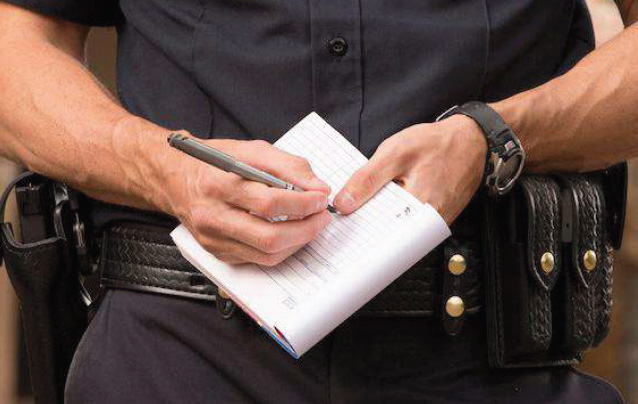
The sufferings of a "fresh" immigrant
We all know that love can easily turn into hate. On the contrary, it takes a lot of good will, foresight and forgiveness to turn hate into love. Somehow it seems to me that one group of Canadian Serbs managed to turn their intolerance of the so-called "police state" into love, thanks to COVID, while the other group hated the same "police state" even more, again thanks to COVID.
Let's start from the beginning. My first encounter with the so-called "police state" in Canada happened in the building where I lived as a newly arrived immigrant. On each floor there was a room with a garbage chute. I conscientiously threw away the garbage, but I left a pile of read magazines on the side of the room, out of habit and the need I had my whole life called: "nothing should be thrown away," and with the best intention that someone could read the press for free. But I was wrong! I got a "love letter" from the superintendent, or, as they call it in Canada, "building management," that I broke the rules. Maybe I received a fine, or maybe only a threat that if the "crime" was repeated, I would be punished. But what puzzled me the most was how they found out it was me. For a fresh immigrant coming from a not-so-strictly regulated social system that had long suffered from symptoms of chaos and insanity, it was natural to label the new state a "police state" that knows everything about everyone, and even if it doesn't, their neighbors are ready to report the culprit.
This "young immigrant" thinking about this country drove many of us to the other extreme - to a paranoid overestimation of the power of the state apparatus in Canada. We were afraid that if we underreported our income to the bank in order to get a credit card, we would be busted very quickly because we believed the bank was connected to the IRS. And an even bigger fear was that the IRS would discover the few hundred dollars in part-time work that we had shamefully evaded in taxes. We were afraid of ending up in court for blocking the neighbor's parking space, or getting a letter from the municipality saying that the branches of our tree were crossing the road and seriously endangering traffic, which is what happened to the author of these lines.
Worn label
Over the years, the perception of the "police state" has changed in the minds of many people in our region. This label has worn off over the years, and the notion of an "orderly state" has emerged in the collective consciousness, with the realization that there are reasons, spheres of interest, political-social and economic interests, visions of long-term future planning, and the like for (almost) every regulation. It is clear that there are often many outdated laws and regulations imposed by the state bureaucracy, but we have understood and accepted that Canada is not a perfect country either.
I feel the need to propose a new theory. The theory is that the fact that even we Serbs accepted an organized state only proves that rebellion against authority ("you’re telling me") is not really in our DNA, but on the contrary, it was acquired through our upbringing and the environment in which we lived. However, since every theory must be proven, I will hypothesize in a different direction. Those peoples who seem to have order and compliance inscribed in their genes, such as the Swedes, the Germans or the Canadians, would very easily and quickly begin to "get their act together" if given the opportunity to do so without sanctions. Why would a German not cross the street where it is most convenient for him, without regard for traffic safety, if he knows he will not be punished for doing so? Why would not a Canadian take his dog into a restaurant knowing there are no rules against it? Why would Swedes not evade taxes if there is no strong state apparatus to control citizens' taxes in detail? And how can this be explained, and what would be the common denominator for the successful implementation of regulations? The first answer is very simple. It is about the fines. The Babylonian ruler Hammurabi in the second millennium BC already knew the answer to this question. In Hammurabi's famous Code of Laws, there was a strictly prescribed fine for each violation. For the second hidden answer, many years of life passed in Canada until one day "the light bulb went on." Indeed, in Canada, citizens have become more aware that it is not only their right, but also their civic duty to participate in the implementation of so-called administrative law. In this society, it is not considered shameful to report, for example, a neighbor who does not comply with the law, but, on the contrary, irresponsible if this is not done. Since many state institutions enforce regulations on the basis of the "presumption of innocence," citizens who report those who do not comply in one way or another actually contribute positively to their enforcement.
A "police state" during the pandemic
Why has this topic now resurfaced from some old discussions at celebrations and meetings of Serbian immigrants? You guessed it right: the role of the so-called "police states" during a global pandemic. Here, too, there are conflicting opinions and feelings.
I am writing these lines in the spring of 2021, when we have already been living under house arrest in Toronto for months, except for such important things as buying groceries, going to the physician (not sure about going to the physician because none of them do face-to-face examinations), taking walks or other outdoor recreational activities. Now the most horrific visions of a police state from when we were young immigrants are coming to life before our eyes. While chatting with a few friends on the street and fearing that the police will show up, we go to a cabin with another family and risk paying a fine of $750 per person if we are reported by one of the locals or routinely checked by the police. Those returning from international travel are not allowed to leave the house for 14 days, while officials periodically check to see if the person is complying with the quarantine. Even within Canada, we could not travel freely between provinces, and for months it was only possible to travel from Ontario to Alberta without first spending 14 days in quarantine.
During the winter and spring waves of the 2021 pandemic, President Trudeau and Prime Minister Ford held us hostage, and in some media Trudeau was given the satirical nickname President of the Chinese Communist Party as a result. The state of emergency obviously gave the state greater powers than usual, which caused a shock in our psyche, perhaps even more so for us immigrants from the former Yugoslavia, because we had already had the opportunity to experience something similar in our previous lives, and for some it was the reason to go out into the world. In the spring of 2020, protests against restrictions, bans and other measures related to the pandemic began to take place regularly in Toronto. They took place every Saturday in Dundas Square and ended with protest walks through the city center that lasted several hours. This lasted until mid-May of this year, when the police banned the gatherings at this location. Since then, protesters' gatherings have moved to Queen's Park, and police have continued to secure Dundas Square with barriers. Protest marches continued and peaked on May 15th, when it is estimated that between 20 and 25 thousand people participated in the protests. In a conversation with Nikola Živojinović, a regular participant in these protests, I learned that the reasons for the protests in Toronto and now across Canada are virtually identical to the reasons for similar protests around the world. According to him, the authorities and their ministries and crisis teams in numerous countries are implementing measures that are undoubtedly doing more harm than good in the supposed fight against the virus COVID -19. Nikola emphasizes that he deliberately uses the word "allegedly" because he believes that the motives for introducing all the measures were very dubious from the beginning and have been fiercely contested by thousands of respected physicians, politicians and even heads of state. The protesters believe that, without convincing and demonstrable reasons, authorities worldwide have been illegally violating human rights for more than a year, prohibiting freedom of speech, movement, assembly, and decision-making about one's health and the integrity of one's body. Additional discontent was caused by the global, unscrupulous, and shameless intimidation propaganda and unprecedented censorship of anything that indicated omissions or different opinions about the pandemic.
"Orderly state" during the pandemic
In 2020, when we heard stories about illegal youth parties in New Belgrade apartments, we were disappointed by the lack of state control measures that contributed to the spread of the infection in Serbia. When we hear that, while the strictest quarantine has been in effect for several months, the state in Ontario is sending officials to check that those who have traveled abroad are complying with the strict quarantine, we are likely to call Canada an orderly (rather than a police) state. We will be glad that, thanks to such an organized state, the infection is not spreading and that the arrogant people who want to spread it are controlled and punished.
But in the spring of 2021, we found ourselves in a situation where we almost envied our compatriots in Serbia, who have been living in complete freedom for some time. At the same time, we forget that they too go to offices, ride public transport and are exposed to potentially infected people who do not wear masks, do not keep distance, etc.
At this moment in which we live, I have the impression that the understanding of "police state" versus "ordered state" is simplified, especially for those of us who have already spent almost a year in strict isolation in Canada. There isn’t much choice but to look at things in black and white. Canada is a "police state" when it repeals the laws of liberal humanism under which once, before COVID, which now seems like a long time ago, the freedom of each of us as an individual was sacred. And the same Canada is an "orderly country" when we have confidence in the decisions and measures of the state apparatus and the citizens follow the regulations in a disciplined manner, either because of conviction or because of fear of sanctions. In recent months, it has been noticeable that emotions and reason are in conflict when it comes to the way we perceive the country in which we live.
Upcoming Events
Article Categories
- DIARY OF THE IMMIGRANT
- HIGHLIGHTS
- Editor's Note
- Trending
- Interview
- INTERVIEW: COFFEE WITH
- Canada
- Serbian Community
- Serbs Around the World
- Homeland
- Visit Serbia
- Life Today
- History and Traditions
- Through the Prism
- Business & Career & Finances
- New Destinations
- Arts & Culture
- Nurturing Serbian Language
- ABCs of Health
- Our Kitchen
- Diary of a Serbophile
- Sports and Hobbies
- Young Journalists
- Kids’ Page
- Our Youth
Fundraising Campaign for SAN
With your donation, you will contribute to the continued existence of the magazine as well as the maintenance of the website. Your name or company name will be included on our page “Our Sponsors”. If you wish you may also choose to remain anonymous (be sure to select the option to donate anonymously in the application). Thank you for considering to support SAN.
Donate Now