
SUCCESSES AND TALENTS: ANA SOKOLOVIĆ - NATIONAL TREASURE OF CANADA
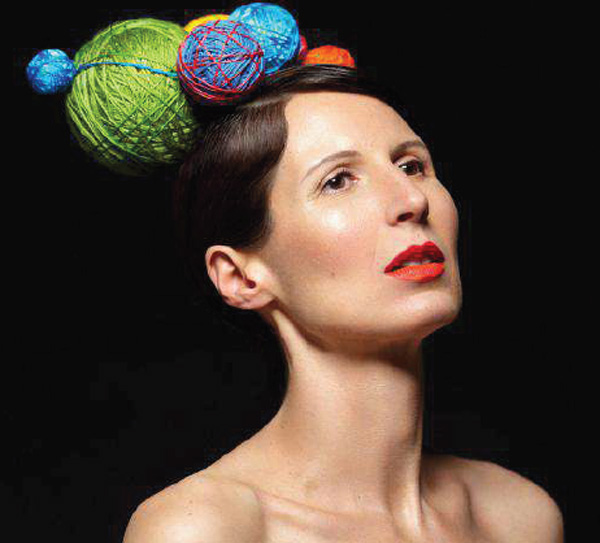
Žolen Georgievska in conversation with composer Ana Sokolović, known in the world of contemporary music. Ana lives in Quebec, where she is a composition lecturer at the University of Montreal. Because of her extremely successful career as a composer and many important musical awards and recognitions, she was declared a "national treasure" in Quebec and Canada.
SAN: Tell us when and how did you become interested in music. What are your best memories from that period?
Like every child, born in the 1960s, I was surrounded by music from the radio, television or my parents' record player every day. I really wanted the piano and started playing imitating my older sister, who was my idol in everything. My best memories are related to the home children's band, which consisted of my sister Jelena and our cousins Tanja and Igor. We played the program from the music school, but there was also a lot of improvisation. Jelena and Tanja, as the elders, played the piano four hands, Igor mainly played the harmonica, and I, as the youngest and not finding other instruments, managed to play the drums on an inverted paper bin. I wonder if that's exactly why rhythm has remained one of my favorite musical parameters.
SAN: After graduating from the Academy of Arts in Novi Sad, you decided to continue your master's degree in Montreal in 1992. Is there any particular reason you chose that city?
Many things influenced my choice. What makes me happy is that I managed to find a place that suits me culturally and socially, i.e. the influence of French culture in the relatively new world of America. That combination of tradition and something new gives me great creative freedom.
SAN: What was your first composition and where do you find motives and inspiration for your creativity?
I created my first composition at the age of four, endlessly repeating it during breaks from ballet lessons. Ballet classes were the only place I had access to a piano at the time. I don't remember the melody of that Chinese song, but I remember playing it on black keys with a friend on piano four hands. It is interesting that it was only here in Canada that I began to realize that the rich Balkan music is, in fact, a part of my being, and it somehow logically became my conscious driver. I am also inspired by many other things - movement, smell, word, color...
SAN: Do you have a special "recipe" for the large number of awards and recognitions you have received over the years, including the Juno Award (Canada's Annual Music Award) for the composition Evta - violin concert?
Composition, like any craft, is learned. And since you mention the recipe, let's continue with that comparison - in art as in cooking, you have to learn the basics, like how to make a béchamel sauce or how to sauté vegetables. Now, if you keep doing what you learned in school, you will be a good or average cook. But, if you have imagination and add some daring combinations to create a new recipe, you have a chance to enter culinary history. In music, we all have the same instruments, the same notes, rhythms, etc. at our disposal. But which combination we will make depends on us. It depends on whether we will use the recipes of Beethoven or we will come up with our own recipe and thus be unique and our own.
SAN: How was the unique Canadian opera Svadba created in the Serbian language and where was it first shown?
Svadba was commissioned by Toronto's Queen of Puddings Music Theatre. It was their fourth order and we can say that we knew each other quite well. Dáirine Ní Mheadhra, the director and conductor of the company, suggested that I write an opera for six female voices a cappella, which is already unusual. Looking for a theme, I came up with the idea of not using a classic libretto, but creating a dramatic plot, an immediate preparation for a wedding or a bachelorette party, taking texts from songs that were traditionally sung in the Balkans with the preparation of the bride. Soon it became clear that the Serbian language was inevitable and that it actually became the great musical (melodic-rhythmic) driver of this opera. My many years of stage and theater experience from my Belgrade days were of incredible help in creating the structure. The opera had about twenty productions and was shown over a hundred times (Toronto, Montreal, Edmonton, Vancouver, Philadelphia, San Francisco, New York, Milwaukee, Pittsburgh, then Hanover, London, Aix-en-Provence, Nantes, Angers, Ostrava, Perm, Dublin, Luxembourg, Ljubljana, Belgrade, etc.).
SAN: In addition to composing, you work at the University with students. Can you tell us about your most interesting experiences as a lecturer?
I try to give students what I wanted to have during my studies and what I persistently researched: ballet, theater, painting, camera, etc. I prepare seminars where students of various artistic profiles can meet for joint-stage projects. Students have the opportunity to have an insight into the real artistic life at the University, which, I hope, will await them when they leave school.
SAN: In addition to an extremely successful career as a composer in Quebec and Canada, where you were declared a "national treasure", you are the mother of two adult children and the wife of a musician. How do you manage to balance everything?
Organization, organization, and organization. But the most important thing is great love for work, satisfaction from numerous contacts with imaginative people. I often say that I get paid to play, because a big part of creativity is imagination...
SAN: Have your children inherited musical genes and what is their profession?
My daughter is 19 years old and a very determined violinist, this year she is graduating from the Cégep (Quebec principle) as well as the Conservatory of Music. My son is 22 and in addition to being a great musician, he decided to play sports.
SAN: After composing over 70 compositions of classical music for all instruments, do you have new ideas and projects for further work and how do you work in this period of changes due to the Covid-19 pandemic?
Composers are often "monastic" while working. So as far as composing is concerned, there is no big difference. Future projects are currently being moved left and right due to the pandemic, for now everything is surviving. But concerts are massively canceled and postponed, so it's not like normal for the performers. Our work is like links in a chain, first the work is written, and then it is performed. Performances have been shaken by the pandemic, but creativity still survives. For example, the premiere of my opera The Old Fools for the Canadian Opera Company from Toronto was scheduled for the fall of 2022. We already know that it will be postponed for at least one season.
SAN: What is your advice to our young musicians living in Canada, what do you think are the priorities for a successful career in the field of music?
It is possible to make a career in almost anything if you really love what you do. The observation that we will work more in life than we will, let’s say, spend with our loved ones motivates us to persevere in the search for what inspires and fulfills us the most. The most important thing is to do the best we can in our work and use our imagination - what I said about the kitchen also applies here. From shoemakers and bakers to politicians and bankers, using your imagination works wonders. That is why it is necessary to go to concerts, plays, museums, even virtually, because practicing art makes us become more creative ourselves.
Upcoming Events
Article Categories
- DIARY OF THE IMMIGRANT
- HIGHLIGHTS
- Editor's Note
- Trending
- Interview
- INTERVIEW: COFFEE WITH
- Canada
- Serbian Community
- Serbs Around the World
- Homeland
- Visit Serbia
- Life Today
- History and Traditions
- Through the Prism
- Business & Career & Finances
- New Destinations
- Arts & Culture
- Nurturing Serbian Language
- ABCs of Health
- Our Kitchen
- Diary of a Serbophile
- Sports and Hobbies
- Young Journalists
- Kids’ Page
- Our Youth
Fundraising Campaign for SAN
With your donation, you will contribute to the continued existence of the magazine as well as the maintenance of the website. Your name or company name will be included on our page “Our Sponsors”. If you wish you may also choose to remain anonymous (be sure to select the option to donate anonymously in the application). Thank you for considering to support SAN.
Donate Now