
Interview with Ivana Djordjevic
I read somewhere that a good listener is a good collocutor as well. Ivana Đorđević is both. While we spoke for SAN over a cappuccino, her words, remarks, thoughts, descriptions, and images came to life not only through sounds, but also on her always-shinning face. Ivana colours even her biography with her particular, cheerful spirit. We found out that she was born in the 1960s in Niš, that she started speaking at 3 years of age and is still making up for it to this day, and that she finished all the necessary schooling in Belgrade, according to her mother’s wishes. She does not know how one rainy night in 1992, she got on a bus at Slavija and eventually flew to Canada, but she does know that she has never regretted it. Ivana says that she is the mother of the most unusual young lady, the only person who can leave her speechless. She has been with Novine since 1995, and works as director of marketing, PR, journalist, and photographer. She supports many cultural activities, and even participates in some of them. She actively participates in humanitarian work. Ivana says (and we believe her) that she does not keep her acknowledgments, appreciations, and awards on the wall, but rather in her heart, that material things do not motivate her, and that she lives a simple life—not out of necessity, but out of conviction.
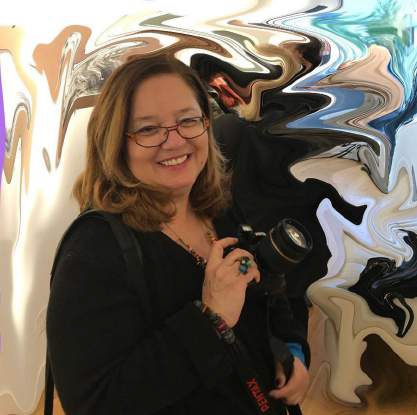
SAN: You are an owner, editor, and journalist all at once. Does Novine leave you enough time and energy for your private life and leisure?
Novine Toronto, of which I have been a co-owner along with Mirko Stanković for 23 years already, fulfills me both privately and professionally. My work arrangement is tied to the people and events of the Serbian community, which requires me to know everything and everyone. That is, of course, taxing, but also fun, and is different from other jobs that other people work at. I do not have specific work hours, but I fight for my free time, and for the moment, I am succeeding. In general, my professional and private lives are in many ways intertwined, so I find time for everything.
SAN: The feminist movement started a long time ago, and resolved some issues related to the position of women in the workplace. Recently, many problems are once again current, above all inequality with men. As a female journalist, do you face any different treatment? Do you think that women have a harder time in this predominantly male world of journalism?
I agree that it is always more difficult for women to push forward in the work force than it is for men. Women fall behind in economic compensation, they have more family obligations, they wish to succeed at being mothers and wives, and they feel the need to change the world. I personally do not feel any gender discrimination in journalism, but in the marketing part of the job that I do, I sometimes wish I were a man. In following my own rhythm and needs according to my nature, a job that does not have strict work hours fulfills me. Sometimes, the day is short or the weekend is full of events, and my phone is ringing off the hook, and the night before publication is usually spent awake. At the end of the day, all that is still something I love and what makes me happy.
SAN: What were some challenges you encountered when you first started working this job, and what was most difficult? What changed in the meantime—the conditions, or you?
The possibility of approaching famous people as a journalist and spending time with them outside the public spotlight was a unique challenge at the beginning. I had to overcome my shyness, unobtrusiveness, and curiosity, and still achieve originality and authenticity. We solved problems through teamwork, and we adapted and changed both our surroundings and ourselves. Just as the time in which we started had its own challenges, so today, regardless of experience, there are situations that are not easy to resolve. That boosts my adrenaline, and those things that would have been problems once are now challenges through which we grow. One of the difficulties that has followed us from its founding is that Novine Toronto is published in Cyrillic, and as such, risks losing readership, but we have never backed down from that.

SAN: What relaxes you after a day of work with no regular work hours? How do you rest?
An urban life is something that my job imposes, constantly chasing after stories, and that is why I like to balance it out by visiting nature. Sometimes, it is enough to take a walk through a forest. I love to ski after the first snowfall. Canadian rivers and lakes in the company of canoeists, camping tents, or mountain chalets bring me great peace and relaxation. On every trip, I fill my car with stones, logs, branches, and other objects from nature that I make into various installations, which is something I really enjoy doing. Besides that, books and movies are my great passions.
SAN: What moves and inspires you?
Creative activities, which the work for Novine demands, has imposed on me to learn of other people’s fortunes, and by following their successes, I too have been inspired to work. The art of living is something that intrigues me, an urge that guides and inspires me, both at work and in my daily life. Human fortunes, particularly their successes in overcoming obstacles in life, hold great meaning in my life. Through photographs and stories about unforgettable moments or important events for our people in Canada, I manage to express myself as well. By documenting emotions, grimaces, movements, and events through photography, I am in fact writing stories. I interact creatively with the environment I live in, so—carefully and with love—I have gathered a collection of paintings and antiques of lively colours and embellishments, which bring me great joy in my moments of rest, since every item is full of emotions and a part of something that has already been lived through.
SAN: In your job, you meet with the most diverse kinds of people. Do you manage to put aside your personal affinities in order to be an objective listener, note-taker, and reporter?
Yes, in my job, I meet different people and I give them the chance to express and present themselves in the light they want. The people I write about, because of their success in life, are the reason they find themselves in Novine Toronto. I personally do not take any stance, nor do I impose myself on the conversation. I think it is my good luck that I speak with interesting and unique people. It is the greatest art to present them as they deserve to be presented.
SAN: How is it that Novine Toronto has survived all these years? What does Novine mean for our community, in your opinion?
I often ask myself what it is that has sustained us. Obviously, we have the most basic postulates of good business, and those are GREAT work and effort, literally day and night commitment, which—even with the best of wishes—we cannot predict how the next day will start.
All of that, in addition to great love, enthusiasm—and most importantly, perseverance—has led to us succeeding in our vision, and to us being on the newsstands every week for the last 20 years. It is very important for us to be flexible and to always have a plan “B,” and of course, support from our readers is vital. And along with all that goes some kind of magic. Besides co-owner Mirko Stanković and myself, Novine Toronto has a team of collaborators—distributors, advertisers, and individuals. Thanks to those people, it is possible to put out a weekly print edition, maintain a website, an info service, a business directory, and Novine Calendar, which covers all current events. Of course, our clients (advertisers), who are always with us and without whom everything would be incomparably harder, play a primary role. Nobody finances us, nor do we receive grants or donations—we survive off of advertising. All of our collaborators, who are constant or occasional members of the Novine team, also play a large part in this success. All of them—and there have been many—wove in something of their own, and contributed so that this “story” keeps going on successfully. We thank them enormously for that.
SAN: What has to happen in order for Novine to come out on newsstands every Friday morning?
Above all, it is necessary for all of us who work there to be healthy; to overcome all of Murphy’s Laws—that always happen on Thursday evenings—without hysteria (all power outages were always on Thursdays; all doctors’ appointments, of all seven days in the week, get booked on Thursdays); to be ready for a sleepless night (which means that we are at the computer from 16 to 26 hours, until the job is done); for our kids not to send us dramatic messages every half hour; for all contributors to submit their texts and pictures on time… And, of course, the most important thing—for our advertisers to be with us.
SAN: In an earlier conversation, we agreed that everyone has an individual and communal purpose or mission on this earth. It is just a question of recognizing and accepting it. After a long, successful career at Novine, do you feel that journalism is your true calling— that which was meant for you, and that which you can most contribute to the world and still be satisfied with yourself?
Every person has a civilizational obligation to leave his or her mark in life. Some leave that through their descendants, some with momentous discoveries, and others with their dedicated work or creative inquiry. I have left my mark through Novine Toronto. My nickname or add-on to my name says it all: Ivana Novine. By nurturing the Serbian language and the Cyrillic alphabet, and by writing about the Serbian community in Canada, Novine Toronto has contributed to spreading a positive image about Serbs in this society; it has connected and bridged the distance from Serbia; it promotes and encourages an active life for all of us who left out of necessity. For all these reasons, I also personally feel fulfilled.
SAN: You are present at the majority of important events and meetings in Toronto. You are everywhere—we see you always armed with a camera and a smile. However, Novine is not your only passion. Lately, you have also been involved with the humanitarian organization Mali svet (Small World). What does Mali svet mean to you, and what do you mean to it?
Aid to our countrymen—which we who live in the diaspora provide—is increasingly significant and vital. For many years, Novine Toronto has participated in various humanitarian campaigns. Mali svet is above all a humanitarian foundation that helps children pay for tuition or stipends, buy books or school supplies, and everything else that will help them develop their talents. Children in Serbia, who are above all good students and great fighters, do not have the basic conditions to develop their talents. A group of enthusiasts, my friends and acquaintances, started this campaign, and I have been with them since the day one. Helping children get an education is something that attracted me most, and that is why I personally got involved (besides the fact that Novine is a media sponsor) and became part of the team. It is also wonderful that other team members are young people who saw themselves in our “small world” and gave us a youthful impulse to work in a different way—to be recognizable in our own way.
With these great, wonderful people, Mali svet will at any rate try to be constantly present, and our plan is to organize get-togethers of various themes. Of course, I have to emphasize again, since I truly believe it—love, respect, and youth make the world go round, and we have surplus of that in the humanitarian organization Mali svet Kanada.
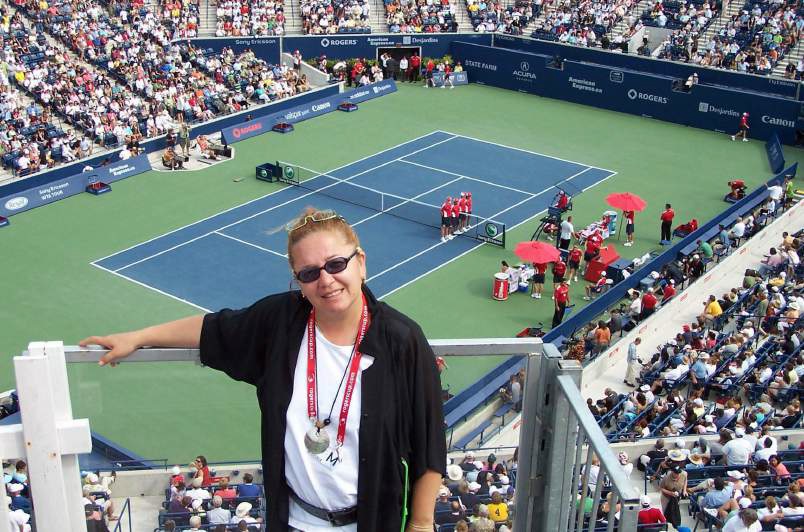
SAN: Living in the diaspora is our reality. After a quarter century living in this city, do you see Canada and Toronto as your home? Did you ever think about going back?
Canada is a country I came to out of sheer life circumstances. It is lucky that it is an organized, multicultural country, which provides space for all communities to grow and develop equally. My contribution to the nurturing and preservation of Serbian identity, its uniqueness and authenticity, is also my medicine for nostalgia. Through frequent trips to Serbia, various cultural and artistic bridges, and by following current people and organizations, I participate in life both in Serbia and of all Serbs in Canada. I manage to balance between the country I was born in and the country I live in, and I do not think about whether or not I would return. That decision is based on life circumstances, and not only on my desire. I am here now, and for now, I am happy. I deeply believe that there is a reason why we end up in certain places. It is not only a question of our decisions. It is also something that we carry in our genes, in our hearts, in the souls of our ancestors, records we have to be aware of. My ancestors were mostly adventurists with curious spirits, for whom life was a provocation, and not suffering, even though they all had difficult lives. As someone who believes that death is not the end and that heaven is endless, I think that our birthplaces should not be our limitations.
SAN: Last summer when we celebrated the Tesla Electric City Festival in Hamilton, all Serbian media from Toronto were at the same stand. It was a beautiful picture of collegiality of people who were on the same assignment. How do you see the relationships between people who work in newspapers, magazines, and television?
Novine Toronto collaborates with all the other media. We fill in for each other and help out when necessary. We are all on the same assignment, of providing the best possible information and preserving Serbian cultural identity. This very conversation is perhaps an example of collaboration and collegiality, and that is why I take this opportunity to thank SAN and you personally for inviting me to speak with you. There are not too many Serbian media, so there is no need to trip each other, since there is enough room for everyone.
SAN: What new things do Novine Toronto and “Ivana Novine” have in store for us?
I think it is important that people like change, since I believe that we were not made to be static and live in the “comfort zone.” Monotony and stereotypes bore me, so I always have new projects in my head that are waiting for the right moment to come to life. In September, we launched a new redesigned website, which allows us to be even more informative and present, thanks to the innovations that the site can now technically support. I have to say that this was a great undertaking, considering the scope and specificity of the site, and for that I am truly thankful to the team of wonderful people and experts at the company CERAIT, headed by Zoran Cerović. But that is not all. There are a few ongoing preparations for new projects for next year, which I am very happy about. My adrenaline is at a satisfactory level [author’s note—she laughed!] and the best part is that creative people are on the team—people who know what they want and are endlessly inspirational. Whether or not everything will turn out as planned, I do not know, nor am I worried. However, I do know that as long as you put your heart and soul into your work, and if you have the best intentions—and in addition to that, you also have an amazing team that shares the same vision—satisfaction and achievement will come to you to the extent in which you have mastered the art of living.
Upcoming Events
Article Categories
- DIARY OF THE IMMIGRANT
- HIGHLIGHTS
- Editor's Note
- Trending
- Interview
- INTERVIEW: COFFEE WITH
- Canada
- Serbian Community
- Serbs Around the World
- Homeland
- Visit Serbia
- Life Today
- History and Traditions
- Through the Prism
- Business & Career & Finances
- New Destinations
- Arts & Culture
- Nurturing Serbian Language
- ABCs of Health
- Our Kitchen
- Diary of a Serbophile
- Sports and Hobbies
- Young Journalists
- Kids’ Page
- Our Youth
Fundraising Campaign for SAN
With your donation, you will contribute to the continued existence of the magazine as well as the maintenance of the website. Your name or company name will be included on our page “Our Sponsors”. If you wish you may also choose to remain anonymous (be sure to select the option to donate anonymously in the application). Thank you for considering to support SAN.
Donate Now