
Every child matters
Coming into Canada as an immigrant is undoubtedly a scary, exciting and generally overwhelming experience. Even though I was born here, my parents are both immigrants, so I like to think I have a good sense of what it is like living in a country you were not born in.
It may seem pointless to care about the history of Canada, since coming in as an immigrant means you are arriving with your own history and culture from your birth country. Canada is often referred to as a multi-cultural nation – but since people immigrating from all around the world have brought in their own cultures, Indigenous history is often put on the backburner. I think that coming in as a new citizen means that you have to adopt new history, tradition and culture as well, and that includes the dark and upsetting parts of history.
When I say “Canada’s history,” I am specifically referring to the very complicated and tragic issues with the Indigenous peoples of Canada and the Canadian government. In light of the recent horrific findings at old residential school grounds across the country, it has become very evident that learning about our nation’s history, even the very basics, should be reviewed by all citizens going forward.
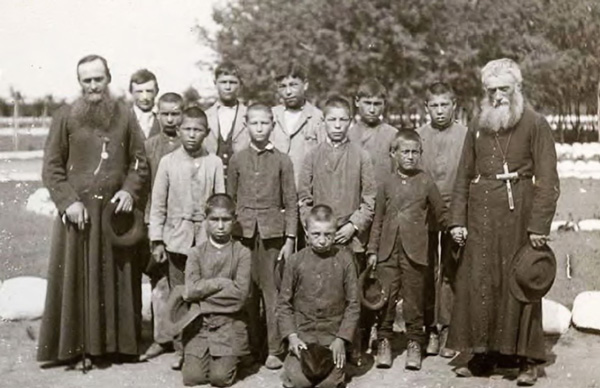
Residential schools were a concept introduced by the Catholic church in the 1880s, and they operated until the late 1990s. They were established as a way to assimilate Indigenous, Métis and Inuit children into western society, which led to children from Indigenous communities across Canada being ripped away from their families, and forced to forget their traditions, religions and cultures, and to adopt Christianity. They were physically, sexually and emotionally abused in the name of Catholicism; many children did not survive.
The Residential school system is a very heavy topic, and one that I encourage everyone to learn about. Unsurprisingly, the crimes committed by the Catholic church in Canada were covered up, which meant that they hardly kept any records or documentation of the children they brought into the system. This makes identifying any remains found on old school grounds very difficult. I do not think I have to emphasize how horrible this is, but surprisingly, many people do not seem to share the same sentiment.
I have recently completed a double degree in archaeology and history, which has led me to a job in commercial archaeology, where I am oftentimes working in cooperation with Indigenous communities. I have heard stories from my co-workers of members of the public coming up to them and asking them if they were looking for the remains of children, or bones in general. I cannot overstate how inappropriate of a question this is, especially being asked on the heels of the recent horrific discoveries across the country.
However, it is these stories that made me realize that many people do not seem to take the time to learn about the history of the country that they have moved to, or were born in. I strongly believe that this type of education is necessary, especially for immigrants. I see it as a matter of respect, and human decency, to properly take the time to learn and understand the problems that many Indigenous communities have faced from the government over the years. I know that some people think that since they were not born here, these topics do not apply to them, and therefore they should not care. However, if you have chosen to remain in Canada, it is important to learn about the issues that stem from its history. History has unimaginable power – being able to learn from it, and hopefully avoid the mistakes that were made in the past, is the only way that we as a society can better ourselves, on a national and global scale.
This article is a part of the Local Journalism Initiative.
https://indigenousfoundations.arts.ubc.ca/the_residential_school_system/
Upcoming Events
Article Categories
- DIARY OF THE IMMIGRANT
- HIGHLIGHTS
- Editor's Note
- Trending
- Interview
- INTERVIEW: COFFEE WITH
- Canada
- Serbian Community
- Serbs Around the World
- Homeland
- Visit Serbia
- Life Today
- History and Traditions
- Through the Prism
- Business & Career & Finances
- New Destinations
- Arts & Culture
- Nurturing Serbian Language
- ABCs of Health
- Our Kitchen
- Diary of a Serbophile
- Sports and Hobbies
- Young Journalists
- Kids’ Page
- Our Youth
Fundraising Campaign for SAN
With your donation, you will contribute to the continued existence of the magazine as well as the maintenance of the website. Your name or company name will be included on our page “Our Sponsors”. If you wish you may also choose to remain anonymous (be sure to select the option to donate anonymously in the application). Thank you for considering to support SAN.
Donate Now