
Interview with Mr. Tomas Saras
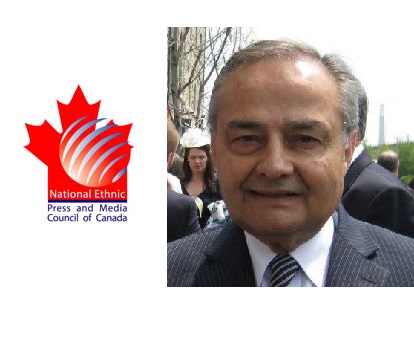
I met Mr. Thomas Saras, President of the National Ethnic Press and Media Council of Canada (NEPMCC) www.nepmcc.ca almost fifteen years ago. In the Rotunda of the City Hall, there was an annual exhibition of the Canadian ethnic press, organized under his leadership. Mr. Saras left a great impression on me as a person with the strong integrity and passion for his work and mission.
Seeing this exhibition I was impressed with the variety of ethnic media in Canada, but disappointed that there was no publication in Serbian language displayed. Now, I can proudly say that SAN is every year displayed at the NEPMCC boot during the CNE (Canadian National Exhibition).
ABOUT NEPMCC
SAN: Mr. Saras, for the past 20 years you are the president of the Canadian ethnic press organization. You are fighting for a strong voice of the ethnic media, ability to reach an audience as well as political leaders and consequently for the opportunities for different ethnic communities to influence decisions in the Canadian politics and society. What is the ongoing agenda of NEPMCC for year 2019 and for the close future?
SARAS: Canada, officially, is a multicultural country. It is therefore that every publication or Radio and TV program serving any linguistic Canadian community must be equal to mainstream media (Anglo or French) and therefore share all the benefits the mainstream media enjoy. Over the past four decades we worked very hard to bring the role of the ethnic media to political establishment of the country, and finally, I would say that we succeeded. Every member of the political establishment of Canada, today, is recognizing the important role the ethnic media plays to our democracy and to our society, in promoting equality, human rights, equal opportunities for all Canadians and social justice. For the recent year 2019, the NEPMCC is continuing its work in order to have its members included in the plans of the federal govern of Canada for financial support of the industry. To this extend we are working with our ability to make sure that a fair share of the amounts are planet to support the financial needs of our members, either they are publishers or editors. Besides, for this year we do have in our plans a celebration of the “Freedom of the Press” Day on May the 3rd, our participation at the CNE, where we are part of the fair for the last 35 years, with our main goal to familiarize the sector with the Canadian public. Following this we do organize our Awards, presented to 36 members of the Ethnic Communities, journalists and publishers for their distinguished contributions to Canadian Society at large, and excellence I journalism and publishing. For the first time this year, the organization managed to provide 20 students from the school. Of journalism as interns in order to help the member publishers to introduce the English and French language in their publication besides the main language of the publication. This way the message they carry will be good also for the second and third generation of immigrant families to Canada. Another service is going to be the creation of electronic sites for members that they don’t have until today. This is in addition to economic support our members are getting from the department of the Canadian Heritage. Also by the spring of 2020, we are planning a three days educational seminar with professors of the University’s school of journalism. This way we will help them to understand the Canadian Laws and regulations about journalism.
SAN: In which areas of Canadian society and legislation NEPMCC is prioritizing its' advocating and why?
Saras: Our priorities as members of the media industry is to be recognized as such by the political establishment of the country. We will continue our struggles for social Justice and equality and equal opportunities for our self and our children. Every right in every society needs struggles in order to be recognized by the majority of the mainstream people.
SAN: Over four decades of presence of NEPMCC what would you recall as biggest milestones?
Saras: The fact that we enjoy the recognition of all three steps of our government should be considered a major victory of the organization and its members. We are working hard to bring the best to our communities and to Canadian society. We want to be part in building of the new Canada, and we want to bring to this the best of our cultures.
SAN: What are the roles and achievements of NEPMCC and your personal that you are most proud of?
Saras: There are many the achievements over the years that the NEPMCC managed to bring to Canadian Society and to our communities. Today we enjoy so many benefits as members of this society, and this to some extend the work of this organization through the cooperation of the Department of the Canadian Heritage, the TD Bank and other institutions recognizing the importance of the organization. Myself I am a humble servant of this idea to this sector and the industry.
SAN: Tell us about your mission/vision and how you turned that into the reality?
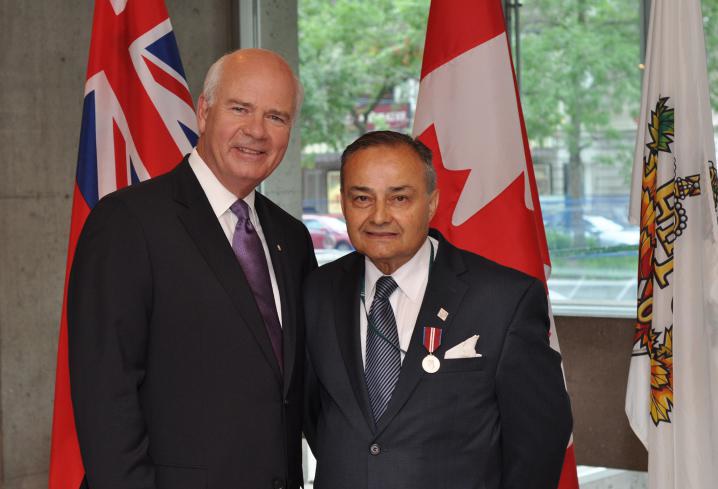
Saras: It was back in the 70’s, the decades of the great upheaval of the Canadian Society. We as immigrants were facing a strong waive of discriminations, which was even worst for us working in the media. I had the opportunity of many discussions with the political leadership of the country as they encourage me to organize the members of the sector. Among them were the late Prime Minister Trudeau, also Mr. Joe Clark, Mr. Mulroney, Mr. Harper, many thanks are going to Ministers Shyla Cops and Jean Augustin, for their encouragement and support. Hard work and will finally made it. We together with the members managed to build this organization, as an envoy of the will of the Canadian ethnic communities.
SAN: Under which political regime and leaders Canadian ethnic societies were having a stronger voice and ethnic press was more influential and had more support from government?
Saras: Already I answered this question. I have to recognize and express my gratitude to all the leaders of the last fifty years, either in the federal politics as well as the provincial, Mr. David Peterson, Mr. Bob Ray, Mr. Mickle Harrys, Mr.McGuinty, and the Premiers of Quebec and other provinces of Canada as well as the leaders of the opposition. Mr. McGuinty, was the first to recognize our needs and he accepted to extend the benefits of HSP exemption, something that was due long time ago.
SAN: Prime Minister Trudeau was a visionary and supporter of immigration, ethnic diversity and mutual respect. In 1970s he told you that the best way to be taken seriously was to band together with other small publishers?
Saras: Correct. Responding to my complaints about the discrimination we were facing he was clear: organize the sector and make sure that the ethnic voices, all of them to demand respect to the rights of all Canadians. Similar was and the words of Mr. Mulroney and Mr. Harper as it is today of Mr. Justin Trudeau.
SAN: Once you said that most of the ethnic papers that pay $30 a year to be part of NEPMCC are tiny, put together in living rooms and basements late at night after the editors come home from their day jobs. But collectively, they reach about five millions readers who have the ability to swing votes in key ridings in cities such as Toronto, Calgary and Vancouver.
Saras: Correct. There are small ethnic or linguistic communities in Canada and also there are big. All of them facing the same challenges and problems. The present and future of their families and children. How to educate their children and how to advance the leaving conditions of their families. Every community wants and needs to have a voice expressing their problems, demands and concerns. This is the work of the ethnic press and journalists. They are the one following the challenges of the community and bringing in the light of the public these concerns and problems. Individually we may be not strong enough to shake the will of the politicians about our needs. But together as a sector of the industry, yes we do have many possibilities. We can reach the sky. This organization on an annual basis has a spending budget of more than 200,000 dollars and even more than that for the educational programs. This money, until today comes from corporate donors that approach by the president of the organization, and this is something very hard to be achieved. Think for a moment, if all the 850 member publications were renewed they annual membership of either $ 50 or $ 30, our treasury should have the ability to help the administration for biggest achievements for the benefits of the members. Together we are strong. We can help all of us to advance. Our goal should be all together and nobody to be left behind. We do have the power, the ability the enthusiasm, and the will to succeed, let’s therefore be organized and together create the New Canada. The Canada which belongs to all of us, to our children and our grandchildren. Just remember we are building together this society, this community, this culture, as we part of it.
ETHNIC COMMUNITIES IN CANADA
SAN: It is beneficial for any ethnic group in Canada to have political representatives in municipal, provincial or federal government. What would be your advice for a person from Serbian community who would want to run for the political representative?
Saras: In a free, democratic community every citizen and every group of citizens should have their own voice in every parliament of the federation, either provincial or federal. Only through this we are succeeding to claim equality with the majority of the population. It is a must therefore that every community, small or medium in members try to advance by encouraging one or more of its members to enter politics. And the Serbian speaking communities of Canada should be organized through the communities or the Orthodox Church to take advantage of this policy. All we need is the acceptance of the community that the person which run should be supported.
SAN: There are 5? publications in Greek language in Canada. Do you believe that these publications are contributing in perseverance of Greek language and culture? What are the other goals and objectives of these publications?
Saras: The role of every publication is to communicate to its readers what is happening in the community at large as well as the community it serves. There are more than five publications this moment serving the Greek speaking communities in Canada. Some of them in Montreal, where a dynamic and great community exist building community centres, schools and parishes. The same I am going to say for the Toronto great community, where there is a separations between Church and civic community institutions. The administration of Church is managed by the Metropolitan and the priests, the administration of the civic institutions is managed by elected officials from the membership and is working towards the support of the community, either political goals or education and improvements in the life of the members. The role of the Greek publications is unique, to keep alive the Greek traditions, letters, language, and to inform their readers about the developments political, civic and community as well as the international including and the developments in the motherland of Greece.
SAN: How many people of Greek origin are in Canada? What are the other organizations and groups that Greek community has?
Saras: There are about three hundred and fifty thousand people all over Canada. The biggest communities are the one in Toronto, Montreal and Vancouver. Besides these areas there are also smaller communities in other cities and provinces. There are about eighty seven religious parishes of the Greek
SAN: What are in your opinion the best ways to engage younger generation to be more involved in the ethnic community and to learn tradition and language?
Every generation of ethnic Canadians consist a very serious stone in the foundation for the future of the community. With other words the community exist because and thanks to them. It is very important, therefore, that every community which wants to survive as a cultural entity has to accommodate the needs of the generations of its members in Canada. This is a paramount for the survival of the cultural characteristics of the community. Canada, as a multicultural liberal country encourages the citizens to retain their own cultural background, language, religion, ethnicity with respect to them as as prime cultural factors. It is up to community therefore to offer the opportunity in these generations to get involved with the affairs of the community. As volunteers at the beginning and eventually giving them the opportunity to administer the affairs and the needs of the community.
SAN: What we can learn from the success stories from the other ethnic groups, organizations and media?
The Canadian society has many difference from the Europeans and more from the Balkan societies. They are societies of a homogeneous culture. Same language, mostly same religion, and homogeneous. They consist a National entity. In Canada, besides the Anglophone and Francophone communities, there are more than 100 other languages and cultures and we all learn to coexist and we try to survive our national characteristics. And our governments are supporting and helping us in our efforts to retain the romantic views of ours and the bridges with the old countries. Everybody knows the policy of the government of Canada. We do have therefore to understand the need and the reasons for the cooperation among the members of our own community as well as the members of the other communities we leave with in peace and good faith. Canada is a special, unique society in the world, consisted of hundred different linguistic or cultural groups, and all these groups want to cooperate in building the future Canadian society where every citizen and every child will feel home and will have equal opportunity with any other citizen in the education, life and employment. Take a look at the NEPMCC, we are more than 850 members from about 112 different cultures, languages, and races, and yet we learned to work together and promote our interests as being in common for all of us.
CANADA PAST, PRESENT AND FUTURE
SAN: Do you believe in democracy and do you think that Canada achieved democracy?
Yes, I would say that today’s Canada is one of the few countries of the world, that is based on the rule of law, of equality, the freedom of opinion of all the citizens, and our government are working very hard to help the creation of better living conditions for all the citizens. This is the reality for today and I hope that tomorrow, in the future these conditions are going to be much better, as our children and grandchildren will have the opportunity and the ability to advance these principals for the benefit of all.
SAN: In your opinion what were the biggest improvement in Canadian society and politics over the last few decades and where did we have a shortfalls?
The living conditions. The principals of equality, equal opportunity of all to education, to work, the freedom to live according to our ability and the blessing of a health system, close to perfect. Yet, I do believe that there is more progress remaining to be done in social justice and the work opportunities. Let’s remember that the future belongs to all of us. To our efforts and to our dreams and to our ability, it is therefore that Canada daily is developing in the perfect society.
SAN: Thank you Mr. Saras for talking with us for SAN – Serbian Canadian magazine and for all support and encouragement that we got from NEPMCC and you personally, over the years.
Upcoming Events
Article Categories
- DIARY OF THE IMMIGRANT
- HIGHLIGHTS
- Editor's Note
- Trending
- Interview
- INTERVIEW: COFFEE WITH
- Canada
- Serbian Community
- Serbs Around the World
- Homeland
- Visit Serbia
- Life Today
- History and Traditions
- Through the Prism
- Business & Career & Finances
- New Destinations
- Arts & Culture
- Nurturing Serbian Language
- ABCs of Health
- Our Kitchen
- Diary of a Serbophile
- Sports and Hobbies
- Young Journalists
- Kids’ Page
- Our Youth
Fundraising Campaign for SAN
With your donation, you will contribute to the continued existence of the magazine as well as the maintenance of the website. Your name or company name will be included on our page “Our Sponsors”. If you wish you may also choose to remain anonymous (be sure to select the option to donate anonymously in the application). Thank you for considering to support SAN.
Donate Now