
Interview with Mirjana Živković, the Consul General of the Republic of Serbia in New York
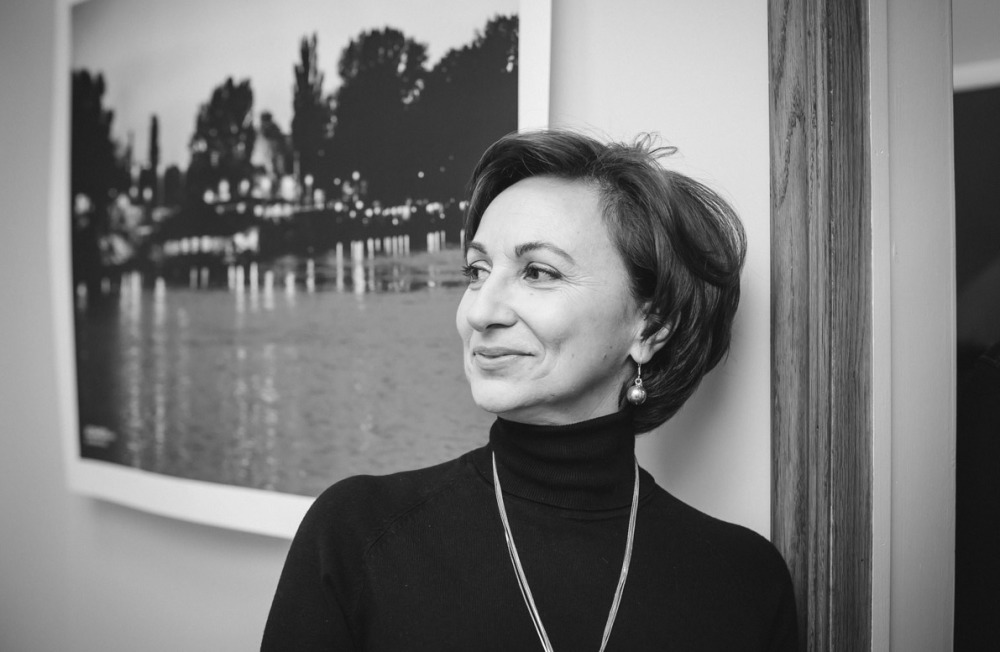
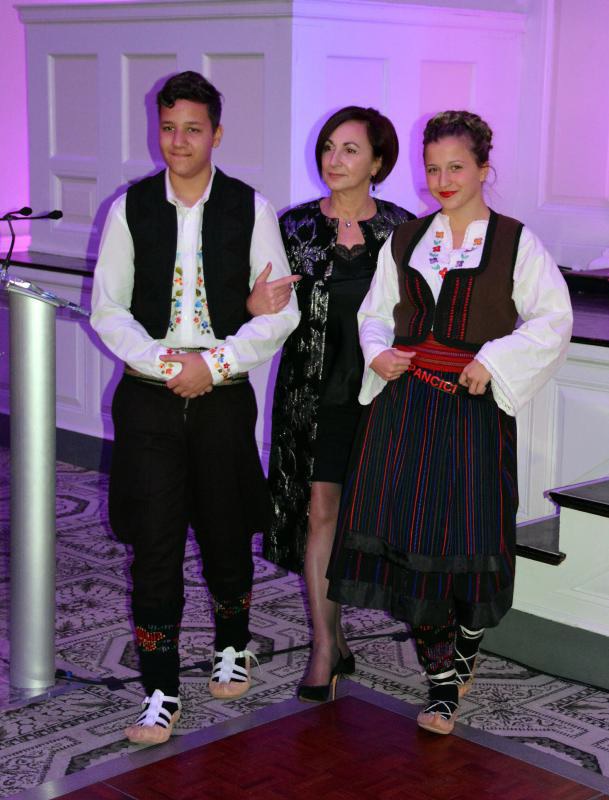
We visited the Consul General of the Republic of Serbia, Mirjana Živković, at her workplace in the consulate of Serbia in the heart of Manhattan. Even though it was the end of the workday just before the weekend in a bustling metropolis, our collocutor gave us a warm reception and was open to speak about many topics. We later found her at a fundraising event organized to raise funds to rebuild the church of Saint Sava, which had been engulfed in flames two years prior. Her presence was acknowledged by a thunderous applause and a standing ovation by the many members of the Serbian community.
THE CONSULATE AND THE SERBIAN COMMUNITY IN AMERICA
SAN: What are the functions of the consulate, and in which ways does the consulate help people of Serbian descent in the US, as well as newcomers to the US?
Mirjana Živković: The functions of the consulate general are clearly defined by the Foreign Affairs Act, so we are talking about consular functions established by international agreements and diplomatic-consular practice. Besides providing regular consular services to citizens of the Republic of Serbia— such as matters of status (birth registration, citizenship, marriage registrations, etc.), passport issuing, document legalization, and so on— the consulate general also deals with matters of economic, cultural, and institutional partnership between the United States and Serbia. Our position in this consulate is that we are here, first and foremost, for the interests of our citizens. Therefore, it is not a question of merely offering consular services, but rather an interactive collaboration, an exchange of information of mutual importance and contacts. We are a service to our citizens, their municipal assembly, their Ministry of Internal Affairs, their notary, their registrar, and in some sense, a legal counsel. Newcomers who come to us receive all available information from our jurisdiction, but when it comes to their status in the US, we do not encroach on the jurisdiction of the American administration. The consulate general has many contacts that could be useful to anyone who finds his- or herself in a new situation, and we gladly share them with anyone who seeks them out.
SAN: You recently became the vice-president of the Society of Foreign Consuls in New York. What kind of society is this, what functions does it have, and what are some of its activities?
Mirjana Živković: The Society of Foreign Consuls is a society with a 93-year tradition. In the city with the largest diplomatic core in the world— with over 100 consulates— at this moment, this society brings together around 50 consul generals who endeavour to create better mutual collaboration through joint efforts, but above all, collaboration with local government organizations: the Office of Foreign Missions and the Office of the Mayor of New York, but also with institutions in the areas of media, culture, finance, and so on. The Society organizes numerous activities, both for the members of the Society and for all other consulates. These activities are mostly related to issues significant to the work of consular representatives: improving their collaboration with municipal authorities and the State Department, but also with numerous cultural institutions in New York. This is how it came to be recently that on our initiative, MoMA organized a visit to the exhibit “Toward a Concrete Utopia: Architecture in Yugoslavia, 1948-1980” for a large group of consul generals.
SAN: Is it possible to estimate how many members of the Serbian community there are in the United States? When did they come and what are they doing?
Mirjana Živković: This is a very complex question. Considering that there is no real basis for keeping this kind of record, we only have an approximate estimate that there currently live around 50,000 of our citizens on the East Coast of the US. Migrations are constant processes everywhere, including in the US. It is believed that the first immigrants from our region came at the beginning of the 19th century, and those were mostly Serbs from areas occupied by the Austro-Hungarian Empire. The next wave came with the beginning and end of the Second World War, and then in the 1990s with the conflicts in the former Yugoslavia. This process has not ended even today, so we have been witnessing a large influx of young and highly educated people who have decided to live in the US to further their education or because of work opportunities. They come from all professions, but we see them mostly working in the fields of science and education, financial institutions, healthcare, the IT industry, as well as the arts.
SAN: What are the most significant institutions and events that bring together our people in New York and the surrounding area?
Mirjana Živković: The city of New York is well known for having an infinite number of events of different kinds, so we also endeavour to contribute to this rich supply. The consulate general is intent on organizing at least one cultural event every month, such as art exhibits, book presentations, film screenings, lectures, and so on. Besides observing the most important religious holidays and the traditional fundraising gala dinner every November, the Serbian Orthodox Church also organizes a large number of cultural and educational events that bring together a large number of our citizens. Every January in the New Yorker Hotel, the Tesla Science Foundation from Philadelphia holds a commemorative conference about Nikola Tesla. In February, we endeavour to appropriately mark Serbia’s national holiday. This year in September, we had the great pleasure of organizing a unique cultural event in Carnegie Hall, with the support of the Ministry of Foreign Affairs, Office of the Diaspora. The concert “Journey Through Sounds of Serbia,” organized by this consulate and pianist Jasna Popović, gathered together around 20 exceptional artists from the East Coast who took the large audience on a unique journey through the ages with their music.
THE HOMELAND AND THE DIASPORA
SAN: What were the reasons for getting rid of the Ministry of the Diaspora? Is there any government agency today whose main purpose is connecting the diaspora to the homeland?
Mirjana Živković: It is well known that the Republic of Serbia has been dealing with economic difficulties for many years— that is, with austerity measures that affect the budget of Serbia that finances the work of the different ministries. After closing the Ministry of the Diaspora in 2011 (and its transformation into the Office of the Government of the Republic of Serbia for Matters of the Diaspora), since 2014 we have had the Office for Cooperation with the Diaspora and Serbs in the Region, which functions within the framework of the Ministry of Foreign Affairs. I would like to point out that as part of the National Assembly of Serbia, we have a Committee for the Diaspora and Serbs in the Region, under whose jurisdiction fall all matters pertaining to the collaboration between Serbia and the diaspora.
SAN: What initiatives would have to be undertaken in order for the diaspora to get its own representatives in the Serbian Parliament?
Mirjana Živković: The Law on Diaspora and Serbs in the Region stipulates that the Assembly of the Diaspora and Serbs in the Region is the largest representative body for the diaspora and Serbs in the region. I do not have any information about the outcomes of this body, so it is difficult for me to comment on it, nor do I know who the delegates are for the US (the law stipulates that the US should have four delegates). This Law does not envisage a possibility for the diaspora to be represented in the National Assembly of Serbia with its own representatives. In that sense, the answer to your question would be an initiative to change the Law on the Diaspora, with which this matter would be addressed, or at least an initiative to change and amend the existing Law.
SAN: According to the Law of Citizenship of the Republic of Serbia, is it possible for descendants of Serbian citizens to get citizenship, and how can they do that?
Mirjana Živković: Yes, absolutely! In accordance with Article 18 in the Law of Citizenship of the Republic of Serbia, descendants of Serbian citizens can apply for Serbian citizenship at any diplomatic consular representative, as well as in Serbia. In my opinion, it is a fairly simple process, particularly when we know that a whole family can apply for citizenship (by paying a tax), but it understandably takes time, considering that it falls under the jurisdiction of the Ministry of Internal Affairs. Here, I would like to point out and to remind our citizens how important it is to begin some consular processes well ahead of time, such as registering a child born abroad. This procedure is the easiest and certainly the least expensive, considering that by registering a child in the birth register in a consulate, that child is also registered in the birth register in Serbia (by paying a symbolic tax), and thus also in the record of Serbian citizens.
CAREER
SAN: You worked in the Ministry of Justice for over 10 years, and then as Secretary General in the Ministry of Foreign Affairs in Belgrade. For four years, you were Head of the Consulate General in Malmö, Sweden, and for the last eight years you have been the Consul General in New York. How have you managed to achieve such a successful career?
Mirjana Živković: The first answer that comes to mind is “easily”! The hardest thing was finding a job in my field after graduation, since the recession was already in full swing in the 1980s. I started my 30-year career as an intern in the Federal Administration of the former Yugoslavia after an eight-month-long open competition. Every further step— that is, every subsequent vocation—was the sole result of my work and my approach to my job. Of course, there were difficult moments in my career and difficult work environments, but I always endeavoured to maintain a certain level in my work that I myself established. I measure the success in my career by the results achieved, never by my title; although I must admit that I see my appointment to Consul General of Serbia in New York as a great recognition, which also comes with a great deal of obligations and responsibility.
SAN: In Canada these days, there are many women in high political functions, although it is still rare to see women in high positions in the economy. What is the situation in the US, and in Serbia?
Mirjana Živković: Recently in the US, we witnessed many women announce their candidacy for gubernatorial races, as well as for House and Senate representatives, and so as a result of these recent elections, we are expecting the confirmation of at least 90 women in Washington this January. This confirms that the American voting body is willing to support an even larger representation of women in public functions, even though this representation was never negligible.
In terms of Serbia, I proudly point out that the country that I represent is gender equitable. I never felt that I was in a lesser or worse position than my male colleagues because I was a women. I speak from the position of someone who grew up, was educated in, and always worked in urban centres in Serbia, so I am definitely not the most reliable example, but I believe that the key factor in this is family and support from an early age.
I emphasize that politics was never my preference, rather my profession. I believe that Serbia gives everyone the same starting possibilities, so I still think that women in Serbia forgo a professional career in lieu of a family, since it is part of the mentality, family inheritance, and her responsibilities to her children above all. That is why the presence of women in political functions is relatively smaller— if not completely negligible— compared to men.
If I mention that I am the first woman appointed to the function of Consul General in the US, even since Mihailo Pupin was named honorary consul of the Kingdom of Serbia in the US in 1912, it might not help support my thesis about gender equality in Serbia. However, the situation is similar in many other countries, for example Germany, who only a few years ago appointed its first woman, Brita Wagener, to the position of Consul General in New York.
SAN: It is impressive that even with your successful career you managed to raise three children. What is your recipe for coordinating one’s career with one’s private life?
Mirjana Živković: I must clarify—I raised two children! My husband and I say that we have three children since, even though they are from our previous marriages, we see each of them as our own, and all equally important. They are now grown and responsible young people who, despite many other possibilities, decided not to leave Serbia.
There really is no recipe for coordinating one’s career with one’s private life, but it is a fact that I always tried to clearly communicate to my children that they were my priority. I tried to leave them space for personal choices, I respected their decisions, and I supported them even when I did not agree with their choices. In return, they fulfilled all my expectations and have become individuals that make me proud. My husband is, of course, my biggest support, since he tolerates my job (which has no fixed business hours or workdays) with infinite patience, and in some sense he himself carries the burden of my function. Along with the “burden” obviously come many nice things, such as making friends around the world, seeing new destinations, cultures, natural wonders…
A BIT MORE…
SAN: What memories do you have from your mandate in Sweden where you served from 2003? How do our fellow countrymen live in that country? How many of them are there?
Mirjana Živković: I carry beautiful memories from Sweden. It is a gorgeous country, and its people act very responsibly towards it. Thousands of lakes, endless yellow fields of rapeseed in bloom, and the bluest sky I have ever seen. That is the first image that comes to mind at the mention of Sweden. It is true that this image only reflects a few months of the year, but with that, one comes to appreciate the little nice weather and sunshine they do have, next to eight months of grey.
Just as in the US, we do not have an exact record of how many Serbs live and work in Sweden. We estimate that it is around 120,000, but it is difficult to verify this number. Both the US and Sweden are countries that had open immigration policies for a long time. Upon entering the EU, Sweden changed its position on this matter, but it stayed open for the highly educated people from our region. I am first and foremost thinking of doctors and engineers, to whom the door is always open because of their high-quality education and work capabilities. In general, our people easily adapt to the Swedish system, which is the embodiment of organization and orderliness.
SAN: If you compare the socialism of the former Yugoslavia, social orderliness in Sweden, and capitalism in America, what are the positive and negative sides, in your opinion?
Mirjana Živković: Socialism as a concept I associate more with Sweden than with Yugoslavia. That is, even though I was born and raised in Yugoslavia during socialism, equality, brotherhood and unity, from this perspective I realized how much that was a utopia in which only some of us equal nations and nationalities believed, and most of all we Serbs. In Sweden, there is a system that offers free elementary education (free in the real sense of the word, since you do not have to buy your child even a pencil); every child will receive a free meal in school. Even though it is sometimes slow to offer services, the health system is also free… So, Sweden offers a social program that offers everyone the same starting positions, and therefore that same system implements certain limits to the advancement of foreigners, which does not exist in the US, for example. For immigrants in the US, there is no limit to their success if they pursue it, that is, if they are good at their jobs.
SAN: You live in a city that we have seen on the movie screen many times. Do we as movie watchers have illusions about life in that city? How much is the life of New Yorkers beautiful and attractive, and what makes it difficult?
Mirjana Živković: Even though it will sound like a stereotype, New York really is a unique city; above all because of its energy, but also because of its inclusivity. I have never felt so at home in any other city in the world as I have in New York. Here, nobody looks at anyone else as a foreigner, no matter where they came form. That is what gives a special quality to life in this city. I like that every cultural event is accessible for every pocket. For example, with just a bit of determination, resourcefulness, and patience, for just a symbolic amount, you can get a ticket to the Metropolitan opera, which usually costs a small fortune. I also really like the wonderfully thought-out public spaces available to everyone. I am not thinking about parks, but rather the passages between buildings or streets, squares, and so on, which are equipped with benches or chairs and tables, as well as greenery; true little oases for a short break between meetings, during a walk, or a lunch break. Nothing is unusual in New York, since it is a city that accepts diversity with open arms, so it is unique in this diversity. A city that has over 300 sunny days a year can also be very unpleasant in the summertime, when the humidity and high temperatures bring along unpleasant smells. Something that nobody in New York likes is the traffic, since it makes life difficult for anyone who works in Manhattan. Time spent in traffic is a relative concept that can never be anticipated accurately, so being late is a perfectly normal occurrence. For example, recently, after the first snowfall that surprised municipal services, I spent four hours in the car just for 20 minutes spent at a diplomatic event in honour of a national day. My duty is to honour an ally country, both as Consul General of the Republic of Serbia, and as the vice-president of the Society of Foreign Consuls, even if that means spending four hours in traffic.
SAN: What was your impression of the exhibit Toward a Concrete Utopia: Architecture in Yugoslavia, 1948-1980, installed this summer at the MoMA here in New York? What do you think about this installation as a representative of Serbia, and as someone who was a witness of that time?
Mirjana Živković: I had the opportunity to see the exhibit three times. It was very difficult to see anything at the grand opening because of the huge amount of people, so I felt the need to visit again. It was not until my third visit with the Society of Foreign Consuls, with an expert guided tour led by curator Anna Kats, that I was able to appreciate and view the exhibit properly. It was only then that I realized the grandeur, power, and— if I can say it that way—avant-garde quality of a country that no longer exists. In my opinion, the exhibit is excellent, even though there are some things that I cannot agree with, but which are simply a reflection of the official US policy towards Serbia, and which we cannot influence.
SAN: What worries you most in the world today, and what would be your suggestions for some solutions?
Mirjana Živković: I worry first and foremost about global phenomena such as terrorism, our own irresponsible behaviour towards the environment, political and religious extremism, and intolerance towards that which is different from us. I think that education is the key to solving all these problems. Only when we realize that the greatest quality of the human race is precisely the diversity that every one of us carries, and we learn to respect one another, I think this world would become a much nicer place for all of us.
SAN: Ms. Živković, thank you so much for your answers and for your time.
Upcoming Events
Article Categories
- DIARY OF THE IMMIGRANT
- HIGHLIGHTS
- Editor's Note
- Trending
- Interview
- INTERVIEW: COFFEE WITH
- Canada
- Serbian Community
- Serbs Around the World
- Homeland
- Visit Serbia
- Life Today
- History and Traditions
- Through the Prism
- Business & Career & Finances
- New Destinations
- Arts & Culture
- Nurturing Serbian Language
- ABCs of Health
- Our Kitchen
- Diary of a Serbophile
- Sports and Hobbies
- Young Journalists
- Kids’ Page
- Our Youth
Fundraising Campaign for SAN
With your donation, you will contribute to the continued existence of the magazine as well as the maintenance of the website. Your name or company name will be included on our page “Our Sponsors”. If you wish you may also choose to remain anonymous (be sure to select the option to donate anonymously in the application). Thank you for considering to support SAN.
Donate Now