
What is the cost of pollution in Ontario?
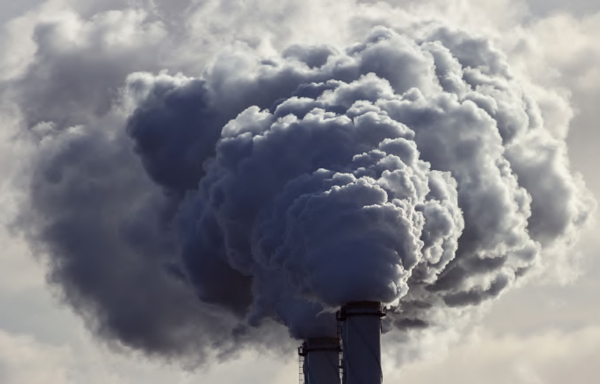
Did you know that Government of Canada has introduced a carbon pollution pricing system?
A federal carbon pollution pricing system was implemented in our province under the federal Greenhouse Gas Pollution Pricing Act. The goal of the act is to tax all industrial plants that play a significant role in preserving the heat in the atmosphere. The act was first applied in January 2019 to large industrial plants that emit more than 50,000 tons of carbon dioxide a year. Smaller industrial plants that emit 10,000 tones to 50,000 tons of carbon dioxide a year had the option to choose whether they want to pay taxes based on the degree of pollution they emit. Provinces such as British Columbia, Alberta, and Quebec that have applied federal carbon pollution pricing system earlier than Ontario have recorded the fastest economic growth in 2017. Drawing on past experience from three Canadian provinces, it is not unrealistic to expect that Ontario could accomplish similar success.
It is interesting to add that our government will return the proceeds under the federal carbon pollution pricing backstop system through direct payments to families and investments to reduce emissions and create jobs.
Recent studies also indicate that the cost of inaction is far greater than the cost of addressing climate change. Extreme weather events such as floods and fires are becoming more frequent and more drastic due to climate change. These types of disasters are costly because of damage to homes, office buildings, and infrastructure. For example, insurance losses related to climate change are about $405 million annually from 1983 to 2008, and $1.8 billion from 2009 to 2017.
Experts advise that Ontario residents can further reduce costs by using better insulation systems, switching to fuel-efficient vehicles, public transportation, and LED lightbulbs.
Since 2016, the Government of Canada has allocated over $9.8 billion for investments in Ontario's public transit projects and pollution control programs. Through these investments, Sudbury has expanded its fleet so that residents of Sudbury can easily reach the desired destinations using buses. In the capital city of Ontario, our government has expanded the Yonge Subway line and invested in the purchase of electric and diesel buses to reduce emission and improve air quality. In Toronto, the Government of Canada also invested in adding bike lanes on Lakeshore and Woodbine to keep Toronto residents safe in their daily commute. Thanks to the Government's Investing in Canada Plan, Ontario residents have public transportation that is safe, efficient, and accessible to all.
Reference:
https://www.canada.ca/en/environment-climate-change/services/climate-change/pricing-pollution-how-it-will-work/ontario.html
Upcoming Events
Article Categories
- DIARY OF THE IMMIGRANT
- HIGHLIGHTS
- Editor's Note
- Trending
- Interview
- INTERVIEW: COFFEE WITH
- Canada
- Serbian Community
- Serbs Around the World
- Homeland
- Visit Serbia
- Life Today
- History and Traditions
- Through the Prism
- Business & Career & Finances
- New Destinations
- Arts & Culture
- Nurturing Serbian Language
- ABCs of Health
- Our Kitchen
- Diary of a Serbophile
- Sports and Hobbies
- Young Journalists
- Kids’ Page
- Our Youth
Fundraising Campaign for SAN
With your donation, you will contribute to the continued existence of the magazine as well as the maintenance of the website. Your name or company name will be included on our page “Our Sponsors”. If you wish you may also choose to remain anonymous (be sure to select the option to donate anonymously in the application). Thank you for considering to support SAN.
Donate Now