
An Interview with H.E. Mihailo Papazoglu, Ambassador of the Republic of Serbia in Canada
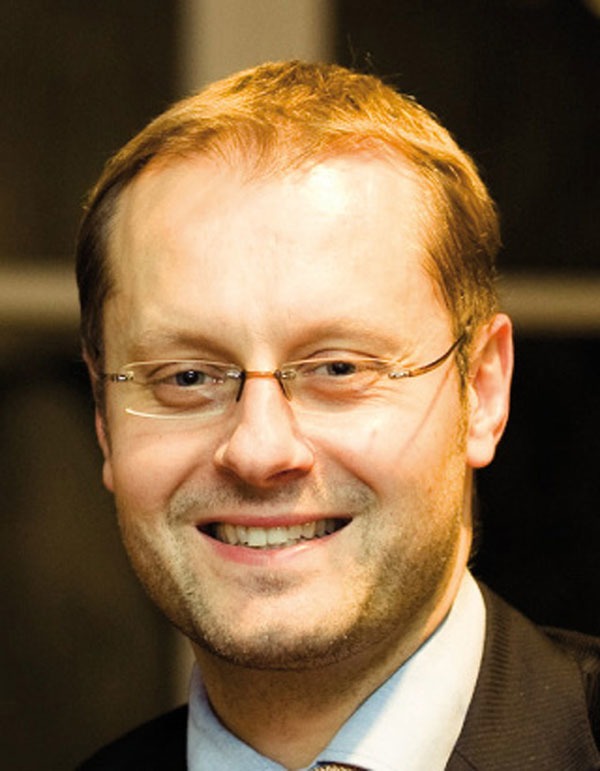
SAN: Last year marked the 75th anniversary of the establishment of relations between Serbia and Canada. What can you tell us about the current bilateral relations between Serbia and Canada? Where did we start 75 years ago and where are we now?
I am happy to say that our bilateral relations have gotten to a worthy level. And it is wonderful that this year, while Canada is marking and celebrating its 150th anniversary, you are reminding us of last year’s other anniversary – 75 years since the inception of diplomatic relations between Belgrade and Ottawa. The relations began in 1941and are a testament to our Allied cooperation in both World Wars. Serbia will never forget Canada’s military-medical missions in World War I, nor its monetary assistance, and we are proud that a mountain near Calgary is named Vojvode Putnika. In the last three years the political dialogues have been excellently nurtured, since each year there has been a visit from each country’s Minister of Foreign Affairs, something which has been lacking in the past ten years. Canada’s investments in Serbia have surpassed a million Canadian dollars and Serbian exports more than double their imports (80 million in exports, 30 million in imports). We sell 40 million dollars worth of FIAT cars each year, and the pharmaceutical company Valeant, Lavalin, Molson Coors, and MAGNA are just a few of the Canadian companies which operate in Serbia as well. However, at the beginning and the end of each successful enterprise are real people. They are our Serbian community in Canada, our diaspora which is actively involved in developing both of these countries.
SAN: What is currently being done to improve the bilateral relations between Serbia and Canada, and what has already been achieved?
Today, the representatives in the embassy are primarily involved with concrete problems which directly affect the everyday life of the people. An agreement was signed and ratified concerning social and retirement insurance. So far about 2 million dollars have been paid out. The embassy has also secured 1.2 million dollars with the help of the Canadian government for tangible projects related to sanitizing buildings which were affected by the May floods in Obrenovac and Sremska Mitrovica. Our companies have put these projects into action. In the summer an agreement will be signed concerning air traffic which has been under discussion since 2006. We can expect direct flights from Toronto to Belgrade soon, which we have long been trying to address. Besides those in Niagara Falls and Hamilton, we have initiated the construction of monuments to Nikola Tesla in Ottawa, Vancouver, and Calgary. Or for a few more streets to be named after him. Essentially, we are present wherever we are invited and able to deepen our international cooperation.
SAN: Moody’s, a website dedicated to ranking credit ratings, raised the position of the Republic of Serbia. Indeed, Serbia has demonstrated a tangible economic growth of 2.8 % in 2016, which was the highest consistent growth in the last 8 years. What does that mean for Serbo-Canadian cooperation?
It is true that the country’s economic opportunities have slowly been improving. International institutions and credit agencies have realized this as well. According to the IMF, unemployment should be at 15.4 % in 2018, and job opportunities should grow by 3.6 %. But nevertheless, many of our people still live in difficult conditions. The key to reform is to address the need for equal and sustainable development while reducing unemployment.
SAN: The Republic of Serbia sees the fostering of relations between Serbs in diaspora and domestic Serbs as highly significant. A number of documents testify to this, such as the Declaration of the Republic of Serbia’s Government on the relations between the homeland and disseminated Serbs to be of the utmost interest to the state and nation (2006), the Laws Regarding Serbs in Diaspora and Domestic Serbs (2009), and the Strategy for Preserving and Strengthening Relations between the Nation and the Diaspora and the Nation and Domestic Serbs (2011). What is that cooperation trying to accomplish? Can you tell us a few examples?
Not long ago, in May, we opened an honorary consulate in Montreal, and in the next couple of months we will open one in Calgary as well. Along with Vancouver, Toronto, and Ottawa, that will be a total of five representative locations in Canada. We go to Vancouver and Calgary once a year, but we hold regular consular days in Montreal and, I hope, Edmonton as well. I am very proud that Serbia has once again opened a consulate in Montreal, which has otherwise existed there as far back as 1918, almost a century ago. Next year we will formally mark this occasion. I am also happy that last year we established Niagara Falls and Kraljevo as twin cities. The embassy initiated and organized the signing of the twinning charter for these two cities, but I must reiterate that it is real people who are behind everything. In this case, they are our Serbian residents in Niagara Falls who came to the aid of Kraljevo. Now, this dynamic has become institutionalized. Likewise, I see the founding of a parliamentary group of friendship, containing 16 Canadian senators and ministers, as another achievement.
SAN: You mentioned a parliamentary group of friendship between Canada and Serbia. When was this group established and what is its purpose?
The group was first formed in 2013 and renewed after the 2016 parliamentary election. It is the Serbian caucus, or Serbian lobby group in Canada.
SAN: What, if anything, has changed in the relations between domestic Serbs and Serbs in diaspora in the last 20 years?
I believe that the country and its activities have been perceived in a sober and less polarized way. My advice, and the suggestion that I give on every occasion, is that our people need to use the advantages of dual-citizenship offered through the agreements made by two nations. The achievements of the community in Canada are valued by the number of ministers. Except for one, a former resident of Hamilton, Bob Bratina, who is also the vice-president of our group of friends, there are no others. That is something we need to work on.
SAN: Do you have documentation as to the number of immigrants that come to Canada each year from Serbia? Does the number occasionally stagnate, or does it always increase?
The total number of visas that Canada gives out in a year is relatively small. About three thousand, in total. From out of that number, even fewer are immigrants. In any case, the numbers are not even close to the wave we saw in the 90s. I often tell Canadians that the best minds from the Faculty of Electrical, Civil, and Mechanical Engineering are the one’s that immigrated here. On the other hand, our country needs to determine how to prevent that type of mass departure of educated specialists from ever happening again.
SAN: To what extent and in what way does the Serbian embassy help newly landed residents from Serbia in Canada?
From my previous answer it should be clear that Serbia is not interested in encouraging the further departure of educated individuals. The fact of the matter is that there are not many new residents. I believe that it is important that they all report to the embassy so that we can even start being in the situation where we can help them regularize their status. We are always there to offer advice and keep in contact.
SAN: We have been witness to recent problems in the Serbian church in Canada. How much has that influenced Serbian-Canadian bilateral relations, if at all? How much is the Serbian church in Canada involved in the actions organized by the embassy?
That episode certainly served as a reminder that it is necessary to always invest effort into constructing unifications and agreements. We have drawn attention to the harmful nature of that kind of incident and hope that we have succeeded in that through our appeals and actions. I have had several opportunities to discuss this even with His Holiness the Patriarch Irinej. I am in regular contact with Vladik Mitrofan as well. Every consular day and the organization of long-distance voting in Canada is announced with the help of the Serbian Orthodox Church. Thanks to our initiative, May 22nd of this year in Ottawa the theological seminary council “Sveti Stefan,” the city of Ottawa, and the embassy jointly organized the representation of Serbia on Canada’s 150th anniversary. I think that this is one of the best example.
SAN: You are a very active participant in various events which mark the life of Serbian immigrants in Canada (such as the opening of Nikola Tesla Boulevard, participating in gathering aid for Serbia under the patronage of the Princess Katarina Karađorđević “Lifeline” etc.). What event distinguishes itself from the rest. Can you tell us an anecdote?
Everything you mentioned makes me proud. There were many such fundraisers. I try to connect our people as much as I can, to embolden them and give them help. However, my primary job is to connect Serbia with Canada and to further the progress of the institutions on a higher level, so that our two countries never find themselves on opposing sides. When the people that make political decisions sit down together, believe me, problems are resolved much more easily. If I had to distinguish one event it would be the organization of the Serbian academic network in Canada which should work to connect all of our most educated individuals who are here: students, researchers, doctoral students, and professors. My wish is to breath life into this association, which is lead by Ana Sokolović, one of our composers and a professor at the University of Montreal (Serbian Academic Network).
If you want an anecdote, here’s a firsthand account. Three years ago, right before my arrival to take up the role of ambassador, it occurred to me while I was flying over the ocean that our people living in Canada who probably do not know me, would ask how it is possible that an ambassador is arriving with a last name which is uncharacteristic for a Serb. I transformed that thought into a message for all. If Serbia is “unafraid” to employ someone of Greek heritage here in Canada as a diplomatic representative, who cares about divisions based on nationality, place of birth, or generations when it comes to Serbs here in Canada.
SAN: Who is Mihailo Papazoglu in private? Let our readers know something about you that they cannot read anywhere on the internet. Where is the last name Papazoglu from?
As I mentioned, the last name comes from Greece, but my family has lived in Serbia for a long time. So, I can proudly say that my mother is from Kruševo, a former Serbian region. As for Mihailo Papazoglu, he is a young man who grew up to the sounds of “Paket Aranžman” and the new-wave music of Belgrade in the 80s. He has reacquainted himself with many of his generation’s peers here in Canada. He wanted to go into acting, but he found himself on an altogether different stage, the international stage, in the role of a diplomat who represents Serbia.
Upcoming Events
Article Categories
- DIARY OF THE IMMIGRANT
- HIGHLIGHTS
- Editor's Note
- Trending
- Interview
- INTERVIEW: COFFEE WITH
- Canada
- Serbian Community
- Serbs Around the World
- Homeland
- Visit Serbia
- Life Today
- History and Traditions
- Through the Prism
- Business & Career & Finances
- New Destinations
- Arts & Culture
- Nurturing Serbian Language
- ABCs of Health
- Our Kitchen
- Diary of a Serbophile
- Sports and Hobbies
- Young Journalists
- Kids’ Page
- Our Youth
Fundraising Campaign for SAN
With your donation, you will contribute to the continued existence of the magazine as well as the maintenance of the website. Your name or company name will be included on our page “Our Sponsors”. If you wish you may also choose to remain anonymous (be sure to select the option to donate anonymously in the application). Thank you for considering to support SAN.
Donate Now