
Internet of Things – The Future Has Started
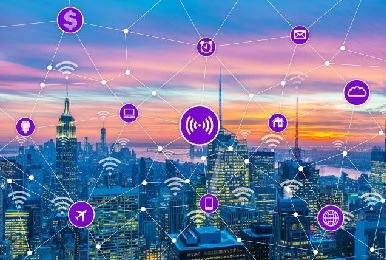
It is no longer a secret that we are on the cusp of a new Industrial Revolution. It is talked about a lot, but opinions are very divided. Some are happy at the prospect of progress and believe that by bringing in new technologies, the quality of life will improve for the human race, while others are afraid of change and believe that computers will take over a great number of jobs which will—combined with the constant increase in the human population—bring about a great economic crisis. Almost every day, we encounter the concept of “Internet of things” (IoT). So, what does this concept actually mean?
Internet of things (Iot) is a network of physical devices, vehicles, household appliances and other products with built-in electronics, software, and sensors that allow them to connect and exchange data. Experts predict that by 2020, there will be over 30 billion objects that will have connection capabilities.
The devices that are expected to be connected are varied, and can be from various spheres—heart rate implant monitors, biochips on animals, various cameras, car sensors, and so on. All of these devices gather important data that is passed on to other devices.
When the Internet of things is connected by sensors and drivers, they create cyber-physical systems such as virtual power plants, smart houses, intelligent transport systems, and smart cities.
Virtual Power Plants
Virtual power plants work on the principle of using several energy sources in order to ensure a reliable supply.
A virtual power plant uses the infrastructure of a smart power network in order to connect various smaller energy sources that then function as a single producer. In this kind of combination, it is possible to use almost every source of electrical energy. These smart electronic networks enable users that are connected to them to sell any surplus electrical energy when they are not using it.
South Australia has announced plans to equip at least 50,000 households with solar panels and Tesla battery storage units, connecting them all with an electronic network in order to build the world’s largest virtual power plant. By having solar panels in homes, people will generate electricity that can be stored in battery units and thereby satisfy the needs of the consumer. Households that participate in the project will have low electricity bills and will create energy for the whole of South Australia. The system will monitor the data through the network of solar panels and batteries in order to ensure a reliable energy source.
Smart Homes
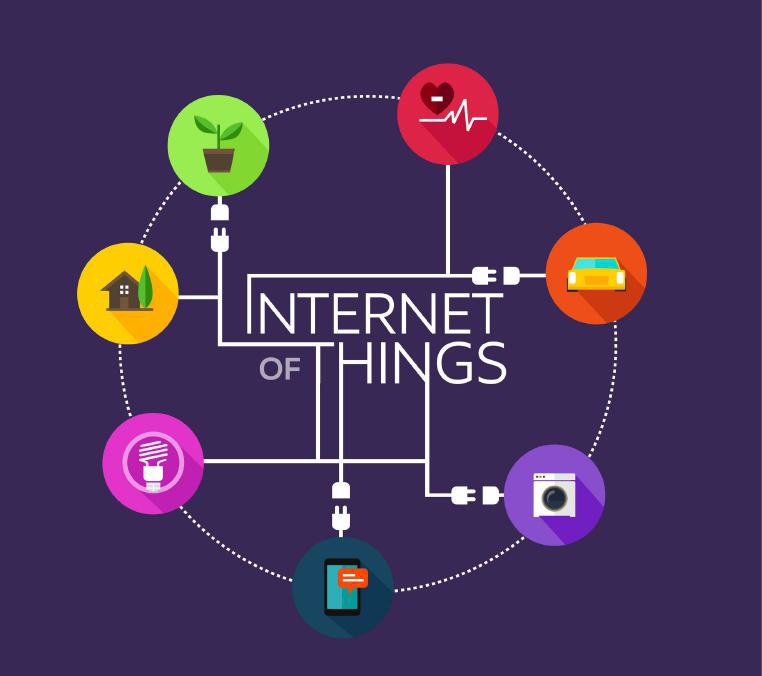
A smart home is a structure equipped with the most modern technology, where an automated system controls the lights, air conditioning, entertainment, household appliances, and home security systems.
The essence of a smart home is to enable easy monitoring of all systems that automatically adapt to your needs and habits.
On the basis of various studies, there will be three generations of home automation:
- First generation: bringing in wireless technology. This phase is already in full swing. Virtually all household systems can be controlled using a remote control— everything from air conditioning devices to entertainment or security systems.
- Second generation: controlling household electrical appliances using artificial intelligence. This means that soon you will be able to get a message from your fridge reminding you that your milk will soon pass its expiration date, or that you need to buy eggs. Also, your air conditioning will receive instructions to increase its cooling the moment unexpected guests walk through the door.
- Third generation: a robot that will communicate with members of the household. Many are happy at the idea of interacting with robots and have been eagerly awaiting that moment from the first time they watched Star Wars. Robots will carry out various household tasks, such as loading the dishwasher or sorting dirty laundry. Of course, the range of activities that the robot will be able to perform will be dictated by the price you are willing to pay for it. Robots will be a kind of new member of the household whose help you can always count on.
Intelligent Transportation Systems
An intelligent transportation system (ITS) is an advanced application that aims to provide innovative services relating to different modes of transport and traffic management. They enable users to be better informed and safer, and they provide better coordination and smarter use of transport networks.
Intelligent transport systems use various technologies that are applied to basic management systems (such as car navigation, traffic signal control systems, automatic license plate recognition systems) as well as more advanced applications that integrate live data and feedback (such as parking guidance and information systems, bridge de-icing systems, and similar). Besides that, predictive techniques are being developed to allow more advanced modeling and comparison with historical baseline data.
Smart Cities
A smart city is an urban area that uses various types of data collection sensors to supply information that is used to efficiently manage assets and resources. This includes data collected from citizens, devices, and assets that is processed and analyzed to monitor and manage traffic and transportation systems, power plants, water supply networks, waste management, law enforcement, information systems, schools, libraries, hospitals, and other community services. The concept of a smart city integrates information and communication technology (ICT) and various physical devices connected to the network (the Internet of things, or IoT) to optimize the efficiency of city operations and services. Smart city technology allows city officials to interact directly with infrastructure, and monitor what is happening in the city and how the city is evolving.
Significant technological, economic, and ecological changes sparked an interest in smart cities, including climate change, economic restructuring, the switch to online retail and entertainment, an aging population, urban population growth, and pressure on public finances. You can read more about what changes are awaiting Toronto in this issue of SAN in the article “High-Tech Toronto on the Waterfront,” by Karolina Grujić.
And while some are happy at the idea of technological changes and others shrink away from them, it will probably be proven again that those that survive evolution are not the fittest, but rather the best adapted.
Upcoming Events
Article Categories
- DIARY OF THE IMMIGRANT
- HIGHLIGHTS
- Editor's Note
- Trending
- Interview
- INTERVIEW: COFFEE WITH
- Canada
- Serbian Community
- Serbs Around the World
- Homeland
- Visit Serbia
- Life Today
- History and Traditions
- Through the Prism
- Business & Career & Finances
- New Destinations
- Arts & Culture
- Nurturing Serbian Language
- ABCs of Health
- Our Kitchen
- Diary of a Serbophile
- Sports and Hobbies
- Young Journalists
- Kids’ Page
- Our Youth
Fundraising Campaign for SAN
With your donation, you will contribute to the continued existence of the magazine as well as the maintenance of the website. Your name or company name will be included on our page “Our Sponsors”. If you wish you may also choose to remain anonymous (be sure to select the option to donate anonymously in the application). Thank you for considering to support SAN.
Donate Now