
The Hudson’s Bay Archives – A Window into Canada’s Past
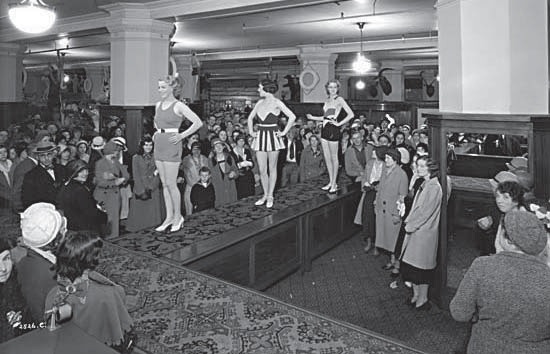
The Hudson’s Bay Company (HBC) is the first shareholder company in the world, and one of the oldest trading companies established on English-speaking territory that still operates today. It gets its name from the Hudson Bay which is surrounded by three Canadian provinces, Quebec, Ontario, and Manitoba, as well as the territory of Nunavut. The HBC has had a prominent position in the economic and political history of Canada.
In 1670 the HBC was registered in the royal charter in England with the mission of finding a northwestern passage to the Pacific, inhabiting the lands along the Hudson Bay, and organizing any trading activities in those regions which had the potential to be lucrative.
Prince Rupert, a relative of the king of England, was the company’s first governor, and because of him the land owned by the HBC, stretching from Labrador to the Rocky Mountains, was called Rupert’s Land.
The HBC traded furs for the first two centuries of its existence. From 1670 to 1680 the company founded and built many its fur trading posts along the shores of the Hudson Bay. A large number of these posts were taken by the French, but returned to the British after they conquered Canada in 1760. The company continued to develop and expand its business.
In 1783, the HBC’s main competitor appeared – the North West Company – which ultimately led to actual armed conflicts between the two. The British government put these conflicts to an end, deciding to unite these two companies under the name Hudson’s Bay in 1821. That was when the company established an exclusive monopoly on the trading of furs throughout Rupert’s Land, as well as other territories of today’s Canada and Northwestern parts of the U.S., from Oregon to Wyoming.
In the 20th century, the HBC remained one of the largest fur traders, although it had expanded its business to real estate and raw materials, establishing one of the largest trading chains in the world. Throughout the 1970s, the company expanded its traditional stock of assorted furs, opening a large amount of discount and department stores across Canada which sold clothing and other household items. During that time, the HBC also dabbled in the oil and natural gas business, in which they were only involved for only ten years. Nevertheless, even today, the HBC remains one of the largest companies in Canada, and is certainly familiar to all of us through their chains of department stores such as The Bay, Zellers, and Home Outfitters.
A Wool Blanket – The Hudson’s Bay Company’s Legendary Item
During the 18th century, the Hudson’s Bay Company launched “point blankets,” wool blankets which were traded with Indigenous peoples in exchange for furs. At that time, wool coverings were one of the main European articles sought by the local American peoples, due to their capacity to retain heat even when wet, and because it was much easier to sew with wool than bison or deer hide. The “points” were sewn markings on the blankets, which designated their size, and which could be read even when the blanket was folded.
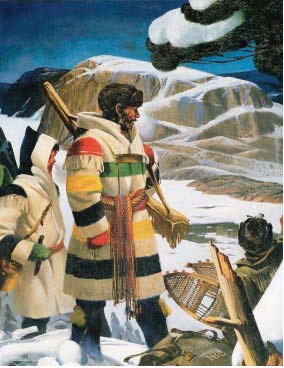
The blankets functioned as a type of currency, and other items where often valued by how many blankets they would procure in a trade. “Capote” coats, sewn from these blankets, were the traditional protection from the elements worn by voyageurs, French fur suppliers from the far, Northern regions.
The biggest controversy around the HBC’s blankets are centred on stories of unscrupulous traders who took blankets they had once sold from villages devastated by mortal illnesses, re-selling them to another village.
The standard design of the HBC’s blankets were green, red, yellow, and purple stripes on a white background. This historic blanket is still sold at the Bay throughout Canada, and is even found in the American sister store, Lord & Taylor.

The Rich Archives of the Hudson’s Bay
The company was exclusively run out of England until 1931, when the Canadian committee of shareholders transferred control into Canada, yet the company still answered to the governor and its shareholders in England.
In 1974, the rich archives of this long-standing company were transported from Europe to North America, from London to Winnipeg. The archival writings of the company were neatly recorded from 1670 to 1920 and they are a valuable testament to life on the territories which are today a part of Canada, the U.N. has even dubbed them the “Memory of the World.” The archives are stored and available for research purposes in the Hudson’s Bay Company Archives (HBCA) at the Archives of Manitoba in Winnipeg.
The Archives of the HBC span every aspect of this nation’s life from its trapper roots, containing dictionaries of nearly every Indigenous language which was spoken in these regions, scientific data concerning the climate, flora and fauna, census information, the business dealings of the company, and other aspects of the HBC’s history. The archives also testify to the company’s less-known roles such as a main allied provider of provisions and weapons during World War I, their attempts at trading furs in Russia in 1920, and their involvement in the film business. Apart form the archives, the HBC possesses a large collection of photographs, and a smaller collection of artwork, audio recordings, and films. Their collection of maps is one of the best in North America.
The lists of the HBC’s employees are open to the public, and can be accessed online. Their impeccably organized files and modern research tools have helped many in discovering their ancestry. These lists, apart from the names and positions of employees, also contain their country of origin, place and year of birth, other family information, and various other documents including photographs.
The rich HBC library has over 10, 000 titles (books, articles, periodicals, video recordings, and CDs). It is made up of the tangible historical material through which we can witness the lives of people on the territories of Canada and the northwestern United States. The library can only be accessed in person, although its catalogs are available online.
The archives of the HBC, accumulated over the course of three centuries, and carefully guarded in Canada for 40 years, are invaluable historical building blocks, reflecting the historic life of a country which, as the Canadian joke goes, is “large in geography but small in history.”
Upcoming Events
Article Categories
- DIARY OF THE IMMIGRANT
- HIGHLIGHTS
- Editor's Note
- Trending
- Interview
- INTERVIEW: COFFEE WITH
- Canada
- Serbian Community
- Serbs Around the World
- Homeland
- Visit Serbia
- Life Today
- History and Traditions
- Through the Prism
- Business & Career & Finances
- New Destinations
- Arts & Culture
- Nurturing Serbian Language
- ABCs of Health
- Our Kitchen
- Diary of a Serbophile
- Sports and Hobbies
- Young Journalists
- Kids’ Page
- Our Youth
Fundraising Campaign for SAN
With your donation, you will contribute to the continued existence of the magazine as well as the maintenance of the website. Your name or company name will be included on our page “Our Sponsors”. If you wish you may also choose to remain anonymous (be sure to select the option to donate anonymously in the application). Thank you for considering to support SAN.
Donate Now