
VINČA – THE PREHISTORIC TREASURE OF SERBIA
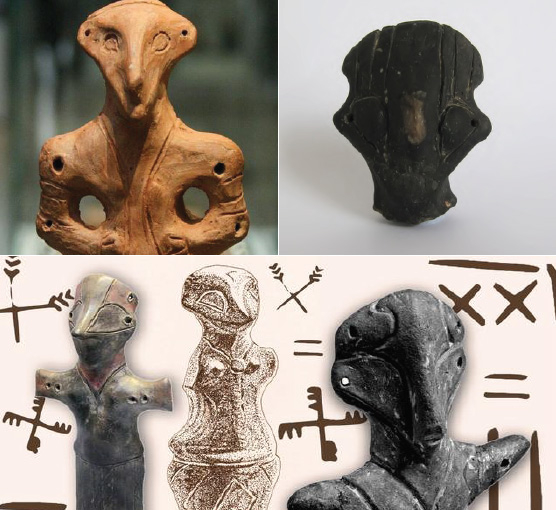
The archaeological site of Vinča, the most significant Neolithic site in this part of Europe is located on the right bank of the Danube, 15 kilometers southeast of Belgrade. Vinča gave its name to one of the most recognizable prehistoric cultures in the world. The Vinča civilization is a Neolithic culture that extended from central Bosnia to central Romania.
Prehistory is the period of time that lasts from the moment when prehistoric man began to make tools and weapons until the appearance of the first letters. Based on the material from which the tools and weapons were made, it is divided into the Stone Age and the Metal Age. The Stone Age distinguishes three periods: the older Stone Age (Paleolithic), the middle Stone Age (Mesolithic) to which the Lepenski Vir culture belongs, and the younger Stone Age (Neolithic) to which the Starčevačka and Vinča cultures belong.
The most progressive culture of the Neolithic
Dragan Janković is an archaeologist and curator of the prehistoric site in Vinča. In his interviews on the YouTube channel (https://www.youtube.com/watch?v=tG72AhIosnc= ) he tells how the discovery of this site dramatically changed the view of prehistoric man because the artifacts show that 5.5 thousand years before the new era, a highly developed culture and civilization lived there.
Based on the excavations in Vinča, the remains of houses were found, which show that people in the Neolithic had a very high level of housing culture. Houses had up to 80 square meters. They were solid wooden structures with thermal insulation made of mud and chaff. Houses had ovens for baking bread and heating, and sometimes they had both in every room. The building system was planned, with the same orientation when it comes to houses.
Archaeologist Janković says that this civilization practiced agriculture and raised animals. Waste pits had been found at the archaeological site of Vinča, which showed that they mainly fed on farmed young animals, pig and veal, and to a lesser extent on wild animals and fish. Birds had not eaten because they were considered natural allies in the fight against pests and insects. Coexistence with nature is a very important segment of this culture.
In the second half of the existence of this civilization, people began to produce much more food than they needed, and thus trade and the first urban centers began to develop. The people of Vinča, it can be concluded based on the abundance of excavations, were the most successful Neolithic traders in this region. They melted cinnabarite, which they mined at the foot of Avala, and made the red color cinnabar. They used malachite to make expensive jewelry and green paint. With this they traded in the Carpathians for volcanic glass, obsidian, from which the sharpest blade was obtained. At a crossroads, with strategic raw materials nearby, Vinča became a center for the distribution of obsidian and grew into a trading superpower of Europe.
Throughout the area of the site, there are typical clay figurines depicting a woman with outstretched arms and exaggerated eyes, the "great mother". She is considered to symbolize life and childbirth, and her eyes show that she must always be vigilant to protect her offspring. Outstretched hands symbolize love and openness to others as one of the main values of this civilization. Namely, there are no traces that there were any wars in those two thousand years, no traces of weapons or fortifications were found. Whoever wanted to work had enough land to produce as much as he wanted and trade the surplus. The principle was to live from one's own work.
The change of this principle brings the Vinča civilization to its end when the Metal Age begins with the invention of metallurgy. People migrate towards places where there are mines. Life in the mines is difficult, so some began to force others to work for them, and the struggle for supremacy over resources begins. The new system of life, based on the exploitation of other people, extinguishes this civilization. The most interesting thing is that with the advent of the Metal Age, not everyone has solid houses anymore, only those who took power have that privilege, and the rest live in huts with fireplaces. After Vinča, there is no more progress for everyone, but only for individuals, curator Janković concludes his story about the twilight of this 2000-year-old civilization.
When asked about the Vinča script, curator Janković answers that it is similar to Cyrillic, but since the entire text has not been found anywhere, but only a few characters in a row, it cannot be officially considered a script. The same letters were found carved into clay vessels throughout the area covered by this culture. This means that the containers were like some standardized packages with a label on what was inside.
The Vinča script
Vinča was first mentioned as an archaeological site in 1893, and when the objects discovered here were shown in 1897, it was established that this is a prehistoric site. Professor archaeologist Miloje Vasić started the first methodologically based archaeological excavations in 1908. He found signs and entire inscriptions on over 10,000 artifacts and published the results of his work in 1930 in the monograph Prehistoric Vinča.
The scientific institutions of Yugoslavia, neither before nor after the Second World War, showed any interest in the capital discoveries of Professor Vasić, who guessed that the signs found were proof of the literate people of Vinča. Official science in Serbia and Yugoslavia simply suppressed these opinions. Then Professor Radivoje Pešić, who has been researching signs found in Vinča since the mid-seventies, enters the scene. Gradually, during almost two decades of his work, Professor Pešić was able to establish that the Vinča alphabet has several versions of letter characters, so he was able to recognize 57 characteristic letters until the Vinča alphabet of 26 letters was finally arrived at.
Studying the alphabets of other ancient peoples, who started writing long after the people of Vinča, Professor Pešić established that in the ancient Phoenician alphabet there are 10 letters taken from the Vinča script, in the ancient Greek alphabet there are 12, and in the Serbian Cyrillic alphabet there are as many as 20 of them. Another major finding resulting from these studies was that the alphabet of the ancient Etruscans is identical to the Vinča alphabet. This means not only that the Etruscans originate from these areas, and not from Asia Minor, as is generally believed, but also that the entire literacy of Europe and the Mediterranean rests on the Vinča script. The discovery that the Serbian alphabet has as many as 20 identical symbols as the Vinča script proves that it originated from this, not the Greek alphabet, as is still taught in schools today. The complete Germanic-Nordic school, which considers the Slavs to be wild tribes that arrived in Europe from the Russian steppes only after other peoples had become civilized, remains unjustified with these discoveries.
Forbidden prehistory
In particular, the discoveries of Professor Pešić were unacceptable to the official policy of the SFRY at the time, which insisted that civilization was brought to the Serbs from abroad and that it could not have originated in these areas. The only problem was that no one could find fault with the absolutely scientific research methodology of Professor Pešić, and even less his conclusions. If the discoveries cannot be attacked scientifically, they can be attacked unscientifically; it was decided in one of the committees of the time. A shameful article About the problem of Vinča was published in the newsletter of the National Museum in Sarajevo. This is the official start of the persecution of Professor Pešić. His colleagues ignored him and hid behind a wall of silence with partial denial. Persecuted and humiliated, Professor Pešić leaves the country and achieves an extremely successful career as a professor in Italy, where his theses were declared the discovery of the year in Europe and received exceptional recognition in the world.
Comparing the age of ancient writing sites around the world, in his work Conspiracy of Denial, Professor Pešić made a new chronology of the appearance and development of the letter around the world, which should read:
- Protopism of Lepenski Vir (8,000 - 6,000 BC),
- Vinča script (5,300 - 3,200 BC),
- Sumerian in Mesopotamia (3,100 BC – 75 AD),
- Proto-Elamite (between 3,000 and 2,000 BC),
- Proto-Indian (around 2,200 BC),
- Chinese (1,300 BC and continues to this day),
- Egyptian (3,000 BC – 400 AD),
- Crete (2,000 - 1,200 BC),
- Hittite (1,600 - 777 BC).
In 1991, when the KPJ began to slip into historical oblivion, the greatest Yugoslav authority on prehistory, academician Dragoslav Srejović, who until then had ignored Pešić's discoveries, declared in Politika: "Vinča culture was the most dynamic, progressive culture of that time and in it anticipated two major achievements that will change the life of humanity in the future: literacy and the invention of artificial ore smelting..."
Professor Radivoje Pešić, as a grammatologist by profession, did not engage in assessments of whether the people who inhabited Vinča were proto-Serbs or members of another nation. Conclusions about this were drawn instead by other scientists all over the world who claim that anthropologically the original inhabitants of the Balkans, meaning those from the Vinča civilization period, are no different from those of today. The most eminent among them, Harvard University Professor Aleksej Kljosov, the greatest living authority for the Haplogroup (hpg) R1a1, which is related to the Slavs, contributes to the theory of continuity with evidence that this Haplogroup has been present in the area of Serbian Podunavlje for about 10,000 years.
Upcoming Events
Article Categories
- DIARY OF THE IMMIGRANT
- HIGHLIGHTS
- Editor's Note
- Trending
- Interview
- INTERVIEW: COFFEE WITH
- Canada
- Serbian Community
- Serbs Around the World
- Homeland
- Visit Serbia
- Life Today
- History and Traditions
- Through the Prism
- Business & Career & Finances
- New Destinations
- Arts & Culture
- Nurturing Serbian Language
- ABCs of Health
- Our Kitchen
- Diary of a Serbophile
- Sports and Hobbies
- Young Journalists
- Kids’ Page
- Our Youth
Fundraising Campaign for SAN
With your donation, you will contribute to the continued existence of the magazine as well as the maintenance of the website. Your name or company name will be included on our page “Our Sponsors”. If you wish you may also choose to remain anonymous (be sure to select the option to donate anonymously in the application). Thank you for considering to support SAN.
Donate Now