
Choir “Kir Stefan Srbin” - twentieth anniversary. Interview with the artistic Director and Conductor Jasmina Vučurović
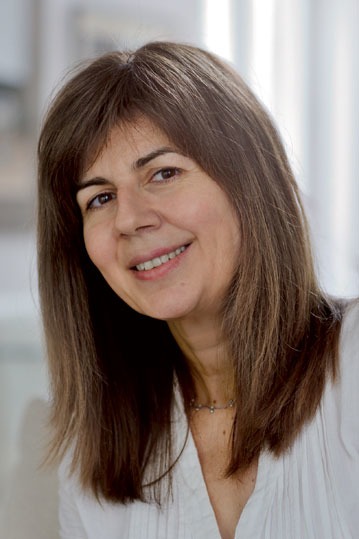
Interview originally published in SAN Magazine Issue 1, July 2015
I Brought the Soul of Serbia to Toronto
“I didn’t want to emigrate to Europe because I had the feeling that we were seen as second-class citizens. I didn’t choose America either because there you would have to abandon your cultural heritage. Canada seemed to be a fortunate compromise, because it presents everyone the opportunity to nurture their own culture and language.”
Interviewed by Gojko Milićević
On the day that Jasmina Vučurović received her degree in piano performance at the University of the Arts in Belgrade, she felt like she had received the Nobel prize. That same day she also received an invitation from Irina Arsikin to work at the Academy of Music as an accompanist for singers who were working with chamber music. At that time and in that Belgrade, the acting artistic director and conductor of the Toronto-based choir “Kir Stefan the Serb” was working with world-famous opera singers – mezzo-soprano Biserka Cvejić and soprano Radmila Bakočevič. However, the course of life took her from the unstable pinnacle of artistic life in Serbia to a distant, though more stable, Canadian shore. But this did not change her identity, since, as she reveals to our magazine, Toronto has offered her the opportunity to still proudly bear the soul of Serbia.
Why did you decide to emigrate when you were already in the midst of an enviable career?
- Regarding careers, I really can’t complain. At the time when I was thinking about leaving, the situation in my country, both political and economic, was very poor. Many were able to foresee how it would all end, that is, how war would beget war… And in a single moment, I realized I did not wish to be a part of that. That moment was preceded by six months of self-observation. I took note of my behaviour in various situations, uncovered what it was that I was bothered by and what the accrual state of my life was. I followed myself, just as if it were another person that was in question. I knew that my departure wasn’t a naïve decision; to cut all ties and – leave. It was amidst this grasping of reality, happy to be leaving something behind in order to arrive somewhere new, that I came to Toronto, open to whatever would come my way. That happiness still endures, since all the initial things that gave me relief when I arrived are still here today.
But why Canada and Toronto?
- I didn’t want to emigrate to Europe, since I had the impression that people from anywhere in the former Yugoslavia were seen as second-class citizens. I didn’t choose America either, since I didn’t want to be a part of a country in which one had to abandon their cultural heritage and relinquish their native citizenship. Canada seemed to be a fortunate compromise. It is a country of dominant European cultures, the English and the French, and it also has its cosmopolitanism, the capacity to retain one’s culture, language, and heritage, and to share them with others. Toronto provided me with all of that. I can be who I am and have an unrestrained capacity for improvement. The various people from all four “corners” of the globe inspire me, their interactions and intermingling which aid the city’s development in a positive direction. When I first arrived, this was a city of defined boundaries, but without much substance, somehow incomplete. Today, however, Toronto is much improved, it looks like the type of city in which I would want to live. I am happy with my choice of country and the fact that I can always leave, such as when I often visit Serbia, but I am also happy that I can always come back.
What first comes to mind when you compare Toronto and Belgrade?
- It is interesting that in Belgrade, unlike in Toronto, you would always know if there was an important sports game going on, whether or not you were an ardent fan. I don’t follow soccer, but that was just a part of city life. Many didn’t follow BITEF (Belgrade International Theatre Festival), FEST, or BEMUS (Belgrade Music Festival) closely, yet everyone knew when they were going on. Here, that is not the case. I preferred the situation in Belgrade, where I was always in the know about what was going on around me.
For you, what does it mean to be an immigrant?
- The fact that I chose this country over others is precisely the answer to that question. Thanks to there being so many different people who live, all with their own cultures and national identities, you really don’t feel like a black sheep. In time, people adapt to the extent that they start to feel like a part of this society, it is in relation to this that they feel either like an immigrant or not. What is an immigrant anyway? The meaning of the notion is really up for debate, since it is the product of personal experiences. However, we all remain immigrants, at least in part, because our way of thinking, our behaviour, our understanding of the world are all formed by a cultural heritage which has its roots somewhere very far away.
Does that mean that some of the difficulties we face with emigration are brought about by our own heritage?
- On a professional level, my difficulties stemmed from the fact that we were raised in Serbia to think that it was enough to be educated and to work, that someone would evaluate this and lead us to where we would want to be. There is none of that here, and I don’t think that there is any of that in Serbia anymore either. That is a big stumbling stone and a hinderance in terms of circumstance for anyone who wishes to break through into the West. Here, it is personal initiative that determines progress, self-promotion in the most positive sense. The absence of this attitude in our upbringing was, for me, and for many of my colleagues and friends who live here, the first and biggest obstacle we had to face. However, in some way I am grateful for the upbringing I did receive, since we live in a marketing-oriented world where it is easy to slip into self-deception.
What wisdom that you received in Serbia helped you most in the beginning?
- What helped me the most was a serious approach to music, which was nurtured by all of us at the Academy in Belgrade: professionalism, an immersion in the repertoire, analysis, serious work with no foreseeable results in the short term. Those are the things which stayed with me until today. I would also add to that list my experiences working with singers which I gained towards the end of my studies. Even back then I had learnt to set boundaries, some sort of defensive attitude, which would make working with them easier.
What was your first achievement in Canada?
- The first real achievement was when I was accepted into the “Ensemble Studio” at the biggest opera company in Canada, the “Canadian Opera Company.” That is a training program which prepares upcoming artists for their careers through professional work, primarily singers, but often accompanists as well. In the wake of soul-crushing advice that there was no point in trying, I was immeasurably happy when I passed the audition. I had the opportunity to work with world-renowned professionals and to participate in the production of operas. It was there that I was bitten by the ‘theatre bug.’ Later, I began to work at “Opera Atelier” as a professional vocal coach which necessitated that I learn French, Italian, and German in addition to my native language and English.
Why did you become a conductor?
- I came to Canada as a pianist, I had experience as an accompanist for singers in Serbia, but it was here that I perfected that and took it to another level. Still, I did not have conducting in mind. At that time, negotiations were started regarding a choir which threw me into waters which I wasn’t even considering. I wanted to continue my studies and I received my Master’s in conducting under the tutelage of the famous maestro Raffi Armenian, a pianist, composer, and professor appointed to the Order of Canada. As a new form of expression, conducting was a great joy for me. And I see the choir itself, our story and our shared journey, as a great achievement. That successful course still holds, and we are still aided by favourable winds.
What were the plans and expectations of the choir in the beginning?
- We didn’t have grand expectations, we didn’t make large-scale plans, we only had a great love for singing and spiritual music. We love team-work which produces a quality worthy of our rich musical and cultural inheritance. The “Divine Liturgy of St. John Chrysostom” by Mokranjac seemed to choose us. That was a true challenge, and we knew it wouldn’t be easy. After a year of difficult work, we were able to pull it off on Easter in 2001, at the Church of Saint Sava in Toronto. From then on, we have been developing a strong repertoire, especially focusing on the works of Mokranjac and Hristić, renowned composers, so the quality is assured, and we can enjoy ourselves, drawing energy and emotion from the music itself. When we decided to perform in concert as well, we enriched our repertoire with additional world music. Apart from our spiritual music, you can hear us perform Italian canzoni, and popular songs from Spain, Greece, Cuba, and Russia in the second half of our concerts.
As the “commander-in-chief” of the choir, are you able to just let your emotions guide you while conducting?
- Absolutely. That is the main reason why I regularly come to our church to conduct during the liturgy. It is then that one can pray to God through music. In those moments I feel as if love is celebrated through spiritual music. You enter the church weighed down by everyday life, but then you let yourself go into the emotions and magical moments – and music begins to flow. However, a part of me functions as precisely as a computer. And that is the part of the professional musician. For the performance to stay at a high level, for everyone, whether audience member of performer, to be able to let themselves go and enjoy themselves, there always must be a controlling aspect which holds everything together and is ready to react in the moment and in the correct manner. There often occur moments of total concentration when the voices of the individual singers meld together, and we all become one. It is after performances such as those that people approach us, thank us, and share their experience of music with us. That is what unites me and the rest of the members of the choir. You know, spiritual music is music which speaks out from the past. As if conversing with us directly, some ancient spirit from a bygone time professes faith, warmth, and love through music.
Can spiritual music communicate to people in the present?
- The communicability of spiritual music is ever-present but need not be made banal. The language of music can change, yet the same message can still be conveyed in a very serious, deep, and meaningful way. There are composers of contemporary Serbian spiritual music such as Svetislav Božić and Milorad Govedarica, who employ a different, more modern harmonization, a different sensibility. They have a specific musical language, a mode of expression which, if well-executed, can pass down its message in the right way. One must be open to spiritual music. A part of our audience prefers spiritual music, but another, larger part, prefers world music.
What spiritual music do you like to listen to that isn’t from the Eastern Orthodox tradition?
- The music of Bach has that same strength, that emotion, intimacy and devotion to God which is necessary in creating the highest of works in spiritual music. I have often played Bach’s compositions and every time I felt his dedication to and love for God. Mozart, Vivaldi, Brahms, and César Franck are on that same level…
What choirs would you recommend to our readers?
- In the last 20-25 years, since Communism has almost entirely disappeared, there has been a flowering of spiritual music. Besides the renowned choir “Glinka,” from Moscow, there is “Stefan Dečanski” from Novi Sad, “Branko” from Niš, and Zrenjanin and Pančevo also have excellent choirs. Pavle Aksentijević and Divna Ljubojević are our stars. We also collaborated with the group “Božuri,” so I can’t forget to mention the brothers Teofilović...
Can art change the world or just the individual?
- Art doesn’t change the world, but is an irreplaceable part of the individual’s personal life. Music can change the individual to whatever extent they can and want to experience it, and to whatever extent they involve themselves in it.
Does the choir receive financial aid?
- We have never received aid from countries or governments. Serbia can’t help, it doesn’t have the money for that, and in Canada or Ontario this is only possible through writing a request for a “grant,” which we haven’t tried yet. From the founding of the choir we have had people who believe in us and wish to help us, private donors. Indeed, the financial element is very important, since however much we have in our coffers, that’s how much work we can do. That’s why we are contemplating the idea of competing for a grant from Canada and Ontario.
What are the differences in organizing concerts in Serbia as opposed to Canada?
- It is difficult for me to compare, since the concerts weren’t held in the same periods of my life. I worked professionally for only a very brief time in Serbia. From the technical and organizational perspective, almost anything is possible here; for our tenth-anniversary concert in the recently opened “Koerner Hall” the audience filled almost every seat, and we were the first choir to ever perform at that venue.
Some singers consider you to be soft-tempered and some stern, but they all agree that you are a professional. How would you describe yourself?
- Everything that they say is their personal opinion, which I respect. I am stern, but only in the sense that we all have to contribute our maximal potential, since we owe that to the music. Apart from music, I am not the type of person that is controlling. The differences in singers’ experiences stem from their own attitudes and personal approaches to the situation. At many concerts and liturgies, I have experiences moments when the concentration is at its peak, when people are giving so much more than could be expected. Those powerful moments when everything is sublime are not the products of work alone, but also trust. We have a shared mission and path. The entire history of our choir is a collective spiritual and musical journey.
Why have you stopped working at professional establishments?
- After a certain amount of time it became too arduous. I was assigned large classes of students, my commitment to the choir was becoming increasingly serious and demanding, I couldn’t devote myself to everything to the extent that I would have wished. After several years, during which time I was at the “Canadian Opera Company” and “Opera Atelier,” I realized that this wasn’t as appealing to me as before. I realized that I had to leave that period of abundant creativity in my career behind.
What was the first concert you attended in Canada?
- The first concert which I attended was U2, after that came Simple Minds, Eric Clapton, BB King, and as far as classical music is concerned, the most enjoyable was a performance by the Romanian pianist Radu Lupu.
What popular music do you listen to?
- These days I like to listen to jazz, but during my studies I preferred the blues. I remember going every Monday to “Mašinac” for their blues evenings.
Do you have any advice for us, trying to establish a magazine which is full of content that is worthy of our rich culture and artistic heritage?
- It is of the utmost importance to first define an idea, what the point is of the thing you are working on. When the project is put into motion, a great amount of energy, enthusiasm, and faith in whatever it is that you are doing are necessary, as well as, of course, professionalism. That may sound strange and paradoxical, since I lead an amateur choir, but as a professional I always want to achieve the maximum. I motivate them and guide them in being dedicated and working responsibly so that they can produce music which is of the highest quality, and I would advise you to do the same.
Entrefilet 1
My daughters speak excellent Serbian
Children born in Canada rarely speak their parent’s native language, yet your daughters speak fluent Serbian…
- That’s interesting, since my daughters are from a intercultural marriage. My husband is French-Canadian, and we agreed that the children would not speak English at home but French with him and Serbian with me, and it has been that way ever since. Children have an amazing capacity for adaption, especially when they are very young, parents just need to be persistent. I speak and have been speaking the Serbian language, definitely not “Serbish,” and that has always been very important for me. There are two principles which form the basis or retaining the native language of children after emigration. The first is that you must constantly and patiently speak with them about everything. The second is to regularly take them to Serbia and Montenegro, in our case, since I have family and friends there. Our daughters love to visit Serbia, the older one is already there, she’s in Belgrade and will spend her entire summer there – a little bit in Serbia, in Montenegro, in Tivat. The younger one is coming with me and we will stay almost two months.
Entrefilet 2
It’s too bad that I am not allowed to visit Mount Athos
What is a wish of yours that hasn’t been realized yet?
- Since I am a woman, I am not allowed to visit Mount Athos, but sometimes, as I’m conducting, it is as if I can feel the atmosphere of those distant monasteries with my thoughts. That is just a small part of my wandering thoughts, just one level of my consciousness – visions, images… The other level is always alert, always present since I cannot allow a moment for things to veer out of control. It’s too bad that I cannot visit that place and so many times I have wished that I could, primarily for the spiritual fulfillment, and I would also like to hear the singing of those monks. I’m aware that it is impossible, and it really is a pity, but those are rules that are much older than me, and I have accepted them.
Entrefilet 3
We are preparing material for a CD
Are you preparing material for a record?
- I am working on selecting material from multiple performances of our world music program for a CD. In the meantime, we recorded our last concert of spiritual music in Mississauga. That produced some material that deserves to be edited, since it was recorded in an acoustically phenomenal space and in nearly ideal circumstances – we gathered one evening, with the utmost tranquility, with no audience, and with no pressure performed everything in one take.
Entrefilet 4
May husband helps me with organization
How do you manage to balance work and family?
- Sometimes it’s easier, other times it’s more difficult. When preparations for an upcoming concert are at their most demanding, then it’s my private life that endures. My family accepts this, they’re tolerant. Occasionally the choir meets at my home, since we practice here, in this room. It was certainly interesting when, a few years ago, we were preparing a concert with a rock band and another group. The rock band was in one corner, the other group was in the opposite corner, and the rest of us were in the centre of the room. My husband helps a lot when in comes to organizing performances. The neighbourhood doesn’t complain. I notice that people mostly just stop to listen, I don’t know how long they stay and we don’t talk about it, but I believe that they enjoy it.
Upcoming Events
Article Categories
- DIARY OF THE IMMIGRANT
- HIGHLIGHTS
- Editor's Note
- Trending
- Interview
- INTERVIEW: COFFEE WITH
- Canada
- Serbian Community
- Serbs Around the World
- Homeland
- Visit Serbia
- Life Today
- History and Traditions
- Through the Prism
- Business & Career & Finances
- New Destinations
- Arts & Culture
- Nurturing Serbian Language
- ABCs of Health
- Our Kitchen
- Diary of a Serbophile
- Sports and Hobbies
- Young Journalists
- Kids’ Page
- Our Youth
Fundraising Campaign for SAN
With your donation, you will contribute to the continued existence of the magazine as well as the maintenance of the website. Your name or company name will be included on our page “Our Sponsors”. If you wish you may also choose to remain anonymous (be sure to select the option to donate anonymously in the application). Thank you for considering to support SAN.
Donate Now