
The Written Rules and Unwritten Tricks of Organic Products
Is organic really better? Is organic healthier? What is an organic product?
Whether we are talking about food, clothing, or cosmetics, organic products are the results of strictly controlled products, which are regulated by law. They are safe for use, and they do not contain artificial ingredients or synthetic chemical pesticides. Organic food has a greater nutritional value than food produced in standard ways. Besides that, organic food does not pollute the environment, respects the natural ecological balance, and uses renewable energy sources. Organic food is not allowed to contain pesticides and heavy metals; genetically modified organisms, artificial additives, and the use of antibiotics or other medicines is prohibited. Livestock is not raised in cages, but rather has the possibility of moving around outdoors.
Is it always really like that?
In Canada, only certified products can be labelled as organic. Unfortunately, the use of that label is not mandatory, so many producers in large part misuse that fact and mark their products with words such as organic, natural, organic ingredients, eco, bio, and fresh with impunity, even if it is far from the truth. Producers have armed themselves well with proven marketing strategies in order to trick the buyer, but at the same time, not break any laws. This goes for not only the labelling of organic products, but also for daily servings of certain food groups, portion sizes, information about added sugar, suggested daily sodium intake, and much more.
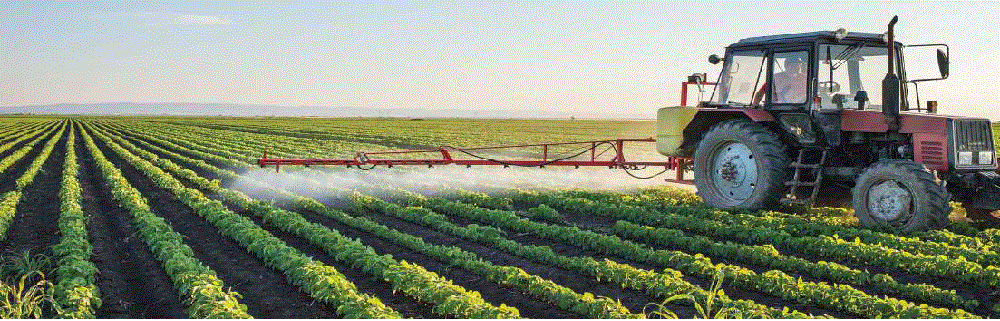
Even thought one of the basic tenets of organic food production is the disuse of pesticides, organic farms do indeed use pesticides, but they are of natural origin rather than synthetic. Natural pesticides are less toxic, but still present some risk to human health.
How to recognize organic products and what to avoid
Avoid bombastic labels of products that do not carry the official logo for organic food.
Carefully read the ingredients on all packaging.
Shop in health food stores, where there is less risk of being tricked by alluring texts on labels, but even there, do not go to the cash before reading everything carefully.
Buy local products at your neighbourhood farmers’ market, or directly from the farm. Even though the definition of local food is not even half as clear as it is for organic food, it is recommended that one buy from farmers’ markets at least in the summer season. There are numerous advantages: lower transport costs and emissions, the produce is fresh, and we support the local economy. Besides that, many small-scale farms use the best methods of organic farming, but they cannot afford the certificate.
And remember that organic does not always mean healthy! Organic ingredients can still make unhealthy foods, including junk food such as cheesy crackers, toaster pastries, and even hotdogs. Some foods that carry the organic label can still contain massive amounts of sugar, salt, or fat, and as such present health risks. “Made with organic ingredients” does not mean anything other than that at least 70% of the ingredients are organic. What about the other 30%? Any label that says, “made with organic ingredients” is still suspicious, since in many cases these are products that contain at most three organic ingredients that are highlighted in the most prominent spot on the packaging. There are also significant problems with the terms free range, sustainably harvested, gluten-free, and kosher, which we will address in the next issue.
Educate yourselves. Books and other print and digital media offer plenty of information.
Canadian Food Inspection Agency:
http://www.inspection.gc.ca/food/organic-products/
The Globe and Mail:
https://beta.theglobeandmail.com/life/health-and- fitness/health/theres-a-long-way-to-go-to-truly- improve-food-labels-in-canada/article33424244/
The Organic Centre:
https://www.organic-center.org/what-the-latest- research-actually-says-and-doesnt-about-organic/
National Post:
http://nationalpost.com/news/canada/canadas- organic-food-certification-system-little-more-than- an-extortion-racket-report-says
According to the non-profit organization Environmental Working Group, certain kinds of fruit and vegetables use more pesticides than others, so buying the following organic products is recommended:
- Apples
- Swiss chard
- Bell peppers
- Kale, collard greens
- Cucumber
- Zucchini
- Celery
- Nectarines
- Potatoes
- Peaches
- Grapes
- Spinach
- Cherries
- Strawberries
- Tomatoes
- Hot peppers
Upcoming Events
Article Categories
- DIARY OF THE IMMIGRANT
- HIGHLIGHTS
- Editor's Note
- Trending
- Interview
- INTERVIEW: COFFEE WITH
- Canada
- Serbian Community
- Serbs Around the World
- Homeland
- Visit Serbia
- Life Today
- History and Traditions
- Through the Prism
- Business & Career & Finances
- New Destinations
- Arts & Culture
- Nurturing Serbian Language
- ABCs of Health
- Our Kitchen
- Diary of a Serbophile
- Sports and Hobbies
- Young Journalists
- Kids’ Page
- Our Youth
Fundraising Campaign for SAN
With your donation, you will contribute to the continued existence of the magazine as well as the maintenance of the website. Your name or company name will be included on our page “Our Sponsors”. If you wish you may also choose to remain anonymous (be sure to select the option to donate anonymously in the application). Thank you for considering to support SAN.
Donate Now