
The Jewel of Timočka Krajina
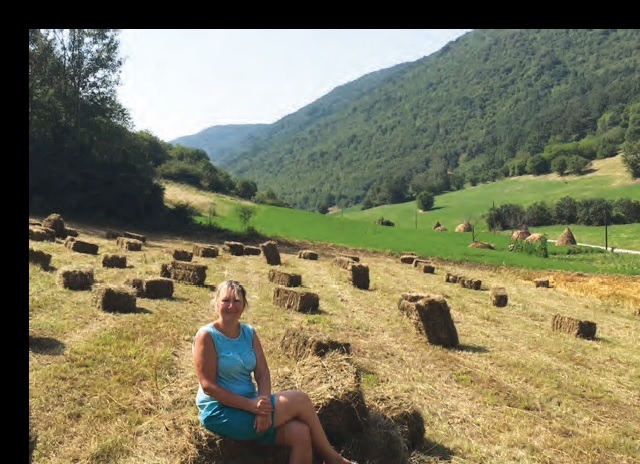
Plains and valleys, plowed fields, corn fields, sunflowers, haystacks, tractors, acacia trees by the side of the road, rosy and teal coloured houses, with gladioli and roses on their front lawns… These are some of the images which are woven through the route from Belgrade to the Timočka region. They give a beautiful, hilly, and green impression of Serbia. I have travelled the world, but never have I seen such fertile land for agriculture, pomiculture, and the breeding of livestock.
This summer, we had a total of two or three days during which we could escape from the Belgrade heat. We immediately knew that places more then 200 km away from Belgrade were not up for consideration as we scanned the tourist map of our beautiful country. And so, the final choice for our three-day trip ultimately fell on Timočka Krajina, a unique journey through history, where we immersed all of our senses into an exceptional experience of natural beauty, getting a glimpse of several historic buildings as well.
We arrived at the Resava Cave under an oppressive heat wave, so the guided group tour, which lasted about 45 minutes in 7 ̊ C temperatures, was pleasantly refreshing. From one section of the cave to another, we were amazed to discover interesting and diversely ornamented rock formations, already 45 million years old. It was clear to us why the Resava Cave had received the name “Resava Beauty” and was among the most visited touristic attractions in Serbia.
From the Resava Cave, it was only three kilometers to the Manasija monastery. After visiting Manasija, we set out for the Ravanica monastery, which is 35 kilometers away. If we had initially been better informed, the order of these visits would have been reversed. Ravanica is open to visitors until 6 in the afternoon, whereas Manasija is open an hour longer. An even better plan would have been to get an early start in the morning, arriving at Ravanica for the Sunday liturgy (or whatever day is marked with a red letter in the Orthodox Church calendar) since the relics of King Dušan are put on display at that time. It would be a good idea to spend the night at the Ravanica monastery’s accommodations, which are able to be booked in advance.
We dined on excellent grilled fish in the popular vacation spot, Grza, staying at the Koliba Grza resort (www.koliba-grza.co.rs).
The following day we set out for Boljevac. Our aim was to visit the Bogovinska Cave, which we had just learnt about by chance from a group of tourists. To visit the cave, we had to report to the Tourist Association of Boljevac. There we received free welcome bags containing tourist information and souvenirs from the region. Afterwards, we followed the guide by car for about 10 kilometers to the Bogovinska Cave entrance. This cave has long been well known, but it was only in 2013 that it became accessible to curious tourists, therefore, there are currently no road signs to guide you to the cave, and even if you did arrive at the location it would not be visits are not possible without a guide. Currently, only the first 500 meters of the cave are open for visitors, but even at that depth you can see a number of large caverns, fully experiencing the beauty of this cave. What was especially surprising, was a concert hall in which listening to a musical performance would be an exceptional experience. We learnt from our guide that it is possible to organize a visit of the entire cave, spanning about 6 kilometers, through the local speleological society.
Leaving the Bogovinska Cave we headed towards the former palace of Emperor Felix Romuliana (Gamzigrad). The archaeological remnants that we saw exceeded all of our expectations. Although the entire palace is in ruins, the remaining walls, stairs, floors, and ramparts are indicative of its formerly monumental nature. Certain parts of the palace and fortress are currently being restored. Entire parts of the gate and fortifications are visibly recent, lacking a patina and undamaged, but overall, the new material is well integrated into the original building, matching its colour and style. I hope that at least a larger part, if not the entire palace, will one day be restored.
The second day we stayed at the Rtanj Balašević Hotel. This was such a pleasant surprise, a hotel with premium services, “all inclusive,” and in the heart of Serbia! The children were enjoying themselves in the outdoor pool, while the adults were relaxing on lawn chairs in the clear, mountain air, disturbed only by the twittering of birds and the chirping of crickets. This is the ideal place to get away from the city and experience some beautiful, natural moments with any loved ones who have come from far away to relax in their homeland with their family.
On the third day, we climbed the Rtanj Mountain. The first part of the ascent, which was about six and a half kilometres, was spent hiking through steep, forested paths, and the second, even steeper part, was filled with bare valleys. A grand view of half of Serbia is found at the peak. Currently, all that is found at the top of the mountain is a cross and an incense censer. Once, there was a small church which was demolished due to a legend that there was gold buried beneath it. The gold was never found, and the church, unfortunately, is gone forever.
In this way, on the roof of Serbia itself, we ended another short, wonderful journey through our breathtaking homeland.
Generally, I believe that Serbia is making advances in promoting its natural beauty and in constructing its own unique image of ethno-tourism and ecotourism, both of which appeal to numerous Western tourists tired of the typical crowded and commercialized content. The roads are generally well maintained, and are well-marked. Google is able to provide more than adequate driving directions in these regions. Prices are at least half, if not a third, of what is normally found in other parts of Europe or North America. A hotel room is under 5000 dinars (50 CAD), a meal from the grill is between 500 and 1000 dinars (5-10 CAD), and an ice cream and coffee is 300 dinars (3 CAD). The services offered to tourists are also good, hosts are relaxed, not aggressive, and there is no sense, as there is in some countries, that kindness is offered only in exchange for tips. I believe that this is an important impression of Serbian tourism which is able to be recognized and valued by travellers from around the world.
Resava Cave
Resava Cave is almost 80 million years old. It began forming before the great Ice Age as a result of the chemical and physical reactions of an underground river passing through a deep limestone substrate. Resava Cave was discovered in 1962, and opened to tourists in 1972. The cave is 4.5 kilometers long, with 800 metres accessible to visitors.
The temperature is a constant 7 ̊ C, while the air humidity varies between 80-100%. The formations on the cave walls are estimated to be about 45 million years old. The inside of the cave is full of various caverns, canals, galleries, pillars, stalactites, stalagmites, stone draperies, and petrified waterfalls.
Manasija Monastery (Resava)
This monastery is among the most significant examples of medieval Serbian culture and is a part of the so-called “Morava architectural school.” It was erected by the despot Stefan Lazarević between 1407 and 1418. Immediately after being founding, the monastery became the Despotate’s cultural centre. The despot himself was one of the most educated people of his day. He authored several literary works, the most famous of which is the Slovo Ljubve. He developed an active community of scribes and founded the renowned Resava school where scrolls and books were copied and translated. The monastery has been ravaged and re-inhabited multiple times over the course of its history. Although heavily damaged, the murals covering the walls of Manasija are among the greatest examples of medieval painting.
Ravanica Monastery
Ravanica is the legacy of Prince Lazar, who died at the Battle of Kosovo on Vidovdan – June 28th, 1389. The church is designed with strong, defensive walls and seven towers. Ravanica was built between 1375 and 1377, and its frescoes were painted a few years before the Battle of Kosovo. Following the Battle, the death of Lazar, and the transport of his remains from the Priština church, Vaznesenja, to Ravanica in 1392, the monastery became a place of pilgrimage as well as the centre around which the cult of Prince Lazar, the martyr of Kosovo, was formed.
Precisely because of these activities – the persistent cultivation and preservation of a national consciousness, a safeguarding of the spirit of resistance – the Ravanica Brotherhood was constantly at odds with the Turkish rulers. Ravanica was set fire to and partially destroyed several times, which affected not only the church but the fortifications and monastery building as well. The church was first heavily damaged in 1686/7, when the majority of the Ravanica monks were also killed. The surviving monks were forced to flee the monastery and Serbia in 1689-1690, joining the Great Čarnojević Exodus.

Bogovinska Cave
Bogovinksa Cave, spanning a total of 6 kilometres in length, is second only to our longest, Lazarev Cave, which is 12 kilometres. Otherwise, Bogovinksa Cave has a river which is periodically active. The cave was formed by the underwater offshoots of the Bogovinska River.
It is surprising that Jovan Cvijić, who had explored numerous caves in these territories, was not aware of the Bogovinska Cave, for the locals had kept its existence a secret so that they might use it as a shelter and refuge. In the area of the cave which is accessible to visitors, there is a path raised over the river bed, running for 500 metres and leading into four larger caverns. The Concert Hall is particularly grand, garnering its name from its exceptional acoustics, and occasionally organizing concerts and liturgies.
Gamzigrad – Romuliana
The palace and legacy of the Emperor Galerius (293-311) is a testament to the palatial architecture of Late Antiquity, and is found in the region then known as Dacia. The palace was named after Galerius’ mother Romula. Even today, most of the luxurious buildings can be discerned through the uneven trapezoidal foundations which remain, constituting of a number of separate palaces, a temple, and heated bath houses, all enclosed within ramparts and gates. Everything is constructed from terracotta combined with various local stones. The remains of floor mosaics have also been discovered, along with other unique and valuable decorative objects, especially a mosaic depicting the god Dionysus, and statues depicting Hercules and Jupiter. This palace was declared a UNESCO World Heritage Site in 2007.
Rtanj
The Rtanj Mountain is called the “roof of Serbia” on account of its naturally pyramidal shape, resembling a roof. It belongs to the Carpathian mountain range, and its highest point reaches 1565 metres. Rtanj presents an interestingly biodiverse habitat. One part of the mountain is overgrown with forests (of pine and beech trees) up to an altitude of 900 metres. The upper part of the mountain is covered in low bushes and grass, where a large number of medicinal plants are also found, such as peppermint, thyme, rosehip, and the much-sought aphrodisiac from which the even more sought-after “Rtanj tea” is made. This mountain also abounds in fresh springs of drinkable water. During the summer, the mountain is visited by amateur mountaineers, but, due to harsh climactic changes, only hardened mountaineers are able to reach its peak.
Upcoming Events
Article Categories
- DIARY OF THE IMMIGRANT
- HIGHLIGHTS
- Editor's Note
- Trending
- Interview
- INTERVIEW: COFFEE WITH
- Canada
- Serbian Community
- Serbs Around the World
- Homeland
- Visit Serbia
- Life Today
- History and Traditions
- Through the Prism
- Business & Career & Finances
- New Destinations
- Arts & Culture
- Nurturing Serbian Language
- ABCs of Health
- Our Kitchen
- Diary of a Serbophile
- Sports and Hobbies
- Young Journalists
- Kids’ Page
- Our Youth
Fundraising Campaign for SAN
With your donation, you will contribute to the continued existence of the magazine as well as the maintenance of the website. Your name or company name will be included on our page “Our Sponsors”. If you wish you may also choose to remain anonymous (be sure to select the option to donate anonymously in the application). Thank you for considering to support SAN.
Donate Now