
INTERVIEW WITH THE CONSUL GENERAL OF THE REPUBLIC OF SERBIA IN TORONTO VASILIJE PETKOVIĆ
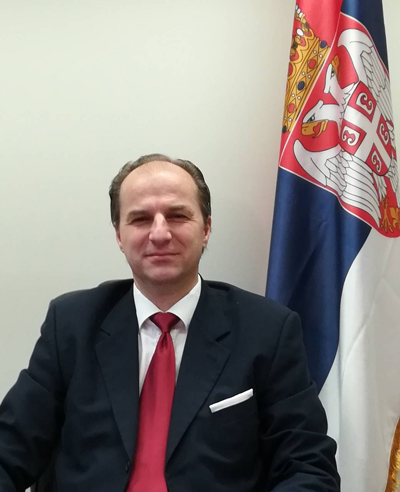
SAN: What are the main functions of the consulate in Toronto and how does the consulate help people of Serbian origin living here?
VP: The actions and activities of the Consulate General of the Republic of Serbia in Toronto (CG RS in TO), as well as, all other Serbian diplomatic missions (DM) in the world, are precisely defined by the Law on Foreign Affairs of the Republic of Serbia, the Vienna Convention on Consular Affairs of 1963, bilateral agreements and treaties.
Each DM has its own jurisdiction. In this regard, the CG RS in Toronto covers the provinces of Ontario, Manitoba and Saskatchewan. The activities of the Consulate General relate primarily to the provision of consular protection and services to citizens of the Republic of Serbia and, within it`s powers, to foreign nationals. Activities are also reflected in the regulation of status issues, performing of registrar functions (Birth Certificate, Marriage Certificate, Death Certificate, issuing passports, legalization of documents, etc.).
In addition to providing basic consular services, the CG also monitors the economic, political and cultural topics of the host country and events in the daily economic and cultural life of the Serbian community in the jurisdiction of this CG, as well, as providing advice for the better functioning of the Serbian diaspora in its broadest sense, which includes Serbs from Serbia, but also from parts of the former Socialist Federal Republic of Yugoslavia (SFRY). The CG is also open to suggestions from the Serbian community, which would contribute to a better positioning of the CG on issues of importance for mutual cooperation.
The Consulate General, like all other DMs, represents the state in a small way, as it provides parties with certain services provided in the home country by the Interior Ministry, the Ministry of Foreign Affairs, the Ministry of Education and Culture, local government services, municipal and registry offices, all in accordance with the laws and regulations of the Republic of Serbia and the host country, when it comes to the jurisdiction of the DM.
SAN: What is the mission of the consulate in Toronto regarding spreading a positive opinion about Serbia in Canada? Is this more a function of the embassy in Ottawa and are the consulate and embassy obliged to agree on everything regarding official statements and missions?
VP: The Consulate General of the Republic of Serbia in Toronto has autonomy in its operations. However, this does not mean that there is no cooperation and agreement with our Embassy in Ottawa. On the contrary, there are, sometimes even on a weekly basis, consultations and arrangements for a joint appearance, or if something needs to be done at the behest of the Embassy of the Republic of Serbia in Ottawa. In any case, there is good cooperation, which is expected of us on the professional level, but also according to the expectations of our people in Canada, because through a joint appearance and agreement regarding certain important issues, we can observe the coordinated appearance of the Embassy and the CG as state institutions of the Republic of Serbia. In our activities, we try to keep in mind even the smallest details, because all this creates a general picture of the country of Serbia, as well as its citizens.
SAN: The community appreciates your hard work and desire to attend events such as the Serbian Day festivities in Niagara Falls, Commemoration to the victims of the “Storm” [the 1995 operation the Croatian army launched to take control of Serbian-occupied territory in Croatia], and the Serbian Food Festival. Are these visits always official and mandatory? Can the ConsulGeneral ever decide for himself whether to attend a particular event?
VP: As part of its activities, the head of the diplomatic mission and consular post has an obligation to promote contacts with the Serbian community through which close cooperation is established between citizens and a state institution, such as the CG RS in Toronto.
However, this cannot be achieved if there is no mutual desire, respect and, in this sense, communication, which implies the cooperation and presence of the CG at all or almost all events and festivities organized by the Serbian community, but also, support and presence of citizens at gatherings and events organized by the CG.
As much as it is an honour for the Serbian community to invite me to their events, it is a greater honour for me to be present. This is how we show mutual respect, which is a great basis for further joint action. Although it requires extra effort and commitment on my part, attending events hosted by the Serbian community are extremely useful because in this way I have the opportunity to get to know many people, their activities, but also their needs, problems and everything else that our people face living in Canada.
SAN: Does the community in Toronto or Ontario organize any interesting get-togethers that differ from the communities in America and other countries?
VP: I cannot speak to the activities of the Serbian community in the USA, but from my experience so far, I think that the Serbian diaspora in the world operates on the same principle - establishing parishes, various associations, humanitarian organizations, building churches, etc.
The Serbian community in Ontario is very active and well organized, which is reflected in many manifestations commemorating cultural and historical events, as well as, humanitarian actions when needed. The associations take care of the cultural and historical traditions of the Serbian people, nurture it and are very persistent in it. Judging by the intensity and perseverance of all the work, and comparing it to other national communities in Ontario and Canada, I think our community is at the very top.
One of the parameters that indicate the scope of activities of the Serbian community in Canada is that in the past two years,seven awards have been given from the “Matica” [cultural-scientific institution of Serbia] to individuals and institutions for their contribution to the preservation of Serbian interests, historical and cultural heritage. This year we also have the winner of the Presidential Award - a gold medal for merit in promoting Serbian values and humanitarian work.
There are more individuals and Serbian institutions in Ontario who have earned recognition for their work, and, as a state institution, we will continue to recognize this and make a recommendation to the appropriate institutions in Serbia for future recognition. As a CG, but also personally, I am always ready to provide moral support to individuals and institutions working to safeguard the ties of our expatriates in Canada to the Serbian motherland.
What is missing, in my opinion, is an "umbrella organization" that would bring together representatives of all our associations and organizations to decide, above all, onextremely important issues for the benefit of the Serbian community in Canada or at the Ontario level. The unique appearance towards the Canadian authorities creates a completely different picture of the Serbs, thus classifying them as serious interlocutors and partners. The same is true toward the fatherland of the Republic of Serbia and other Serbian lands. The existence of an umbrella organization would in no way imply a restriction on the freedoms and activities of existing associations, but would merely concentrate and strengthen joint activities on issues of general concern to the Serbian community in Ontario and Canada. There have been such attempts in the past that, unfortunately, have not come to fruition, but that does not mean that the idea of establishing a national, representative institution should be abandoned.
SAN: Did the community here accept you immediately or did it take an adjustment period to earn our trust? Does it require your special effort and exertion?
VP: Our community is very welcoming and accepts new people. There is always an adjustment period, both for diplomats and the community, which is quite common. It is our duty, as diplomatic representatives, to work at full capacity, and thus, to earn the trust of the Serbian community.
I can proudly say that the cooperation between the Consulate General of the Republic of Serbia in Toronto and the Canadian Diocese and the Serbian communities is at an enviable level, as evidenced by the many joint actions.
I will list just a few of them: A memorial to victims of persecution from Croatia in “Operation Storm”, in August 2017, was organized in cooperation with the Serbian Heritage Academy of Canada; a ceremony on the occasion of the National Day of the Republic of Serbia and the St. Sava Academy organized with the Canadian Diocese of the Serbian Orthodox Church in February 2018 (as I later learned, this joint appearance of the CG and the Canadian Diocese was organized for the first time ever since the Consulate General in Toronto came into existence in 1953); commemoration of members of the Canadian Army Medical Corps who participated in the Thessaloniki Front from 1915 to 1918 in a joint organization with the Serbian Heritage Academy of Canada in Toronto at the University of Toronto School of Medicine, on November 6th 2018; Reception on the occasion of the National Day of the Republic of Serbia, on March 4th 2019, in collaboration with the Consulate General and the Canadian Diocese, along with a group of enthusiasts from the Serbian community in Ontario, who sponsored a cocktail reception at the Cultural Centre of the All Serbian Saints Church in Mississauga. On that occasion, we also had special guests from the Republic of Serbia - Aleksandar Antić, Minister of Mining and Energy and Her Excellency Kati Csaba, Ambassador of Canada to the Republic of Serbia.
The Consulate General and representatives of associations and individuals from the Serbian community organized a large number of literary and poetry evenings, as well as, exhibitions of paintings at the premises of the Consulate General.
In one of the previous questions, you stated that the community is grateful to the Consul General for its regular participation in their events. However, I am even more grateful to the Serbian community for accepting me with open arms and in this way, I feel not only professionally fulfilled, but also privately I have a feeling like I am among my own, like at home.
THE MOTHERLAND AND THE DIASPORA
SAN: Can you give us some items from Law on the Diaspora from 2009 and amendments to the Law that may be of interest to our readers?
VP: The Law on Diaspora and Serbs in the Region was passed in 2009. Although the Ministry of Diaspora has ceased to exist in the meantime, issues of the diaspora are now the responsibility of the Directorate for Cooperation with the Diaspora and Serbs in the Region, which operates within the Ministry of Foreign Affairs of the Republic of Serbia.
I would like to point to Article 6 of the Law, which refers to the co-financing of projects in the diaspora in various fields, for which a call for funds is announced annually, which interested parties can be informed of through the website of this CG.
Articles 15 and 16 of the Law allow for the creation of a Diaspora Assembly, which can outline everything it considers to be of importance for improving the relations and status of our people abroad with the motherland of Serbia.
Article 24 regulates the establishment of the Economic Council, which has an advisory role in the Diaspora Assembly. Then Articles 25 and 26 relating to status issues of the Diaspora and to councilfor cultural, educational, scientific and sports cooperation. However, the Law is best viewed as a whole because it covers a wide range of possibilities for actions of the diaspora.
SAN: Is Serbia introducing some business-model newspapers and incentives for small private businesses from the Canadian diaspora in areas such as computer programming and the like so that they have an interest in hiring professionals from Serbia? Are you familiar with any specific examples? Does the Ministry of Foreign Affairs put forward any new plans and actions related to cooperation with the diaspora?
VP: The Serbian economy operates on the principles of an open market economy. The Investments Act of 2015/2018 clearly specifies investment opportunities and conditions in the Republic of Serbia. Previously, there was a problem of different status given to domestic and foreign investors, but now this status is equalized. Government subsidies exist and are the same for all investors.
The aforementioned Law regulates the existence of the Economic Development Council, which is appointed by the RS Government and is composed of the Minister of Economy, the Minister of Finance, the Minister of Labour and Employment, the SCC Representative and the Director of the Serbian Development Agency.
There are many examples of foreign investment in our country's economy, mainly from the most developed countries in the world. Serbia has over 30 Canadian companies of different profiles, followed by Germany, France, Italy, USA, Japan, China, Turkey, UAE, Russia, etc.
The Republic of Serbia, as a candidate for EU membership, has numerous benefits and relief in doing business with the EU. Afree trade agreement with the Russian Federation has been signed, and soon there is the prospect of signing the same agreement with the Eurasian Economic Union, which in terms of space and population, is a huge market. Foreign companies with production in the Republic of Serbia will be able to export their products to the aforementioned duty-free markets within a certain quota, which is an absolute advantage over other countries when it comes that market.
The Government of the Republic of Serbia invites our people, who live and work in Canada, to invest and do business in Serbia and to familiarize themselves with the terms of investment directly through the Ministry of Economy, the Serbian Development Agency, the Serbian Chamber of Commerce, our Embassy in Ottawa or the CG in Toronto.
CAREER AND FAMILY
SAN: You studied the Arabic language at the Institute for Foreign Students in Damascus, Syria. How did find out about this opportunity and did this specific type of higher education contribute to diversity in your career? Was this a good basis for admission to the prestigious Diplomatic Academy?
VP: I studied Arabic in Damascus by circumstance, because my late father, Milan Petković, was at that time a military envoy of the SFRY, accredited to Syria, Lebanon and Jordan, based in Damascus. Given my stay in the Syrian capital, the only rational solution at that point was to start learning Arabic, which later proved to be very useful.
Staying in Damascus was also the period when I first encountered diplomatic work, observing the work and activities of my father and other embassy staff, which was pivotal in deciding my future life calling.
Knowledge of foreign languages is the basis for dealing with diplomacy, along with higher education, of course. Everything else is gained through work and is based on experience. It goes without saying that a diplomat has a general culture and a particular sense of international politics and skill in communicating with people.
Attending the Diplomatic Academy is a must for those who are starting out in diplomatic business. The Diplomatic Academy is an integral part of the Ministry of Foreign Affairs of the Republic of Serbia, it is very successful and well known abroad, which is also reflected in the frequent exchange of students from our Diplomatic Academy with the same or similar institutions around the world.
SAN: In addition to ministry jobs, you also have extensive experience working at numerous embassies in Sarajevo, Tripoli, Istanbul and Doha, just before coming to Toronto, where you have been since 2017. Is it difficult to get those jobs and how many people are competing for such a position? Did you always follow a plan or was it sometimes by circumstance?
VP: The Ministry of Foreign Affairs of the Republic of Serbia every year or two announces a call for applications to serve in our diplomatic missions and consular posts around the world. The announcement indicates the vacant spots that employees of the Ministry of Foreign Affairs can compete for.
It is no secret that jobs in certain countries are more attractive than in others, and accordingly, the interest in getting such jobs is greater in those places. Each candidate can apply for more than one job in different countries according to his or her own priority, so there is a high probability that they will be appointed to one of the countries they applied for. When deciding on the selection of candidates for a particular position, the professional qualifications, knowledge of the language required in the country of service, experience, rank required for that position, etc. are primarily taken into account.
SAN: Does your family accompany you in your diplomatic career and how do you and them fit into the everyday life of a new environment (outside of work)?
VP: Personally, I think it is very important for a diplomatic officer to have a stable family, who will always be with him. Regardless of the deep-seated view that diplomacy is a refined and gentlemanly business, as it is, it is first and foremost demanding and laborious, which often lacksa set work time and implies maximum concentration, constant engagement and a balanced approach to tasks. At certain times, separation from the family is imposed in accordance with the circumstances under which the service abroad is carried out, which represents a certain burden on daily life and work. This is why family occupies an important place and role in the life of a diplomat.
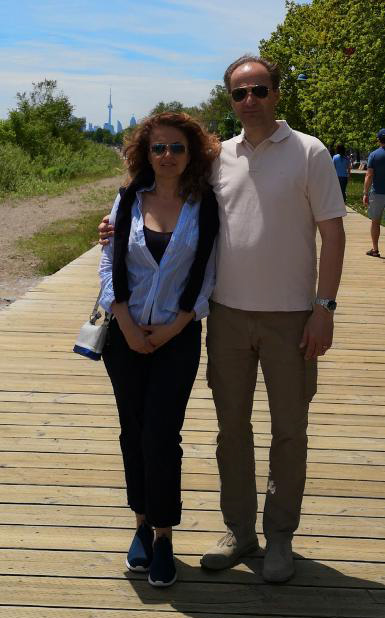
So far, I have been lucky that my family has almost always accompanied me in my career thus far. I have the exceptional support of my wife, Dragana, who is also a diplomatic officer at the Ministry of Foreign Affairs, where we met. The Ministry of Foreign Affairs has obviously had a decisive influence on me from many aspects of life.
I am especially grateful to our children, who have gifted us with their existence, good upbringing and mature attitude towards their life obligations, whose development in this direction is, I must emphasize, still because of my mostdeserving spouse, Dragana.
As a family, so far, we have had no problems fitting into the countries and places where we served, although it has not always been simple, as changing environments every four or five years is not easy at all. On the one hand, foreign service has the benefits of getting to know new countries, people and customs, which greatly widens perspectives, but it also has disadvantages, such as distance from the fatherland, parents, relatives, comrades and friends, and lacks an ordinary style of life that we are used to. For these reasons, in most cases, a diplomat's family members are rather turned, first and foremost, towards each other, which requires frequent compromises.
SAN: Do you have any advice for young people from Serbia or Canada about which is a good path to take for a career as a diplomat? Has your knowledge of certain languages (English, Arabic, French and German) influenced your career choices? Does a diplomatic career bring with it both sacrifice and risks that one must be prepared for?
VP: In addition to the appropriate level of education, foreign language skills, strong will, desire and determination are required to meet the diplomatic call.
Young people should be prepared for patient, persistent work, based on the principle of subordination, continuous training and travel, longer stays abroad and everything else that I have mentioned so far.
The future diplomat must be aware that their country has sent them out into the world to represent it and protect it`s interests in the best possible way, and that this is a priority in relation to everything the diplomatic service gives or takes away.
Engaging in diplomacy also carries certain risks and sacrifices, because sometimes it is necessary to go to serve in countries where there is a certain degree of risk due to difficult climatic conditions, political instability, situations of war, a negative attitude towards our country and other factors.
If young people find that they meet all of the above requirements, then they are the right people for diplomatic service.
AND SOME MORE
SAN: Thanks to your knowledge of Arabic, your previous travels have taken you east. How much did you know about this country before you stepped into it? How do you like Canada and Toronto?
VP: Before coming to the post of Consul General of the Republic of Serbia in Toronto, according to the established procedure, I had a thorough preparation for this duty that lasted about four months. Thanks to them, I am well aware of all the relevant facts about Canada, and that which is more important to my job, about our people who live and work in Canada. This means that before coming to Toronto, I already had a picture of what I could expect. Of course, that picture is constantly being supplemented and shaped by combining theoretical knowledge with the daily experience gained during my stay in Canada.
Although I was familiar with the basic features of our community in Ontario, what surprised me was the abundance of Serbian associations, organizations and institutions and their extraordinary activity.
Canada is a young country in every sense, and despite the multitude of different communities, languages and cultures, I feel a significant contribution by the Serbian community to the overall development of Canadian society, which makes me very professionally and personally pleased. Toronto is a city that welcomes people with open arms, but as a metropolis it can be very demanding. Above all, I mean the accelerated dynamics of life that not everyone is prepared for.
SAN: We here have all been able to master the subject material and knowledgegained in Yugoslavia from which we originate and learned many more new things related to the richness and complexity of life in a multicultural environment. How should Europe, the Balkans and Serbia educate and overcome the negative nationalism they occasionally fall into? Is the problem of intolerance always more economic in nature?
VP: The subject material that we mastered from the era of Yugoslavia was not bad at all. The problem, however, arose when the subject material we learned come to life. In any case, it should be remembered as a lesson for the future of Serbia. Yugoslavia is gone, whether we like it or not, and we need to focus as much as possible on our only fatherland, Serbia and the Serbian lands where our people still traditionally live.
Today's Serbia is also a multinational and multicultural country that respects the rights of all its citizens. Even in the 1990s, Serbia was able to preserve multiethnic and multinational culture at a much higher level than was the case in all other former Yugoslav republics and Balkan countries.
On the other hand, political and economic conditions were not good, which is why a significant number of our citizens went to live and work abroad.
Today's Serbia allows all its citizens, regardless of nationality or religion, to exercise their rights through national councils, free citizens’ associations, political parties and through their representation in the RS National Assembly, all in accordance with European standards.
Economic development also improves the quality of life, allowing people to pay attention to other things like starting their family, planning for the future, etc. That is why Serbia today creates a large number of jobs and improves living conditions, which enables people to think in a positive way, and therefore, to have a positive approach to life in Serbia. It is the golden rule of all states, and in that sense, Serbia is on the right track.
We should remember the past, as well as Yugoslavia, but now we have our Serbia, to which we must unreservedly commit to.
SAN: Do you have a favourite spot in Ontario and Toronto and something to recommend to Ontario visitors and SAN readers? Do you bring maple syrup and Montreal steak spice to Serbia?
VP: Niagara Falls is an impressive, natural phenomenon that gives the impression of power and unstoppability. In addition, the work of our great Nikola Tesla is related to Niagara. Niagara Falls is all the more interesting to me because, until my arrival in Canada, I often watched documentaries and stories about them, and now I have the opportunity to see them in real life.
Blue Mountain is also one of my favourite places, especially in wintertime. This is a good example of how you can create a very good winter tourist centre from a small hill.
My family and I love being in nature and hiking, we really like Algonquin Park and Nature Reserve, as well as, the many lakes, some of which we have yet to explore.
In Toronto, I love “The Beaches”, the[Queens] Quay Promenade next to Lake Ontario, the many parks, some of which are like a forest in the middle of the city.
The Distillery District is interesting to me because of its diverse tourist offerings. My favourite cafe is "Cacao 70", which my wife and I, jokingly, renamed "block 70" (a part of New Belgrade). I especially like to visit an antique shop located in one of the corners of the Distillery District. I like Bay Street, King Street, Yorkville Avenue, which have many shops and restaurants, as well asone part of Yonge Street, but I am not a fan of shopping malls and indoor spaces.
I tried maple syrup for the first time, in due course, at some American friend’s place during a private dinner, but here my family often uses it and it is an indispensable part of gifts for relatives and acquaintances in Serbia.
Upcoming Events
Article Categories
- DIARY OF THE IMMIGRANT
- HIGHLIGHTS
- Editor's Note
- Trending
- Interview
- INTERVIEW: COFFEE WITH
- Canada
- Serbian Community
- Serbs Around the World
- Homeland
- Visit Serbia
- Life Today
- History and Traditions
- Through the Prism
- Business & Career & Finances
- New Destinations
- Arts & Culture
- Nurturing Serbian Language
- ABCs of Health
- Our Kitchen
- Diary of a Serbophile
- Sports and Hobbies
- Young Journalists
- Kids’ Page
- Our Youth
Fundraising Campaign for SAN
With your donation, you will contribute to the continued existence of the magazine as well as the maintenance of the website. Your name or company name will be included on our page “Our Sponsors”. If you wish you may also choose to remain anonymous (be sure to select the option to donate anonymously in the application). Thank you for considering to support SAN.
Donate Now