
Homeschooling – Your choice
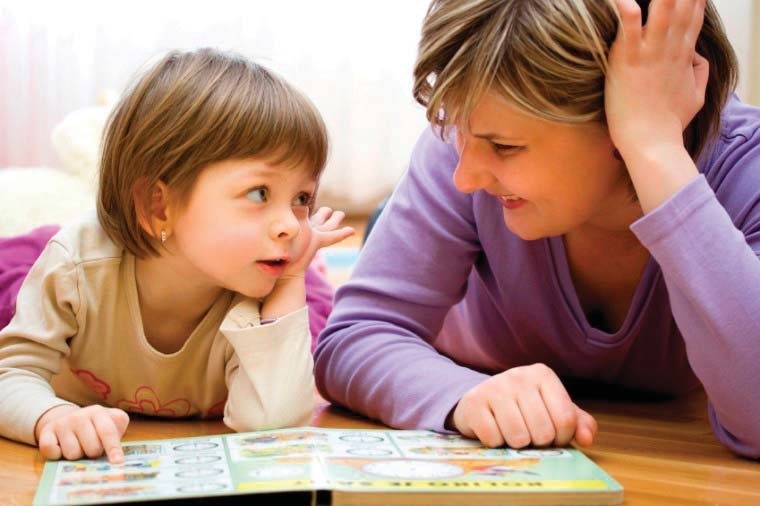
I hear so many parents of elementary schoolchildren say, “Kids get too much homework!” I grew up in Hamilton, Ontario, during the ‘80s and ‘90s. I do not remember ever receiving homework in elementary school. We would finish any work in class, and time at home was reserved for family and recreation. At that time in school, we practiced writing and the multiplication table; I still regularly use these skills. I finished high school in 2003, and my generation was the last OAC (grade 13) generation to graduate. [OAC – Ontario Academic Credit. The Ontario educational system used to have five-year high school education, and the fifth year was known as “grade 13” from 1921 to 1988.]
The school board introduced a new plan and learning program for students born after 1984. We know that what is new is not always better, and they say that if something ain’t broke, don’t fix it. In the new plan and program, learning writing or the multiplication table became the decision of individual teachers. Parents were advised to help their children with their homework every day.
Seeing as children spend six or seven hours a day, five days a week at school, why are parents expected to further instruct their children in the evenings and on weekends?
The latest results of the EQAO tests (Equality and Accountability Office: an independent government body that puts together and tracks exams in reading, writing, and math that students in Ontario schools have to take in grades 3, 6, 9, and 10) are very alarming. If parents cannot expect schools to teach their children basic knowledge (reading, writing, and math) why send them to a public school at all?
It seems that it has come to a point where parents are the only ones responsible for what their children will learn at school. In August 2016, the CBC announced that only 50% of grade 6 students who took the standardized test satisfied the provincial standard; for comparisons sake, that figure was 58% in 2012. The results are worse with the grade 3 students as well. Only 63% satisfied the provincial standard, which is a significant drop from 68% in 2012, or 71% in 2009. These kinds of results show a constant drop in demonstrated knowledge on math tests in the last seven years.
My daughter went to an elementary school that was built to accommodate 450 students. A school nearby closed around 10 years ago because of the dwindling enrolment, and the building was sold to a developer who renovated it and turned it into housing units. The children from that school were transferred to my daughter’s school, which meant that the three-storey school all of a sudden had 1,000 students. It is surrounded by a fence nine meters high, the surface is concrete, there is no greenery, and the only shade is offered by a small tree that the children fight over. There are no water fountains. For comparison’s sake, my elementary school was a one-storey building on several acres, and was attended by 200 students. There was incomparably more room.
One winter, when my daughter was in grade 1, I volunteered at the school. The snow had not been cleaned after heavy snowfall. Then, a frozen rain fell and turned the snow into big, icy slabs. At recess, the children ran around in small circles like herds of gazelles. There was no room for any kind of individual movement, so it was impossible to avoid physical contact and avoid aggressive children. Because my daughter was afraid to go out at recess, she asked to stay in the classroom during that time, but the school did not allow that. Even though they agreed that my anxiety was justified, they could not do anything to solve the problem.
My daughter was under stress because of an overcrowded school in which there was no order. All the school needed to do was to provide council for my seven-year-old daughter, so that she could get over her fear of bullies at school. That is why on January 7, 2016, I put in the request for homeschooling.
People often ask me how I find the time to educate my daughter. I work part-time, so her learning schedule changes every day. It is not necessary to study at home for six hours like at school. Learning about the world through activities and travel is just as important as memorizing the multiplication table. Practice is more important than excessive testing.
In Alberta, homeschooled children receive $1,670 from the government to cover the costs of education. In Saskatchewan, parents receive up to $1,000 for every homeschooled child. The average cost of education in Ontario is $12,000 per child yearly. In October 2015, there were 764 homeschooled children in the Peel District School Board, and 151,423 children in public schools. The numbers might not be so high yet, but they show growth from year to year. For example, Peel had 530 homeschooled children in 2014, and 493 the year before that.
The regulations for homeschooling vary from province to province.
In Ontario, the only requirement is for the parents to declare homeschooling to the local school board. Parents fill out a letter of intent and mail it in to the school board; that is all. Some parents worry about the prerequisites for college or university applications after homeschooling. To avoid possible problems, it is important to plan ahead of time in order to obtain the necessary textbooks and learning materials from the school board, based on the curriculum of high school grades. That way, the students can show their knowledge through tests and grades. Children who were homeschooled are 6% more likely to receive a diploma compared to their peers in public schools.
The flexible schedule of homeschooling creates less stress and more time spent learning effectively. Education becomes an essential part of everyday life. While I educate my daughter, I also learn new things. Often, simple questions turn into research projects. We research together in a safe and relaxed environment. The Internet is full of free online resources for homeschoolers. This plan and program is something that guides me in educating my child. Parents do not have to be experts in all school subjects in order to successfully educate their children. It is more important to foster an environment that will help develop an exploratory spirit, and with that create a desire for learning in the child.
Upcoming Events
Article Categories
- DIARY OF THE IMMIGRANT
- HIGHLIGHTS
- Editor's Note
- Trending
- Interview
- INTERVIEW: COFFEE WITH
- Canada
- Serbian Community
- Serbs Around the World
- Homeland
- Visit Serbia
- Life Today
- History and Traditions
- Through the Prism
- Business & Career & Finances
- New Destinations
- Arts & Culture
- Nurturing Serbian Language
- ABCs of Health
- Our Kitchen
- Diary of a Serbophile
- Sports and Hobbies
- Young Journalists
- Kids’ Page
- Our Youth
Fundraising Campaign for SAN
With your donation, you will contribute to the continued existence of the magazine as well as the maintenance of the website. Your name or company name will be included on our page “Our Sponsors”. If you wish you may also choose to remain anonymous (be sure to select the option to donate anonymously in the application). Thank you for considering to support SAN.
Donate Now