
From the “Gibraltar of the Danube” to Branko’s Resting Place
Petrovaradin Fortress
Novi Sad, with its Petrovaradin Fortress, is one of the most frequented places to make a daytrip in Serbia. Weekenders from Novi Sad and Belgrade are among its most numerous visitors throughout the Spring and Summer months.
When construction was finished on this unconquerable fort in 1780, it was called the Gibraltar of the Danube due to its location and strategic importance. Over time it became a symbol of Novi Sad.
The upper fortress of Petrovaradin, which still stands today, is a classic example of 18th century military architecture with its barracks, aqueducts, clocktower, basement galleries, lagoons, and four subterranean levels of hallways.
Petrovaradin was not just an impenetrable fort, but also a large dungeon. Mihajlo Polit-Desančić writes that “the buzzing and clanking of prisoners’ chains” was heard beneath the earth. Many of our important historical figures where imprisoned there, and among them we find Karađorđe after the collapse of the First Serbian Uprising, Vasa Pelagić, imprisoned as a rebel and disseminator of Socialist ideas, Antun Gustav Matoš as a military deserter, the patriots from Beška in 1914, both members of the Yugoslavian League of Communist Youth and patriots in 1941, among many other.
If the day is a clear and sunny, visitors can walk along the sturdy ramparts, designed with many angles with overlapping fire in mind. Those ramparts make up the “bastion” of the fortress. From the bastion, visitors can climb up sets of stairs to the upper fortress, the entrance of which is a small gate, built in the Classical style. The winding stairs, which lead from the Church of St. Juraj to the upper bastion of Ludwig, were once made of wood, but the oak planks were later switched to stone. The upper fortress’s main military food storehouse is located under the terrace, where now there is a restaurant. There, one can sit with some refreshments or lunch and enjoy the wonderful view that encompasses all of Novi Sad. Replicas of the original lanterns are scattered about the spacious terrace, and the stone groundwork is also partially restored.
Without fail, tourists pause to take photographs of themselves under the clock tower which is in the Bastion of St. Louis. The clock is unique since the big hand indicates the hours, while the small hand indicates the minutes. Long ago, this was done so that shipmasters on the Danube and surrounding farmers were always able to clearly see what time of the day it was. Time flowed slower back then, not being measured in minutes and seconds. In the mid-18th century, the old tower was demolished and replaced with the current one, in which we nevertheless find the old clock mechanism. This clock is known as the drunk clock, since it is late when it is cold, and fast when it is warm.
The officers’ pavilions are constructed in a Baroque style, with a façade that is brought to life by numerous arches. The interior was converted into a restaurant space in the 1950’s.
The underground military galleries, which are the fortification’s greatest attraction, are not to be missed. During Word War II the galleries were used as a bunker for both civilians and soldiers, and after the war, they were a common location for filming movies. Conscription was announced when war broke out with Serbia in 1914 in the same place where the Museum of the City of Novi Sad is found today, once used as the fortress’s gunpowder magazine.
The long barracks with their clock tower are the most recognizable feature of the fortifications. A portion of the barracks has been converted into a hotel.
If you are visiting Petrovaradin, be sure not to miss out on getting a picture with the Courtyard Gate which is five metres wide and joins two separate bastions. It was built to truly resemble the entrance of a medieval castle.
Aside from that, Leopold’s Gate arches over the entrance to the upper fortress, and above it is found a stone wreath encircling an emblazoned Austro-Hungarian crest. The Eastern outer gate is named after the emperor Charles VI, and the year in which the fortress was built is engraved on it: 1780.
The entire fortress is dominated by trenches today, which are covered by a soft layer of grass in the Spring and Summer, and perfect for vacationers. They are surrounded by ramparts. At least half a day is necessary in order to visit everything, but the fortress’s view of Novi Sad, the Podgrađe (Lower City, which was known as the City of Water), and the Danube will be worth every minute.
Lunch on the Shores of the Danube
If you visit Petrovaradin in the morning and decided to continue your excursion to Stražilovo, make a stop for lunch along the way in Sremski Karlovci. If it is a sunny day, there is no better place to eat than by the riverside. And if the catch was good that day, there is no tastier meal than fish stew, paprikash, or grilled fish.
“Naša Čarda” is a small, peaceful oasis on the banks of the Danube. The rustic building is certainly a good place for lunch if the weather is poor, but on a good, dry day, guests can sit outside around wooden picnic tables, trying the freshly caught, deliciously prepared fish specialties. Or, if they do not like fish, ćevapčići. While the stew or paprikash is steaming from its pot, small fishing boats sway in the shallow waters beside you. The smell of the river builds an appetite, and the sound of water and twittering birds calms the nerves.
The prices are also very favourable. A four-person family can eat well for $30 CAD.
Stražilovo
A delicious meal goes excellently with a hike along the path leading to the memorial of Branko Radičević. Stražilovo is located just a few kilometres from Sremski Karlovci, one of the many peaks of the Fruška Gora mountain. It is a popular place for vacations, and is also the location of the great poet’s tomb. Stražilovo is a part of the Fruška Gora National Park, from which the stražilovac wind blows, a unique characteristic of Sremski Karlovci.
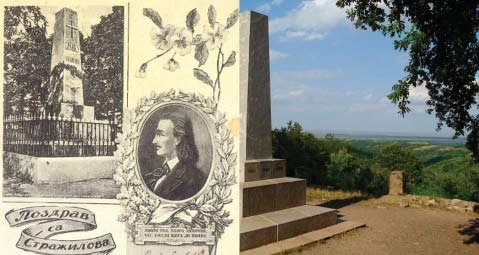
The path climbs upwards, 321 metres above sea-level, and has many rest stops where there are signs with Branko’s verses and information about the surrounding vegetation.
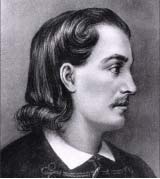
One of the few Serbian poets of the Romantic era which everyone knows by first name alone – even his memorial is merely inscribed with BRANKO – spent much of his free time in Stražilovo where he found inspiration for his poetry. His final days were spent in composing his final impressions of his beloved Stražilovo:
O, how it is here, how pleasant!
O, how is lifts the soul upwards, so strongly!
O, how wonderfully your hills are adorned!
O, how the valley winds below!
O, how the breeze steals the scent! –
From the many linden trees.
Branko was a poet driven by deep patriotic urges and honest feelings of love. A great adherent to Vuk’s reform of Serbian, he sung in his national language and loved his native Karlovci more than anything, spending the best days of his youth there.
Branko’s tomb offers the most majestic view of his homeland. And at the base of the hill is the rest area, “Brankov Čardak,” in front of which the poet’s memorial stands.
Upcoming Events
Article Categories
- DIARY OF THE IMMIGRANT
- HIGHLIGHTS
- Editor's Note
- Trending
- Interview
- INTERVIEW: COFFEE WITH
- Canada
- Serbian Community
- Serbs Around the World
- Homeland
- Visit Serbia
- Life Today
- History and Traditions
- Through the Prism
- Business & Career & Finances
- New Destinations
- Arts & Culture
- Nurturing Serbian Language
- ABCs of Health
- Our Kitchen
- Diary of a Serbophile
- Sports and Hobbies
- Young Journalists
- Kids’ Page
- Our Youth
Fundraising Campaign for SAN
With your donation, you will contribute to the continued existence of the magazine as well as the maintenance of the website. Your name or company name will be included on our page “Our Sponsors”. If you wish you may also choose to remain anonymous (be sure to select the option to donate anonymously in the application). Thank you for considering to support SAN.
Donate Now