
Green Fashion
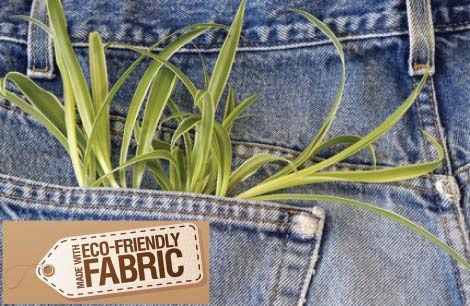
I remember my excitement when I used to go shopping with my mother for a new coat, shoes, or dress. It was common knowledge when you went shopping: when you grew out of the old item, you wore it out, or more rarely, when it went out of fashion. Clothing and shoes were expensive, even for the average family with two working parents.
Times have changed. For the price of a dinner in a nice restaurant, we can buy ourselves two pairs of pants, or a nice pair of shoes, or even a winter coat. We collect so much clothing simply because the prices are affordable. Do we ever stop to think about what their actual price is? The price that is paid by this planet or by workers in another part of the world, poisoned by pesticides and other toxic substances?
An attempt to solve the problem by using a genetically modified cotton (one that used natural pesticides) did not work, since a few years later there appeared new species of parasites that required even more pesticides.
A significant problem in the production of cotton is the misuse of child workers. According to data provided by the non-profit organization Human Rights Watch, every year in Egypt alone, over one million children work on cotton plantations.
It would seem that synthetic fabrics are the solution. Or… maybe not. Their production started when someone thought of using petroleum to create a new kind of fibre. Everything started with nylon pantyhose, and the wheel has not stopped turning ever since. Today, millions of barrels of oil are used to make synthetic clothing items, which have become parts of our necessary wardrobes.
In factories that mass-produce cheap clothing—so-called sweatshops—the employees work under slave-like conditions. It is not only producers and sellers of cheap clothing who get a finger pointed at them. High-end stores, where we can pay up to three or four times more for a similar product, also use the cheapest workforce in economically poor or war-torn countries. Unfortunately, not a single label will say “Made in a sweatshop.”
How can aware and conscientious consumers, then, know where and what to buy, and not contribute to the pollution of humankind’s surroundings nor the abuse of workers?
Here are a few eco-friendly labels:
Linda Loudermilk is a high-end designer who uses bamboo, organic cotton, and soy in her eco clothing line.
Deborah Lindquist uses recycled materials.
Loomstate and Del Forte Denim produce expensive but eco-sustainable jeans.
Levi’s started producing organic denim many years ago.
Brands such as Greenloop, Coco’s Shoppe, and Pangaya are also recommended.
Search for increasingly popular bamboo products on the Canadian site www.bambooclothes.ca.
Items made with organic cotton are also recommended. Check out the site of Canadian brand Patagonia, known for their winter sports clothing: www.patagonia.ca/home.
The popular brands Gap and Nike are also increasingly using organic cotton.
Hemp is the new star in the eco fashion sky. It is ideal for those who do not mind the hippy look, since it uses very few pesticides and herbicides in its production, and grows faster and depletes the earth less than cotton. One hectare of hemp absorbs five times more carbon dioxide than a hectare of forest, so hemp plays an important role in the fight against global warming.
Organic wool is the hardest to find. The Ontario brands Patagonia and Warm & Wonderful are specialized in woollen sweaters. And do not forget the natural fabric of alpaca, which is the trademark of the brand Sentaler and its founder Bojana Šentaler, who was featured in the summer issue of our magazine.
The Internet has a great deal of information. Check out the following sites before you go clothes shopping:
- http://www. thegoodtrade.com/features/fair-trade-clothing
- http://ecocult.com/2015/the-18-most-affordable-places-to-buy-ethical-fashion/
Raising consumers’ awareness about fast food goes hand in hand with raising awareness about the things we wear. That is how the term “slow fashion” came to be, as the opposite of fast or dirty fashion.
Next time you visit the homeland, do not forget that sweaters from Sirogojno on Mt. Zlatibor are not only ecologically sound, but are also best at warming the heart.
Ask about “clothing with green tags,” as these products are called in Serbia.
Green fashion is the future, or there will be no future!
Upcoming Events
Article Categories
- DIARY OF THE IMMIGRANT
- HIGHLIGHTS
- Editor's Note
- Trending
- Interview
- INTERVIEW: COFFEE WITH
- Canada
- Serbian Community
- Serbs Around the World
- Homeland
- Visit Serbia
- Life Today
- History and Traditions
- Through the Prism
- Business & Career & Finances
- New Destinations
- Arts & Culture
- Nurturing Serbian Language
- ABCs of Health
- Our Kitchen
- Diary of a Serbophile
- Sports and Hobbies
- Young Journalists
- Kids’ Page
- Our Youth
Fundraising Campaign for SAN
With your donation, you will contribute to the continued existence of the magazine as well as the maintenance of the website. Your name or company name will be included on our page “Our Sponsors”. If you wish you may also choose to remain anonymous (be sure to select the option to donate anonymously in the application). Thank you for considering to support SAN.
Donate Now