
Academic Achievements on an International Scale An Interview with Vukan Vučić, Professor Emeritus, the University of Pennsylvania, Philadelphia
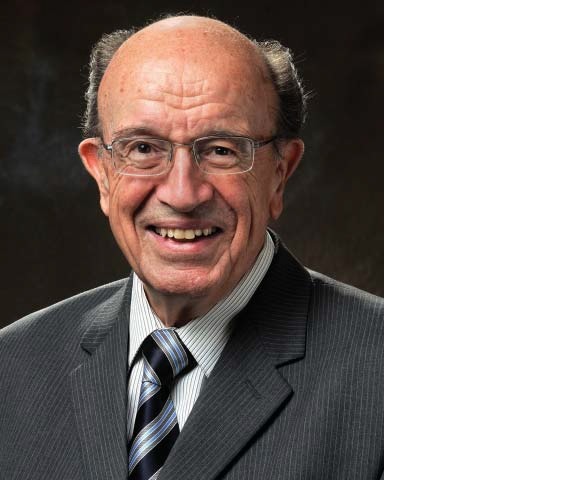
Vukan Vučić is a Professor Emeritus of transportation systems and urban studies from the University of Pennsylvania, Philadelphia, the second oldest university in North America.
He has written several academic and scholarly works and has held hundreds of lectures in various universities, academic conferences, and public forums. He has worked as an urban transit consultant in many cities throughout North America, Russia, China, and other countries. As a transit expert, Dr. Vukan Vučić has had a significant impact on the development of Light Rail Transit – LRT – a modern streetcar which has its tracks separated from the rest of traffic and has special signals at intersections. A few of his achievements have been participating in the planning of LRTs, subways, and regional railways in San Francisco, Washington, Edmonton, Perth, Bergen, Moscow, Manchester, Rome, Naples, Belgrade, and Singapore, where he was the advisor to the Minister of Transportation. His contributions towards exchanging practical experiences between European and North American cities have been invaluable. He is currently assisting cities in Russia and China in learning from both the solutions and mistakes of American and European cities.
Dr. Vukan Vučić is the author of several books and the recipient of numerous accolades: he was the first recipient of the “Dr. Friedrich Lehner Medal” (Munich, 1982); the first co-recipient of the “Lifetime of Academic Distinction Award from the American Public Transportation Association – APTA” (Houston, 2014); he received an “honoris causa” degree from CNAM University in Paris (2011) and from the University of Waterloo, Canada (2014). He is a corresponding member of the Serbian Academy of Arts and Sciences (SANU, Belgrade, 1994) as well as the Russian Academy of Architecture and Construction Sciences (RAASN, Moscow, 2006).
The life of Professor Vučić tells a story of achievement, knowledge, family, immigration, core values, and the preservation of Serbian identity. We asked Vukan Vučić to share a part of his rich, enlightening, and inspirational life story with our readers. I conducted a phone interview with Dr. Vučić while he was flying over the Pacific to the Chinese city of Tianjin, boasting a population of 15 million, where he had been invited as a consultant for the city’s transit systems.
Youth in Serbia
SAN: You grew up and completed your studies in Belgrade, and then left for Europe first, and America afterwards. Tell us about your family and what you remember from the period when you were living in Belgrade.
My parents moved from Jagodina to Belgrade in 1931, where I was later born in 1935. My sister Lidija and I love and are proud of Belgrade, its unique location on the Danube and Sava Rivers, Kalemegdan fortress, its history, and its multicultural orientation which is greater than in any other city of the former Yugoslavia, still harkening back to its inclusive heyday.
Until the war, our father, Radmilo Vučić, was a professor in a men’s teacher’s college up to 1941. Since he taught philosophy, he could not (and would not) give that up for Marxism when the war ended, so he ended up teaching German and English in high school. Then he moved to the Theological Faculty of the University of Belgrade, where he taught the psychology of religion and pedagogy until he was 75. He lived to be 96.
Our mother, Dr. Marija Vučić, taught psychology at the women’s teacher’s college until she retired in 1950. After that she was active for another 12 years: she founded an advisory service for parents, worked as a psychosomatic consultant at the hospital in Belgrade, and held many lectures in schools and public forums. She received the City of Belgrade Award for her activities in 1963. Our mother, a Slovene by birth, and our father were both very content to be Yugoslavs.
My sister, Dr. Lidija Vučić, is a Professor Emerita of Psychology at the University of Belgrade. She has guided hundreds of psychology students, published several books, many academic articles, and has participated at international conferences. My family and I are very close with her. Eleven of us, including our children and grandchildren, went to visit her this summer!
Now, in my twilight years, I often think of those ‘early’ days. In 1941, before the war, life was just getting better, we were able to buy things, to go on vacations, etc. But the bombing of April 6th and the occupation was what followed. I remember when Hitler declared war on Russia – the 22nd of June, 1941. The German bombings were horrific, but the American-British bombings of 1944, which targeted residential buildings, targeted us, their allies – the bombings of Leskovac and Niš, but not Zagreb, the home of Hitler’s entranced ally the NDH – those bombings were harder to bear than the German attack of 1941. To this day, living in the U.S., I have not been able to find out who was responsible for that criminal decision, to bomb Serbia in 1944. Although I do fondly remember the years from 1945-60, since a man grows and learns the most during his early education and university.
SAN: As a child you were obsessed with observing the streetcars through the city. You started writing a newsletter about Belgrade’s public transit at ten, and that newsletter came out for three years!
Even at ten I had developed an interest in transit systems. As the GSP (Gradsko saobraćajno preduzeće – City Transit Corporation) renewed the streetcars after the damages of the war (in 1945, only 22 vehicles were in working order), I began to follow their actions and knew every streetcar by number. That interested me so much that in 1946 I began to “publish” (i.e. I typed on a typewriter and drew by hand, later taking pictures from actual newspapers) a newsletter every other week called “Streetcar News.” It was read by everyone I lived with and all of my friends. When buses were introduced, and then trolleybuses in 1948, I renamed my newsletter “Belgrade Transit.”
SAN: What gave you the idea to go to America?
Even as a boy during World War II, I became interested in other countries and world geography as I following the events and movements of the fronts on a map of Europe. After the war, I listened to stories from my friends, I read about and watched movies about America, and that’s when I became very interested in that country. Even then I began to imagine myself living there one day. As a teenager I began to learn English in high school and to exchange letters with my peers in the U.S., England, Germany, Switzerland, etc. There was a “cosmopolitan soul” within me, and already I had begun to expand my connections and knowledge beyond Yugoslavia and into other (primarily Western) countries.
After much difficulty, I finally received my passport for travel into Western Europe in 1957, it was then that I visited friends in Germany, the Netherlands, and England. I took that opportunity to visit transit companies and institutions, I brought back many instructional materials, and wrote several articles for the academic journal “Saobraćaj” (Transportation). I was even the first student to present a talk to the Union of Engineers and Technicians in Belgrade.
The American Dream
SAN: How did you manage to leave for America?
It was a long and complicated process. In 1960, as soon as I graduated from the Faculty of Transportation Systems at the University of Belgrade, I applied and was accepted to three universities in the U.S., however, I did not receive scholarships, so I was not able to accept these offers. Nevertheless, I was able to attain an internship at the transit company HHA in Hamburg which was currently constructing its U-Bahn subway. I survived three months of that internship with minimal compensation, 100 marks a month. But then I was successful in applying to an engineering position in their Planning Department (with a salary of 850 marks a month).
My wished-for “flight to America” was also achieved thanks to a turn of fortune. When Professor John Reps of Cornell University visited Belgrade in 1959 to present a lecture at the Architectural faculty, I both translated and interpreted that lecture and was thus able to meet him. I wrote to him from Hamburg that I wished to move to the U.S., and he sent my letter along with his own letter of recommendation to a transit company in New Haven, Connecticut. They then offered me a position and made sure that I received a “First Preference Visa” as a specialist that was in demand in the U.S.. That is how America opened itself up to me.
SAN: How did you meet your wife?
Since 1957 I was in a relationship with Radmila Zeljić in Belgrade. Although we were very much in love, that relationship could not continue since her parents sent her to Paris when I still had a year left in my degree and was planning my journey Westwards. When I left for Hamburg in June 1960, Rada was in England and then switched to Paris in order to study at the Sorbonne. I wrote to her at that time that I was planning to go to America “somehow.” We continued to write each other and when I found out that I would receive a visa for the U.S. I asked her to marry me. On December 28th, 1960, Rada and I were wed in a Russian cathedral in Paris. After the wedding, I returned to Hamburg so that I could make enough money for the voyage to New York (now for two), and she remained in Paris to finish her studies. After a five-day journey on a boat called the “United States,” we arrived in New York on the 12th of April, 1961 with $314 in our pockets. That was how we began our lives as a young couple in the U.S.!
SAN: How did you build your career in America?
I first began by working at a private company in New Haven, Connecticut. In 1963 I was accepted into a Masters and PhD program at the University of California. In 1967 I founded the Transportation Systems Engineering program at the University of Pennsylvania, Philadelphia. It was there, after a certain number of years, that I was awarded the UPS Foundation Chair of Transportation in 1990, and taught until I retired in 2010.
SAN: Where you ever discriminated against in your personal life or career?
I have never felt discriminated against. During the crisis in Yugoslavia and the terrorist bombings of Serbia I was interviewed several times, and I always deflected the anti-Serb propaganda with my far greater knowledge of the situation. When the Croatians and their fascist allies published an attack on Serbia in the New York Times, 15 of us university professors were able to respond in that same newspaper, pointing out their lies and stating the true facts. Unfortunately, the political climate of the U.S. has generally declined, and I now find myself often critical of it, especially its animosity with Serbia.
SAN: What were the main contributions of your expertise and the achievements of your career?
I developed considerable definitions, descriptions, analyses, and theories of all aspects pertaining to urban transit in my books, as well as the effects of those aspects on the character of a city and the quality of life it provides. Through my books and lectures I have published my detailed technical knowledge concerning planning, designing, and utilizing public transit in cities – buses, trolleybuses, streetcars, LRT, subways, and regional railways – as well as private transportation – automobiles, bicycles, and pedestrians. I always try to apply theory to concrete situations, i.e. “I build bridges between theory and practice.” I have a thorough familiarity with the transportation systems used in the U.S., as well as other countries, such as Germany, England, Italy, Russia, China, Japan, Singapore, among others. I am invited to Universities, to city transit companies, and to ministries of transportation to advise city leaders. Aside from 43 years of teaching at the University of Pennsylvania, I have held around 170 lectures at universities around the world. My lectures concern transportation systems, but they also include a “systematic approach” in orienting the planning of transportation systems towards a higher purpose – that is, the creation of cities that are comfortable for living and easily maintainable.
SAN: In your opinion, what cities in the world have the best solutions for urban transit?
Some examples of leading cities are: Munich, Oslo, Vancouver, Portland, San Francisco, Stuttgart, Vienna, Singapore, Zurich, Prague, Brussels, and Kazan. Those are cities with large pedestrian zones and which have a much higher level of “comfort” now than cities whose transportation is based mostly around private automobiles, are difficult for pedestrians. These exemplary cities are far ahead of Detroit, Houston, and Rio de Janeiro, not to mention the megacities in developing countries.
SAN: Regarding Toronto, what was your advice?
Back in 1975 I held a one-day seminar on coordinating the city’s public transit vision, its continued construction of the subway, streetcars, and buses. I visited the TTC three times, and gave a presentation each time. I was an advocate for energetically developing and improving the public transit of Toronto, especially rail transit (LRTs, subways, and GO Transit), to limit the use of automobiles, and build less highways and parking locations in the central areas of the city.
SAN: You were also officially invited to Belgrade and gave your expert opinion?
I worked on several commissions in Belgrade for the planning of subways and modernizing the streetcars from 2000 to 2012. A few good subway plans were developed, but the current mayor has completely changed the planning committee.
SAN: In your opinion, what is most important for a successful career in North America?
It is important to find a good corporation, company, government position – a good city, and with good state administration. It is also important to have not only a technical knowledge, but also an interest in the work that you do. A job interview is supposed to go both ways: what the person offering the job does, and what the candidate can offer, how they see their place in the company or institution.
SAN: What advice would you give to immigrants about adapting to and working towards accomplishing something in North American society?
If an individual or family is moving here, they must orient themselves towards the future: they have to plan how they will live, progress, and find new friends. They must retain all of their knowledge about work or private life, their habits, and traditions from the “old country,” but they also have to adopt whatever improved habits, knowledge, and ways of life they might find in the “new country.”
It is certainly important to learn English in America, but it is also important to remain bilingual. If it is at all possible, one should insist that the first generation of children speak at least elementary Serbian due to three reasons. The first is to enable them to speak to their relatives, so that they are not “strangers” to their grandmother or uncle in Serbia, Bosnia, or Croatia. Second, knowing a second language is a great contribution to one’s sophistication and culture. And finally, knowledge of the Serbian language opens the doors for developing a knowledge and interest in history, literature, and geography, not only of Serbia but of all the Slavic countries (the Czech Republic, Poland, Russia, among others).
Private Life
SAN: You have succeeded in America, attained a respected social and professional reputation, but you have also achieved much in your personal life through your large family. Tell us more about your family.
Rada and I are very happy that we were able to have four children, and now our family has 17 of the closest members. We are proud of Monika, Boris, Lili, and Viktor since they are all well-educated, they speak multiple languages, have great relationships with each other, wonderful families, and careers. They are all high achievers and very ambitious. We visit each other frequently, but getting everyone together at once takes some long-term planning. We occasionally visit Lili in Virginia, Boris invites us all for Thanksgiving in New Jersey, Monika lives three kilometres away in Philadelphia, and last year I spent three days mountaineering with Viktor on the Rockies in his California “neighbourhood.”
Raising children is, of course, a huge amount of work that Rada and I coordinated between us. She was able to not only lead the everyday family life, but also managed to simultaneously receive her Master’s from the University of Pennsylvania and her PhD from the University of Delaware, where she stayed to teach Linguistics. Aside from all of that, she also supported me in my profession and my travels. In short, I would not have achieved everything that I have if I did not have my Rada. That is why we are celebrating 56 years of marriage. At least so far!
SAN: You have managed to retain a Serbian identity for your family. All your children speak Serbian. All your friends and neighbours have been regularly coming to your Slava for years…
The Slava is a wonderful custom which is unique to the Serbs. Rada and I consider the Slava of Saint Nicholas to be the holiday which strongly maintains our Serbian Orthodox faith, and one that we can celebrate together with our friends. It is an occasion when we are visited by not only our Serbian and Yugoslav friends, but by friends of many different nationalities. Frequent visitors have learnt to say “srećna slava” (happy Slava) and to help themselves to wheat. In that way we unite our Serbian tradition with the American attitude which values the customs and beliefs of various cultural backgrounds. When we lived in a large house and all the children were still with us, we sometimes had 50-80 guests at our Slava, and that was an unforgettable experience for everyone.
SAN: What do you do in your free time?
I read history books, novels, and watch tennis on TV – especially when Novak is playing – I mountaineer, swim, and play ping-pong. Rada and I go to the movies, and have an annual subscription for the performances of our renowned Philadelphia Orchestra.
The books of Vukan Vučić can be found translated in Serbian, Japanese, Russian, Spanish, Chinese, and Turkish:
Vuchic, Vukan R. (1981). Urban Public Transportation Systems and Technology. Prentice
Hall.
Transit Trilogy:
- Vuchic, Vukan R. (1999). Transportation for Livable Cities. CUPR/Rutgers.
- Vuchic, Vukan R. (2005). Urban Transit Operations, Planning and Economics. John Wiley & Sons.
- Vuchic, Vukan R. (2007). Urban Transit Systems and Technology. John Wiley & Sons.
Web Site: Vukan R. Vuchic https://vuchic.seas.upenn.edu/
Upcoming Events
Article Categories
- DIARY OF THE IMMIGRANT
- HIGHLIGHTS
- Editor's Note
- Trending
- Interview
- INTERVIEW: COFFEE WITH
- Canada
- Serbian Community
- Serbs Around the World
- Homeland
- Visit Serbia
- Life Today
- History and Traditions
- Through the Prism
- Business & Career & Finances
- New Destinations
- Arts & Culture
- Nurturing Serbian Language
- ABCs of Health
- Our Kitchen
- Diary of a Serbophile
- Sports and Hobbies
- Young Journalists
- Kids’ Page
- Our Youth
Fundraising Campaign for SAN
With your donation, you will contribute to the continued existence of the magazine as well as the maintenance of the website. Your name or company name will be included on our page “Our Sponsors”. If you wish you may also choose to remain anonymous (be sure to select the option to donate anonymously in the application). Thank you for considering to support SAN.
Donate Now